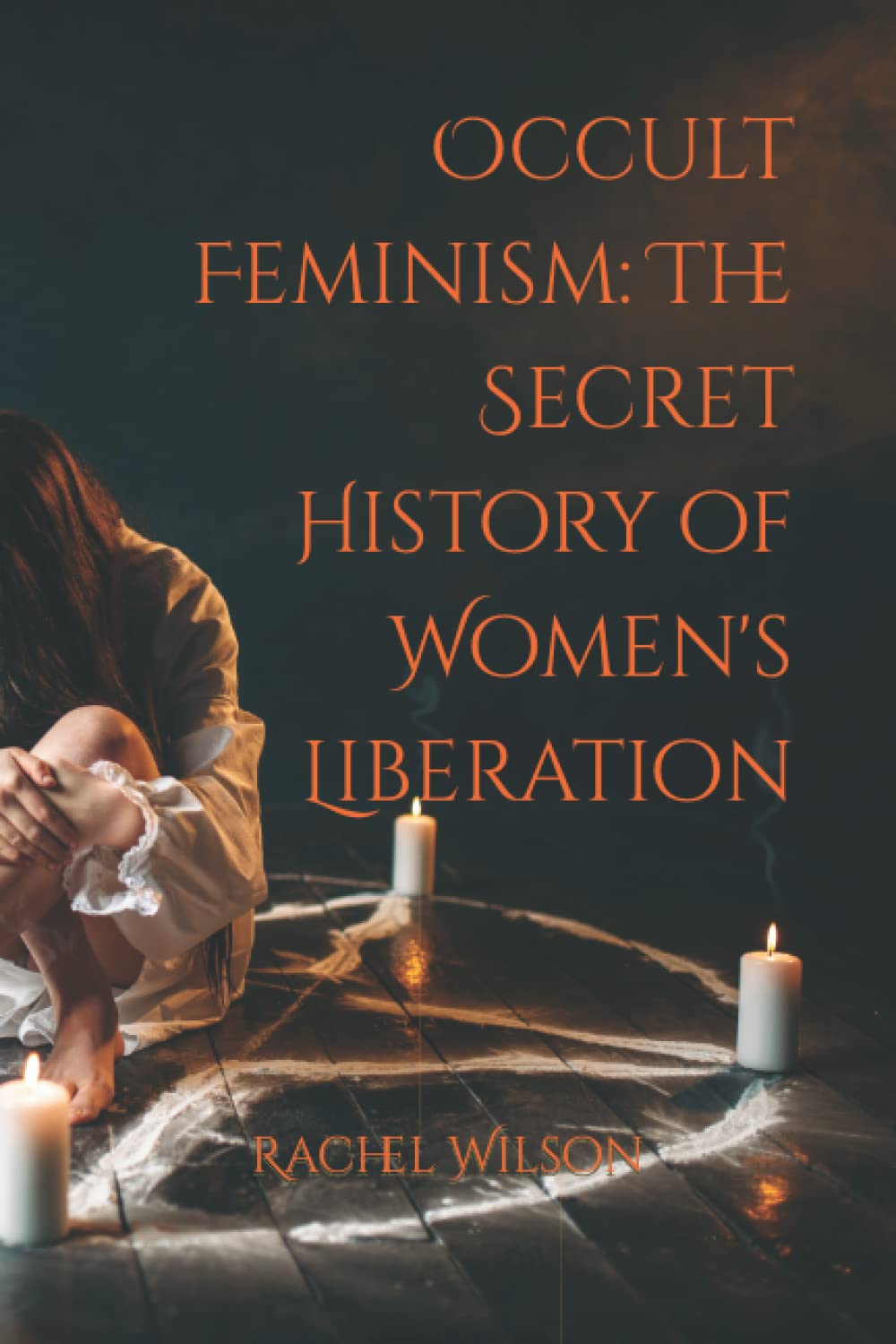
Why are so many drawn to the occult, and why, specifically, are so many women drawn to it? Is it merely a rebellious phase, a rejection of patriarchal structures, or does it tap into something deeper, something primal within the feminine psyche? Rachel Wilson’s “Occult Feminism” delves into this complex intersection, excavating the hidden history of women who dared to wield esoteric knowledge as a tool for liberation. It’s not just about tarot cards and crystal balls; it’s about dismantling the very foundations of societal control.
The narrative often glosses over the genuine agency women found in these esoteric practices. It prefers to paint a picture of naive individuals easily swayed by charlatans. But that is an incredibly simplistic interpretation. It ignores the potent symbolism and self-empowerment these practices fostered.
I. The Allure of the Forbidden: Reclaiming Knowledge, Reclaiming Power
For centuries, the acquisition of knowledge has been a male prerogative. Academia, scientific inquiry, and even religious doctrine have been systematically gatekept, denying women access to intellectual and spiritual authority. The occult, operating outside the sanctioned institutions of power, offered an alternative pathway. It provided a space where women could explore forbidden ideas, cultivate their intuition, and develop their own unique interpretations of the universe. The allure of the forbidden is potent. It’s a siren song calling to those who have been silenced, marginalized, and denied their rightful place in the intellectual and spiritual landscape.
This reclamation wasn’t merely about intellectual curiosity. It was about reclaiming agency over their own bodies and minds. Consider the history of witchcraft persecutions. Accusations of witchcraft were often used to control women who defied societal expectations, who possessed knowledge of herbal remedies, or who simply refused to conform to the patriarchal ideal of submissive womanhood. Engaging with occult practices, therefore, became an act of resistance, a defiant assertion of autonomy in the face of oppression. The practice was a potent form of resistance. That power can be intoxicating.
II. The Goddess Within: Reimagining the Divine Feminine
Traditional patriarchal religions have often suppressed or marginalized the feminine divine, relegating women to secondary roles in the spiritual hierarchy. The occult, in contrast, frequently embraces and celebrates the feminine principle, often through the veneration of goddesses, the exploration of lunar symbolism, and the emphasis on intuition and emotional intelligence. This reimagining of the divine offered women a powerful alternative to the male-dominated religious institutions that had long denied their spiritual worth. It allowed them to connect with a deeper, more primal source of power within themselves.
Think of the resurgence of interest in figures like Lilith, the first woman in Jewish folklore who refused to submit to Adam. Lilith, demonized in traditional narratives, becomes a symbol of female empowerment in occult circles, representing independence, sexual agency, and a rejection of patriarchal control. The goddess wasn’t just “out there,” she was within. This realization was revolutionary.
III. Challenging the Cartesian Split: Embracing Intuition and Embodiment
The Cartesian dualism, the separation of mind and body, has had a profound impact on Western thought, contributing to the devaluation of the body and the privileging of rational thought. This has particularly affected women, whose bodies have been historically objectified and controlled. Occult practices, in contrast, often emphasize the interconnectedness of mind, body, and spirit, valuing intuition, emotional intelligence, and the wisdom of the body. It encouraged a more holistic understanding of self. It defied the rigid boundaries imposed by rational thought.
Practices like astrology, tarot, and energy work encouraged a deeper connection to one’s intuition and bodily sensations. They provided tools for understanding the self on multiple levels, beyond the limitations of rational analysis. It provided liberation. This embracing of the intuitive and the embodied was a powerful challenge to the dominant paradigm of Western thought.
IV. Sisterhood and Solidarity: Creating Alternative Communities
The occult has often provided a space for women to connect with one another, share knowledge, and build supportive communities outside the confines of traditional social structures. These communities offered a sense of belonging and validation to women who felt marginalized or isolated in the wider world. It facilitated the sharing of esoteric knowledge. The mutual support was crucial.
Think of the feminist witchcraft covens of the 1970s, which provided a haven for women seeking to explore their spirituality and challenge patriarchal norms. These covens were not just about casting spells; they were about creating alternative social structures based on principles of equality, collaboration, and mutual respect. They were laboratories for social change. They demonstrated the power of collective action.
V. The Perils of Appropriation: Navigating the Minefield of Cultural Sensitivity
The increasing popularity of the occult has also raised concerns about cultural appropriation. Practices that originated in marginalized communities are sometimes adopted without understanding or respect for their original context. This can lead to the trivialization of sacred traditions and the further marginalization of the communities from which they originated. The lines are often blurred. The ethical considerations are paramount.
For example, the commercialization of tarot and other divination practices can dilute their spiritual significance and reduce them to mere entertainment. It’s crucial for those engaging with these practices to be mindful of their origins and to approach them with respect and humility. Sensitivity should be key. Ignoring this risks perpetuating harm.
VI. The Backlash: Why is Occult Feminism Still Feared?
Despite the increasing visibility of occult practices, they still face significant social stigma and are often dismissed as irrational or superstitious. This is partly due to the historical association of the occult with deviance, rebellion, and female power. Patriarchal societies have long sought to control women’s bodies, minds, and spirits, and the occult represents a threat to this control. Because it provides a powerful avenue for women to reclaim agency and challenge the status quo.
The fear of the occult is also rooted in a deep-seated anxiety about the unknown and the irrational. In a world that privileges rational thought and scientific explanation, the occult represents a challenge to the established order. It forces us to confront the limits of our knowledge and to acknowledge the existence of forces beyond our comprehension. That can be deeply unsettling. It invites us to question the foundations of our reality.
VII. Beyond Stereotypes: The Nuance of Modern Occult Feminism
Modern occult feminism is not a monolithic movement. It encompasses a diverse range of practices, beliefs, and perspectives. From Wicca to chaos magic, from tarot to astrology, women are finding creative and innovative ways to integrate occult practices into their feminist activism. It is constantly evolving. It is inherently dynamic.
Some women use occult practices to heal from trauma and reclaim their bodies after experiences of sexual violence. Others use them to connect with the earth and advocate for environmental justice. Still others use them to create art and express their creativity in ways that challenge patriarchal norms. The possibilities are endless. The only limit is our imagination.
VIII. A Mirror to Society: Reflecting Our Anxieties, Illuminating Our Path
The enduring appeal of occult feminism speaks volumes about the ongoing struggle for gender equality and the persistent need for alternative pathways to knowledge and empowerment. It reflects a deep-seated dissatisfaction with the limitations of traditional institutions and a yearning for a more holistic and spiritual understanding of the world. The reflection is not always flattering. But it is always illuminating.
Ultimately, occult feminism is not just about casting spells or reading tarot cards. It’s about challenging the dominant narratives, reclaiming our power, and creating a more just and equitable world for all. It’s about daring to imagine a future where women are free to explore their full potential, unburdened by the constraints of patriarchal oppression. The fight continues. The path is lit by the stars.
So, is the fascination with occult feminism just a trend? No. It’s a symptom, a sign, a beacon. It signifies the undying thirst for something more, something authentic, something that whispers of forgotten power. It demands that we look deeper, not just at the surface of spells and rituals, but at the profound hunger for liberation that fuels it all.









Leave a Comment