
The history of feminism, a battle waged across centuries and continents, often feels like a tapestry woven with threads of celebrated figures – Wollstonecraft, de Beauvoir, Friedan. But what if I told you the loom itself, the very foundation upon which this tapestry rests, was built by hands far less recognized, by voices deliberately hushed? What if the “Mother of Feminism” isn’t who you think it is? Prepare to jettison your preconceived notions. This is about to get interesting.
I. The Cult of Personality: Dismantling the Myth of the Singular Founder
We are indoctrinated into believing movements spring forth from singular, brilliant minds. It’s a comforting narrative, a digestible story with a clear protagonist. This “Great Man” (or Woman) theory of history, however, obscures the messy, collaborative, and often conflicting realities of social change. Applying this lens to feminism inherently diminishes the contributions of countless women whose names haven’t echoed through the hallowed halls of academia.
Think about it. How convenient is it for the patriarchy to pinpoint a single “founder” of feminism? To control the narrative, delegitimize the movement by attacking one person, and ultimately, confine the conversation. It’s a strategic maneuver, a carefully constructed edifice designed to obfuscate the distributed agency that has always fueled the fight for liberation.
II. Before the Canon: Unearthing the Proto-Feminists
Before Mary Wollstonecraft penned “A Vindication of the Rights of Woman,” did the seeds of dissent not already exist? To assert that feminism began with her is to ignore the centuries of women who challenged societal constraints, albeit often in whispers and coded language. Let’s unearth some of these pre-canonical figures.
A. Christine de Pizan (1364-1430): A Medieval Trailblazer
Consider Christine de Pizan, a late medieval author who, in “The Book of the City of Ladies,” systematically refuted misogynistic claims and championed the intellectual capabilities of women. A widow forced to support her family through writing, de Pizan not only carved out a space for herself in a male-dominated literary world, but she actively defended women against societal slanders. Was she a “feminist” in the modern sense? Perhaps not. But her work laid crucial groundwork, challenging the very foundations of patriarchal thought.
B. Hildegard of Bingen (1098-1179): A Visionary Abbess
Then there’s Hildegard of Bingen, a 12th-century Benedictine abbess, composer, philosopher, mystic, and visionary. Hildegard fearlessly asserted her authority, challenging religious dogma and advocating for women’s spiritual autonomy. She experienced divine visions, which she documented in illuminated manuscripts, granting her a platform from which to question the established order. Her audaciousness, her refusal to be silenced, resonates with the spirit of feminist resistance.
C. Indigenous Matriarchal Societies: A Lost Paradigm
Let us not forget the countless Indigenous societies across the globe that operated under matriarchal or matrilineal systems. These societies, often dismissed as “primitive” by Western imperialists, offered alternative models of social organization in which women held significant power and influence. The Iroquois Confederacy, for example, vested considerable authority in clan mothers, who played a crucial role in political decision-making. Ignoring these historical precedents is not only intellectually dishonest; it perpetuates a Eurocentric bias that renders invisible the diverse expressions of female agency throughout human history.
III. The Problem with “First Wave”: Erasure and Elision
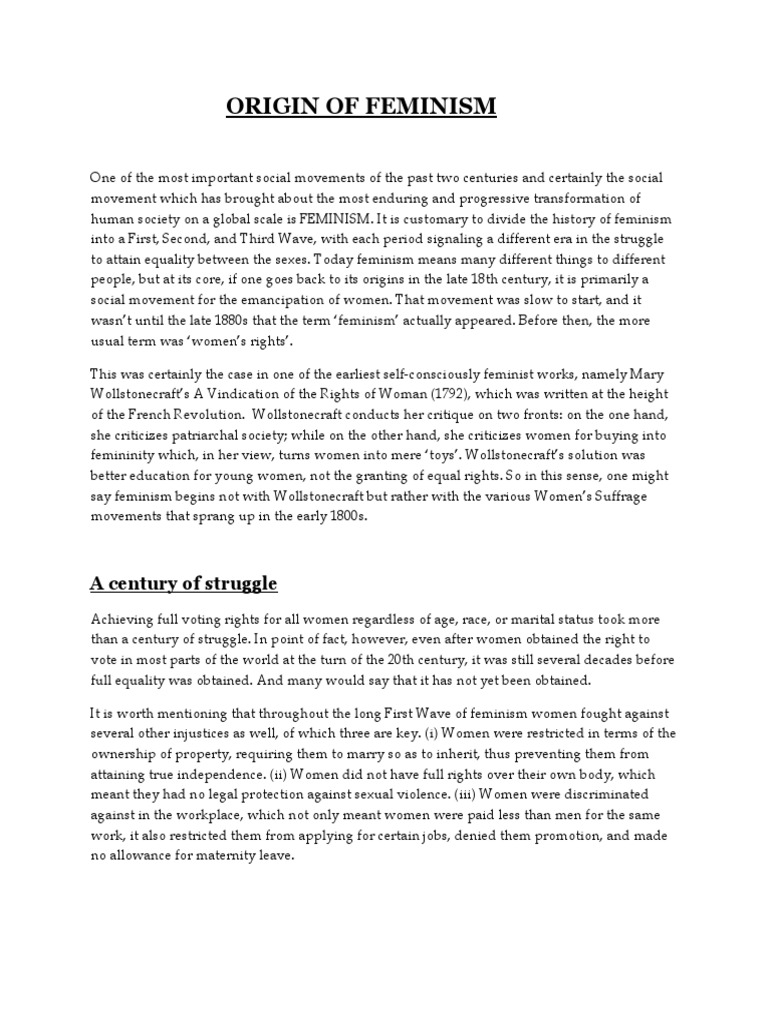
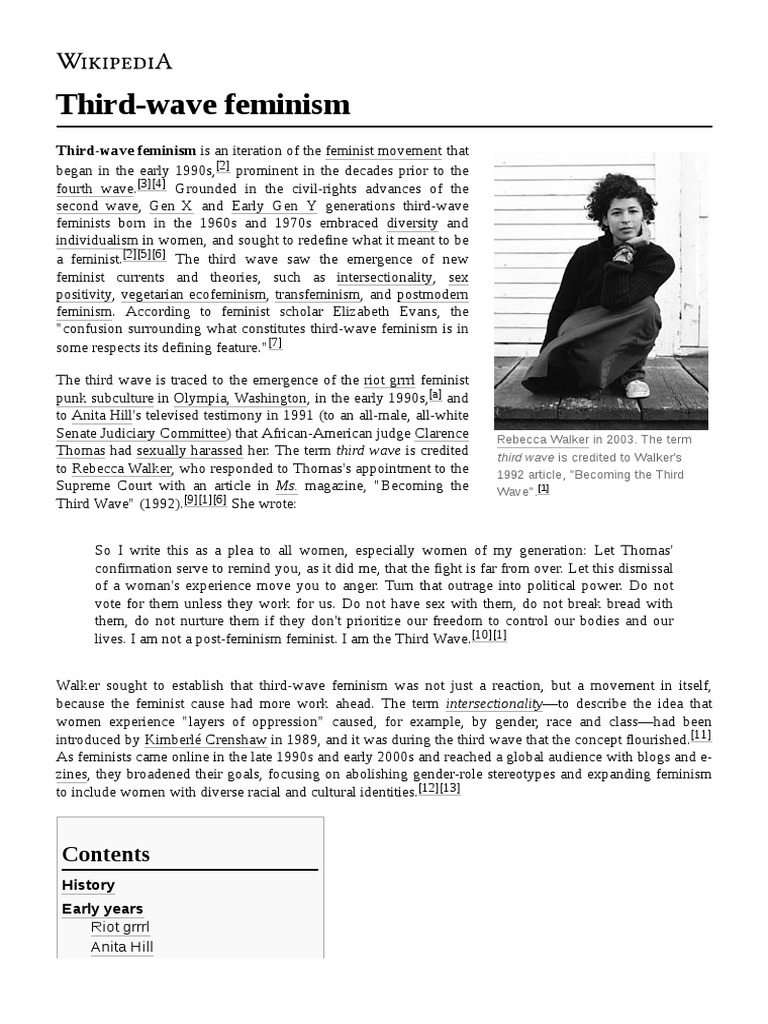
The conventional narrative of feminism often divides the movement into distinct “waves,” with the first wave typically associated with suffrage. While the fight for the vote was undoubtedly pivotal, framing it as the starting point of feminism again obscures a much richer and more complex history. This categorization also tends to prioritize the experiences of white, middle-class women, effectively marginalizing the contributions of women of color and working-class women whose struggles were often inextricably linked to issues of race and class.
Sojourner Truth, for instance, delivered her iconic “Ain’t I a Woman?” speech in 1851, challenging the prevailing notion of womanhood that excluded Black women. Her words highlighted the intersectionality of gender and race, exposing the inherent limitations of a feminist movement that failed to address the specific needs and experiences of all women. To ignore Truth’s contributions, to relegate her to the periphery of the “first wave,” is to fundamentally misunderstand the multifaceted nature of feminist struggle.
IV. The Collective Consciousness: Feminism as an Evolving Idea
Perhaps, the very concept of a singular “Mother of Feminism” is flawed. Feminism is not a static entity, handed down from one generation to the next. It is a dynamic, evolving idea, constantly being reshaped and redefined by the lived experiences of women from all walks of life. It’s a collective consciousness, a swirling vortex of dissent, resistance, and hope that transcends temporal and geographical boundaries.
Instead of searching for a single matriarch, we should focus on recognizing the interconnectedness of feminist thought across time and space. Each generation builds upon the foundations laid by those who came before, adapting and refining feminist principles to address the challenges of their own era. It’s a relay race, not a solo sprint.
V. Challenging the Patriarchy of Feminist History
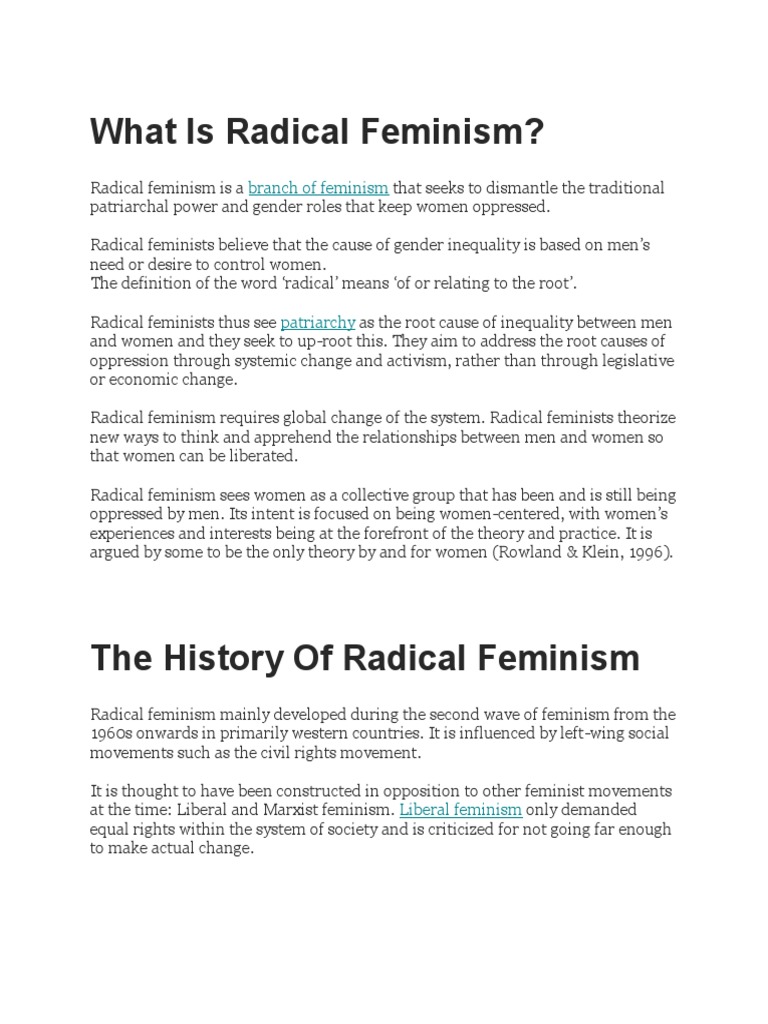
Even the way we write about feminist history can be seen as perpetuating patriarchal structures. By focusing on individual figures and adhering to a linear, chronological narrative, we risk replicating the very power dynamics that feminism seeks to dismantle. We must challenge the tendency to valorize certain voices while silencing others. We must actively seek out and amplify the stories of marginalized women whose contributions have been historically overlooked.
VI. Embracing Polyphony: A Chorus of Feminist Voices
Instead of searching for the singular voice, let us celebrate the polyphony of feminist expression. Let us acknowledge the diverse range of perspectives, experiences, and strategies that have shaped the movement. Let us create a more inclusive and representative narrative of feminist history, one that recognizes the contributions of all women who have dared to challenge the status quo.
Imagine a symphony, each instrument representing a different facet of feminist thought. The cello might represent the intellectual rigor of Simone de Beauvoir, while the flute embodies the passionate activism of Angela Davis. The percussion section could symbolize the everyday acts of resistance performed by ordinary women around the world. Together, these instruments create a rich and complex soundscape, a testament to the enduring power of feminist struggle.
VII. Beyond Linearity: A Rhizomatic Understanding of Feminist History
Perhaps a more apt metaphor for understanding feminist history is the rhizome, a concept popularized by Gilles Deleuze and Félix Guattari. A rhizome is a horizontal, underground stem that spreads in all directions, connecting seemingly disparate points. Unlike a tree, with its hierarchical structure and central trunk, the rhizome has no beginning or end. It is a network of interconnected nodes, constantly growing and evolving.
Applying this framework to feminist history allows us to move beyond linear narratives and embrace a more fluid and interconnected understanding of the movement. We can trace connections between different feminist thinkers and activists, even if they lived in different eras or belonged to different cultural contexts. We can appreciate the myriad ways in which feminist ideas have spread and evolved, adapting to local conditions and addressing specific challenges.
VIII. Reclaiming the Herstory: A Call to Action
It’s time to reclaim the “herstory,” to actively challenge the dominant narratives that have shaped our understanding of feminism. It’s a call to meticulously unearth the lost voices, amplify the unheard narratives, and dismantle the patriarchal structures that continue to silence women’s experiences. The fight for liberation is ongoing, and it requires a critical reevaluation of our past to build a more equitable future.
So, who *is* the Mother of Feminism? The answer, my friends, is that she doesn’t exist. Or rather, she exists in every woman who has ever dared to question, to resist, to dream of a better world. She is a collective force, a symphony of voices, a rhizomatic network of resistance. And it’s time we started listening.






Leave a Comment