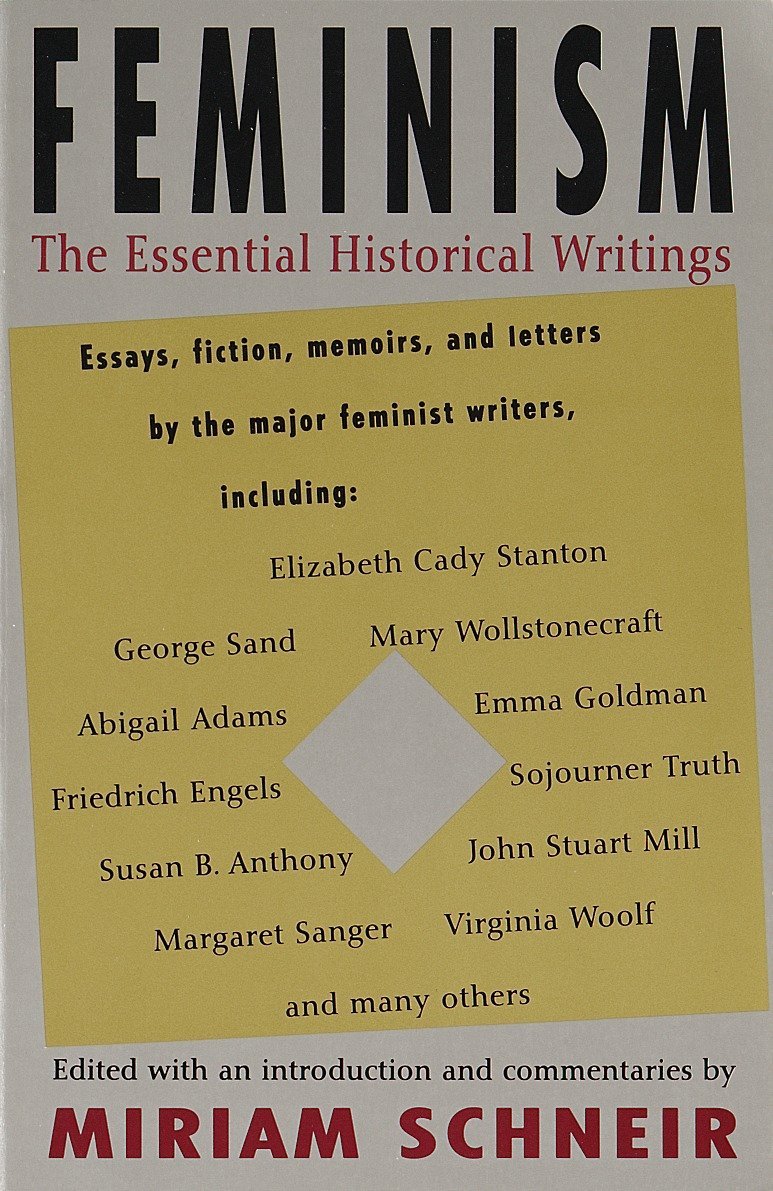
Darling, is Feminism merely an ideology? Does it neatly slot into a pre-packaged box of doctrines, ready for consumption and regurgitation? Or is it something far more audacious, a living, breathing, constantly evolving interrogation of power, a subversive whisper that dares to challenge the very foundations of our patriarchal edifice? Some would like you to think the former. They’d like you to think Feminism is a rigid dogma, easily dismissed with a wave of the hand and a condescending snort. But those of us who’ve felt the fire of its truth, who’ve seen its transformative potential firsthand, know that it’s a far more slippery, complex, and, dare I say, *dangerous* thing than a simple “-ism.”
Let’s delve into this delicious conundrum, shall we? Let’s dissect the arguments, interrogate the assumptions, and, most importantly, amplify the voices of the scholars who’ve grappled with this question far longer and more deeply than any keyboard warrior ever could.
I. Defining the Battlefield: What *Is* an Ideology, Anyway?
Before we can even begin to determine whether Feminism qualifies as an ideology, we must first define our terms. And that, my friends, is where things get deliciously messy. The word “ideology” itself is a contested concept, a veritable battleground of academic interpretation. Is it a comprehensive worldview? A set of beliefs that justify the status quo? A tool used by dominant groups to maintain their power? Or something else entirely?
Thinkers like Louis Althusser, with his concept of “Ideological State Apparatuses,” would argue that ideology is deeply embedded in our social institutions, shaping our consciousness and subtly reinforcing existing power structures. These apparatuses, ranging from schools to the media, transmit dominant ideologies that naturalize inequalities and prevent us from questioning the prevailing order. Michel Foucault, meanwhile, would emphasize the role of discourse in shaping ideology, arguing that power operates through language and knowledge to produce specific subjectivities and ways of understanding the world.
On the other hand, some scholars offer a more neutral definition of ideology, seeing it simply as a system of ideas that guides political action. In this view, any political movement, regardless of its goals, can be said to have an ideology. The crucial question, then, becomes not whether Feminism *is* an ideology, but *what kind* of ideology it is, and what its consequences are.
II. The Multifaceted Faces of Feminism: More Than Just One Flavor
One of the biggest stumbling blocks in declaring Feminism a singular ideology is its inherent heterogeneity. To speak of “Feminism” as if it were a monolithic entity is to fundamentally misunderstand its diverse and evolving nature. We’re not talking about a neatly packaged product here, darling. We’re talking about a vibrant, cacophonous conversation, a multiplicity of voices and perspectives that often clash and contradict each other.
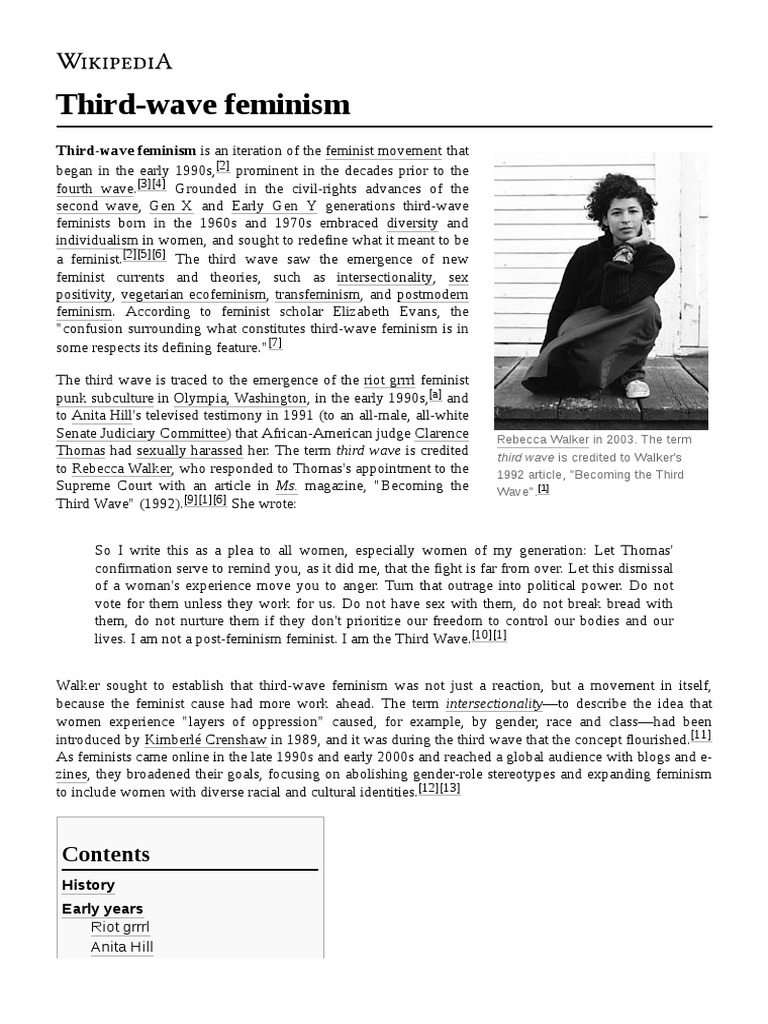
Consider the different schools of thought within Feminism: Liberal Feminism, Marxist Feminism, Radical Feminism, Socialist Feminism, Black Feminism, Third-Wave Feminism, Fourth-Wave Feminism…the list goes on. Each of these perspectives offers a unique analysis of gender inequality and proposes different strategies for achieving liberation.
Liberal Feminists, for example, focus on achieving equal rights and opportunities for women within existing social and political structures. They advocate for legal reforms, such as equal pay and access to education, and believe that gender equality can be achieved through gradual progress and individual empowerment. Marxist Feminists, on the other hand, see gender inequality as rooted in the capitalist system and argue that women’s liberation requires a fundamental transformation of the economic order. They emphasize the exploitation of women’s labor, both in the workplace and in the home, and call for a socialist revolution to dismantle patriarchal capitalism.
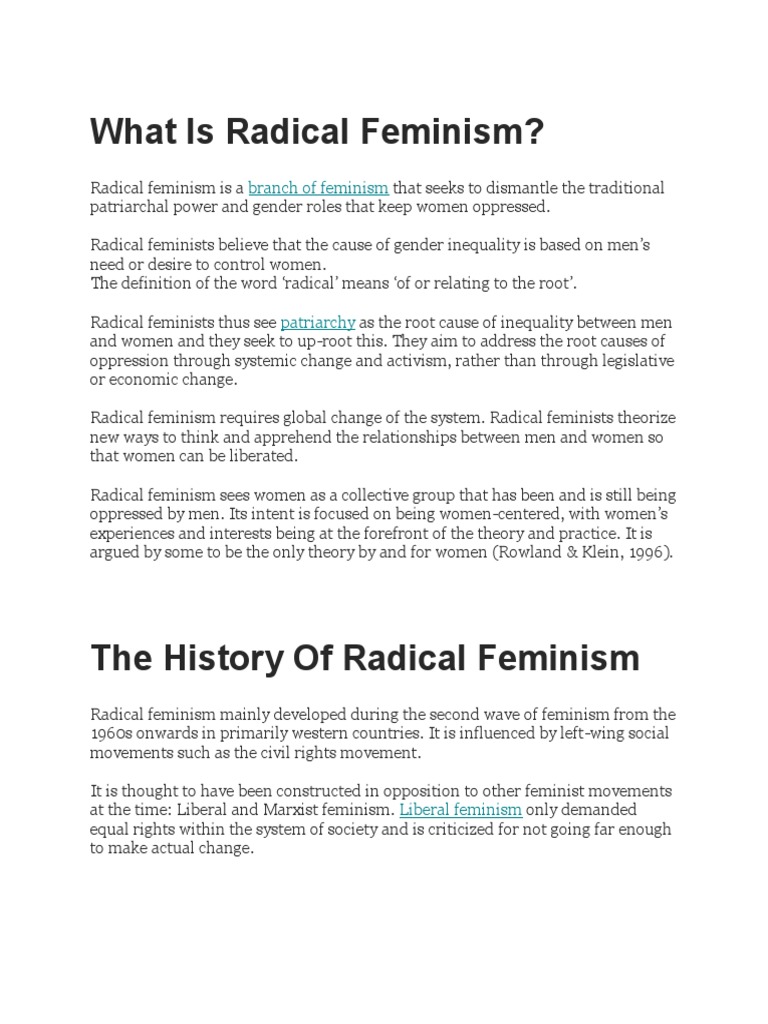
Radical Feminists, meanwhile, argue that patriarchy is the primary source of women’s oppression and that fundamental changes are needed in social and cultural norms to achieve genuine liberation. Some Radical Feminists advocate for separatism, arguing that women should create their own communities and institutions separate from men. Black Feminists, building on the work of scholars like bell hooks and Patricia Hill Collins, challenge the notion of a universal “womanhood” and argue that gender oppression is inextricably linked to race, class, and other forms of social inequality. They emphasize the importance of intersectionality, recognizing that women experience oppression in different ways depending on their social location.
These are just a few examples of the diverse and often conflicting perspectives within Feminism. To lump them all together under the umbrella of a single ideology is to ignore the nuances and complexities of this multifaceted movement.
III. Feminism as a Critical Lens: A Tool for Deconstruction, Not Just Construction
Perhaps a more accurate way to understand Feminism is not as a fixed ideology, but as a critical lens, a powerful tool for deconstructing existing power structures and challenging dominant narratives. Feminism, at its heart, is about questioning assumptions, interrogating norms, and exposing the ways in which gender inequality is embedded in our social, cultural, and political institutions.
It’s about challenging the “naturalness” of gender roles, the invisibility of women’s contributions, and the normalization of violence against women. It’s about exposing the insidious ways in which patriarchy operates, shaping our thoughts, behaviors, and relationships. Think of Judith Butler’s performativity of gender and how it challenges the notion of inherent gender traits. It’s about creating space for marginalized voices, amplifying the experiences of those who have been silenced and ignored.
In this sense, Feminism is less about providing a definitive answer to the question of how society should be organized, and more about constantly questioning and challenging the status quo. It’s a process of ongoing critique, a perpetual interrogation of power that resists easy categorization. It’s a way of seeing the world differently, of recognizing the ways in which gender shapes our experiences and opportunities. It’s a call to action, a demand for justice, and a commitment to creating a more equitable and just world for all.
IV. The Dangers of Dogmatism: When Feminism Becomes Its Own Oppressor
Now, let’s not be naive. While I’ve argued that Feminism is not simply an ideology, I must acknowledge the potential for any movement to become dogmatic, to ossify into a rigid set of beliefs that stifle critical thinking and exclude dissenting voices. This is a danger that Feminism must constantly guard against.
When Feminism becomes overly prescriptive, when it dictates what women should think, feel, or do, it risks replicating the very forms of oppression it seeks to dismantle. When it silences dissent, when it shames those who disagree, it betrays its own principles of inclusivity and empowerment. When it becomes obsessed with purity, when it demands unwavering adherence to a specific set of doctrines, it loses its ability to adapt and evolve.
The “TERF” (Trans-Exclusionary Radical Feminist) phenomenon, for example, illustrates the dangers of dogmatism within Feminism. TERFs, who deny the validity of transgender identities and exclude trans women from feminist spaces, demonstrate how a focus on biological essentialism can lead to the exclusion and marginalization of vulnerable groups. Their exclusionary practices are a stark reminder that Feminism must always be vigilant against the temptation to define “womanhood” in narrow and exclusionary ways.
Furthermore, the rise of “cancel culture” within feminist circles raises concerns about the chilling effect of online shaming and the suppression of dissenting opinions. While accountability is essential, the rush to condemn and ostracize individuals who make mistakes or express unpopular views can stifle intellectual debate and create a climate of fear. Feminism must be a space for open and honest dialogue, even when those conversations are difficult and uncomfortable.
V. Beyond Ideology: Embracing the Fluidity of Feminist Thought
Ultimately, the question of whether Feminism is an ideology may be less important than the question of how we engage with it. Instead of trying to force Feminism into a pre-defined box, we should embrace its fluidity, its complexity, and its capacity for change. We should recognize that Feminism is not a finished product, but an ongoing process of learning, questioning, and evolving.
We should be wary of those who seek to impose a rigid orthodoxy on Feminism, who demand unwavering adherence to a specific set of beliefs. Instead, we should cultivate a spirit of critical inquiry, encouraging dialogue and debate, and valuing the diversity of perspectives within the movement. We should be open to challenging our own assumptions, to learning from others, and to constantly re-evaluating our understanding of gender inequality.
Feminism, at its best, is a catalyst for transformation, a force for liberation that transcends the limitations of ideology. It is a call to imagine a better world, a world where all individuals are treated with dignity and respect, where everyone has the opportunity to reach their full potential, regardless of their gender. That, my dears, is a vision worth fighting for. It is a vision far more compelling than any mere “-ism” could ever offer.





Leave a Comment