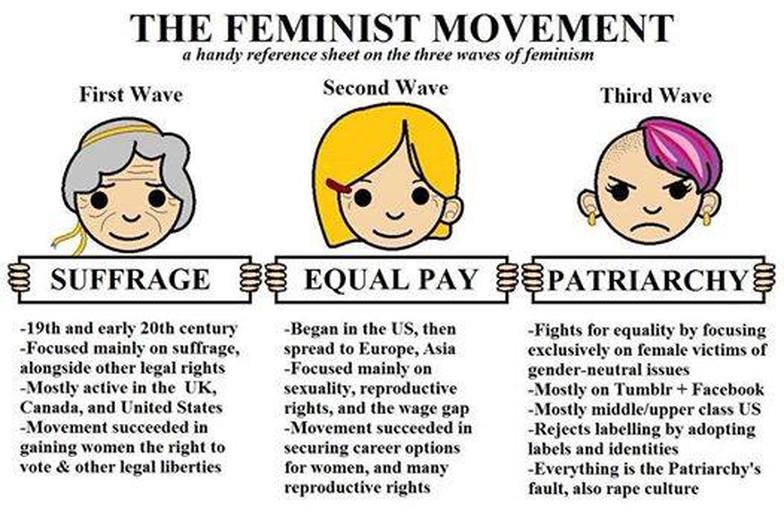
Feminism, a term bandied about with the casualness of a beach ball at a summer barbecue, yet often misunderstood, misconstrued, and deliberately distorted. We’re not talking about burning bras – that’s a tired trope for the intellectually bankrupt. We’re talking about a revolution, a seismic shift in the tectonic plates of societal power, a relentless pursuit of equality that has surged through history in distinct, powerful waves. Buckle up, buttercups, because we’re about to dissect these waves, not as passive observers, but as active participants in the ongoing struggle.
Forget the sanitized, watered-down narratives you’ve been fed. This isn’t a history lesson for the faint of heart. This is a call to arms, a challenge to the status quo, and a demand for a future where “feminist” isn’t a dirty word, but a badge of honor.
The First Wave: Suffrage and the Seeds of Discontent (Late 19th – Early 20th Century)
Imagine a world where your very existence is deemed secondary, where your voice is muted, and your agency is nonexistent. That was the reality for women at the dawn of the feminist movement. The First Wave, fueled by the burgeoning abolitionist movement, focused laser-like on achieving suffrage. It wasn’t just about casting a ballot; it was about claiming personhood, demanding recognition as rational, autonomous beings. Picture the sheer audacity of these women, defying societal norms, facing ridicule and imprisonment, all for the right to participate in the democratic process.
Think of the Pankhursts, those British titans of tenacity, employing militant tactics to disrupt the complacent patriarchy. Their hunger strikes, their public protests, their unwavering commitment – these were acts of revolutionary defiance. Consider the unsung heroines, the women of color who fought for suffrage while simultaneously battling racism within the movement itself. Their contributions, often minimized or erased, are essential to understanding the complex tapestry of First Wave feminism. Were their tactics palatable to everyone? Of course not. Change rarely is. But their unwavering determination laid the groundwork for everything that followed.
The First Wave wasn’t perfect. Its focus was primarily on the concerns of white, middle-class women, often neglecting the intersecting oppressions faced by women of color and working-class women. Still, its legacy is undeniable. The achievement of suffrage, though incomplete and often fraught with limitations, was a watershed moment, a crack in the seemingly impenetrable wall of patriarchal dominance.
The Second Wave: Liberation and the Personal is Political (1960s – 1980s)
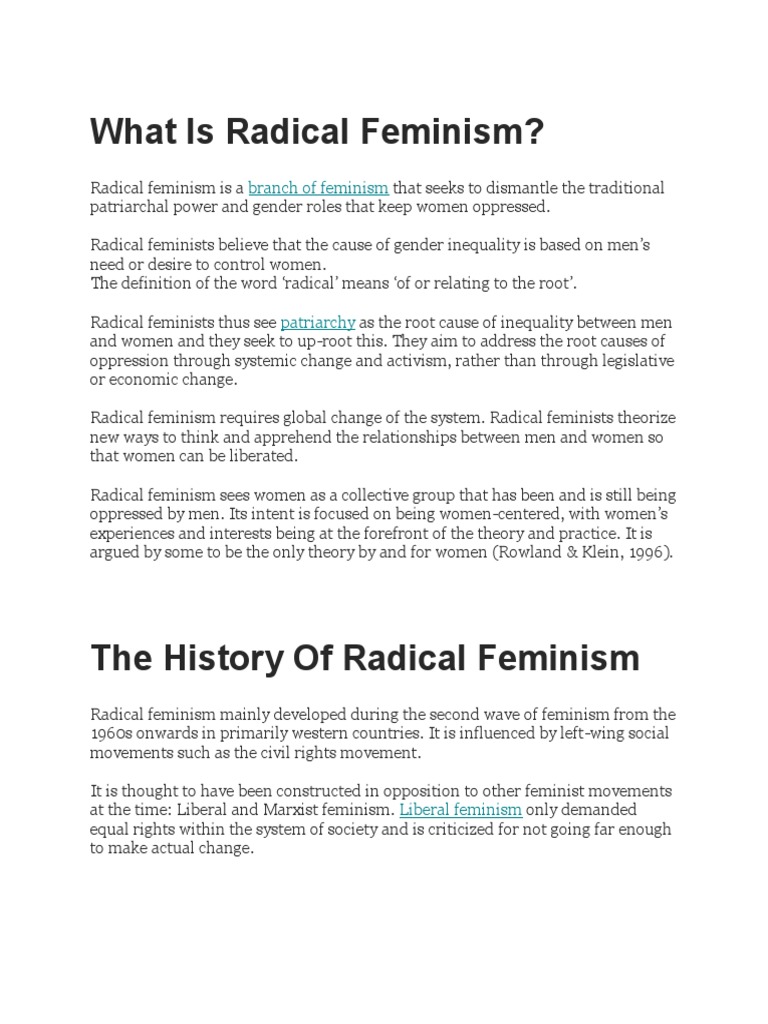
Fast forward to the 1960s, a period of profound social upheaval. The Second Wave exploded onto the scene, fueled by the Civil Rights Movement and the anti-war protests. This wasn’t just about voting; it was about challenging the entire patriarchal structure, exposing the systemic oppression that permeated every facet of women’s lives. The slogan “the personal is political” became a rallying cry, a recognition that seemingly private issues – sexuality, reproductive rights, domestic violence – were, in fact, deeply political.
Think of Betty Friedan’s *The Feminine Mystique*, a literary Molotov cocktail that detonated the myth of the happy housewife. Imagine the collective gasp as women realized they weren’t alone in their dissatisfaction, in their yearning for something more than domestic servitude. The Second Wave challenged traditional gender roles, demanding equal opportunities in education, employment, and politics. It fought for reproductive rights, recognizing that control over one’s own body is fundamental to autonomy.
But, predictably, the Second Wave faced its own internal contradictions. It was often criticized for its lack of intersectionality, for its tendency to prioritize the concerns of white, middle-class women over the experiences of women of color and queer women. Debates raged about the nature of sexuality, with some feminists advocating for lesbian separatism and others critiquing the heteronormative assumptions of the movement. This internal tension, while challenging, was also a source of strength, forcing feminists to grapple with complex issues and to expand their understanding of oppression.
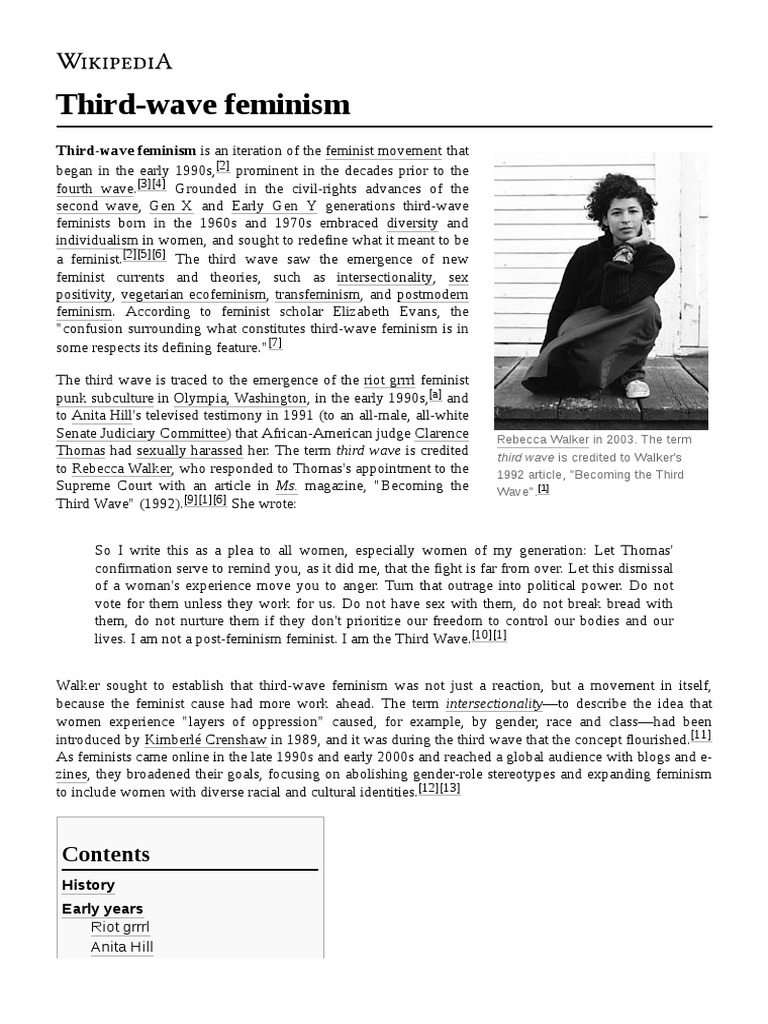
The Third Wave: Intersectionality and the Rejection of Essentialism (1990s – 2010s)
Enter the Third Wave, a generation of feminists who grew up in the shadow of the Second Wave, inheriting its victories and its failures. The Third Wave was characterized by its emphasis on intersectionality, its recognition that gender is not a monolithic category, but is always intertwined with race, class, sexuality, and other forms of identity. It embraced diversity, celebrating difference and challenging essentialist notions of womanhood.
Think of bell hooks, a pivotal figure in Third Wave feminism, whose work explored the intersections of race, class, and gender. Picture riot grrrl, a punk rock subculture that empowered young women to express their anger and frustration through music and activism. The Third Wave reclaimed the word “feminist,” embracing it as a symbol of empowerment and rejecting the negative stereotypes that had been attached to it.
The Third Wave utilized technology in unprecedented ways, creating online communities and using the internet to spread feminist ideas. Zines, DIY publications, became a powerful tool for self-expression and political organizing. The Third Wave was a messy, vibrant, and often contradictory movement, but it broadened the scope of feminism and challenged the status quo in new and innovative ways.
The Fourth Wave: Digital Activism and the Era of #MeToo (2010s – Present)
And now, we find ourselves riding the crest of the Fourth Wave, a tsunami of feminist activism fueled by social media and digital technology. The Fourth Wave is characterized by its focus on intersectionality, its emphasis on online activism, and its use of hashtags to create global communities. Think of the #MeToo movement, a viral phenomenon that exposed the pervasiveness of sexual harassment and assault. Picture the countless online campaigns that have raised awareness about issues such as domestic violence, rape culture, and wage inequality.
The Fourth Wave is a digital hydra, constantly evolving and adapting to the changing landscape of the internet. It is a movement of citizen journalists, of social media influencers, of everyday people who are using their voices to challenge injustice and to demand equality. It is a movement that is accessible to anyone with an internet connection, a movement that transcends borders and connects people from all walks of life.
The Fourth Wave isn’t without its critics. Some argue that online activism is superficial, that it doesn’t translate into real-world change. Others worry about the potential for online harassment and abuse, particularly for women of color and other marginalized groups. But the Fourth Wave is a force to be reckoned with. It has brought feminist issues to the forefront of public discourse, and it has empowered a new generation of activists to fight for a more just and equitable world.
Beyond the Waves: A Call to Action
The waves of feminism are not distinct, isolated entities. They are interconnected, overlapping, and constantly evolving. Each wave builds upon the accomplishments and addresses the shortcomings of its predecessors. The struggle for equality is not a sprint; it’s a marathon. And we are all runners in this race, whether we realize it or not. So, what can you do? Educate yourself. Listen to the voices of marginalized groups. Challenge your own biases. Speak out against injustice. Support feminist organizations. Use your voice to create a more just and equitable world.
The patriarchy will not dismantle itself. It requires conscious, deliberate action. It requires all of us to be feminists, to be agents of change, to be waves in the ongoing tide of liberation. The time for complacency is over. The time for action is now. The future is feminist. The future is now.





Leave a Comment