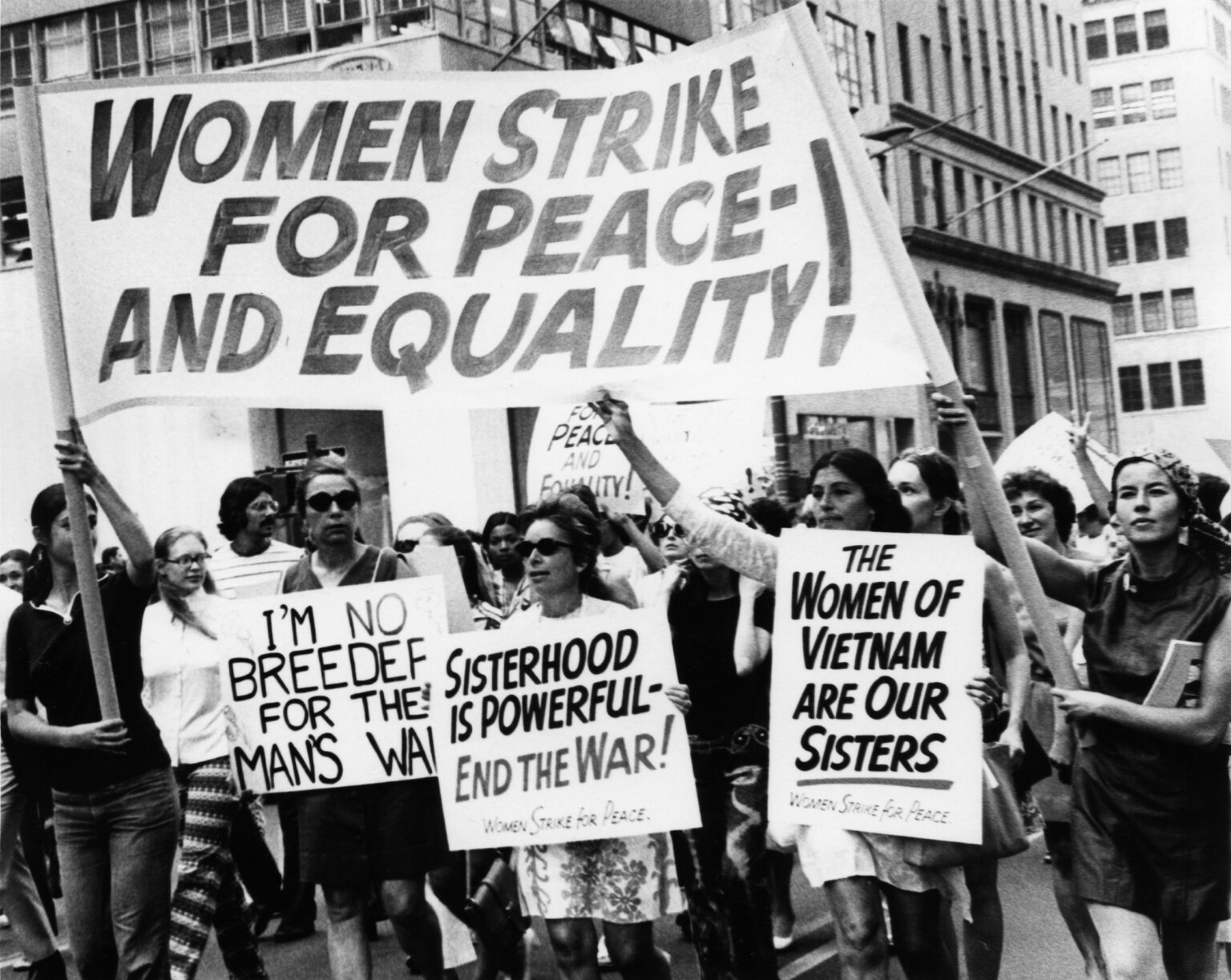
So, you think you know feminism, do you? Another one bites the dust, swallowed whole by the diluted, corporate-approved pap that passes for enlightenment these days. Think again. We’re not here to sip lattés and sing kumbaya about “girl power.” We’re here to dismantle the patriarchy, brick by excruciating brick. And you can’t dismantle what you don’t understand, darling. So, buckle up, because we’re diving headfirst into the murky, magnificent, often contradictory world of feminist thought. Forget the soundbites and the slogans; we’re going deep.
Let’s crack this ideological piñata wide open. We’re not just talking about “equal rights” – that’s child’s play. We’re talking about fundamental shifts in power, seismic upheavals in social structures, and the complete and utter annihilation of systemic oppression. Feminism isn’t a monolith, it’s a kaleidoscope, a fractured mirror reflecting a thousand different perspectives, all striving for the same damned goal: liberation.
1. Liberal Feminism: The Trojan Horse of Conformity?
Ah, Liberal Feminism. The gateway drug. The “let’s work within the system” approach. Sounds reasonable, doesn’t it? Advocating for equal opportunities, legal reforms, and access to education. Suffrage, equal pay, reproductive rights – all vital, yes, but are they enough? This approach often focuses on individual rights and neglects the deeper structural inequalities that permeate society. It’s like rearranging deck chairs on the Titanic. You get a few more women in boardrooms, a few more female CEOs, and everyone pats themselves on the back, claiming victory. But what about the women working in the sweatshops that make those CEOs’ clothes? What about the systemic biases that prevent women from climbing the corporate ladder in the first place? Liberal feminism, while well-intentioned, often ends up reinforcing the very systems it claims to challenge, leaving the most marginalized women behind. It’s a dangerous dance with assimilation, a subtle seduction into the arms of the patriarchy.
Does it challenge the core power dynamics? Not really. It asks for a seat at the table, but doesn’t question who built the table, or why it’s built the way it is. Incremental change is still change, of course. But slow incremental change is not what we need.
2. Radical Feminism: Burning Down the House
Now we’re talking. Radical Feminism throws the rulebook out the window, sets it on fire, and dances on the ashes. This is where things get uncomfortable. This branch of feminism argues that patriarchy isn’t just a set of laws or social norms; it’s the fundamental organizing principle of society. It’s woven into the very fabric of our existence, shaping our thoughts, our desires, and our interactions. Radical feminists believe that the only way to achieve true liberation is to dismantle these patriarchal structures completely.
Think abolishing gender roles, challenging traditional family structures, and reclaiming female bodies and sexuality from male control. Some radical feminists advocate for separatism, creating women-only spaces free from male influence. Others focus on combating violence against women and challenging the objectification of women in media. It’s a bold, uncompromising vision, and it’s not for the faint of heart. But it’s also essential. Without radical feminism, we risk settling for superficial changes that leave the root causes of oppression untouched.
Its a fundamental uprooting of everything. A scorched earth policy against the status quo. Is it extreme? Perhaps. Is it necessary? Absolutely.
3. Socialist Feminism: Class Struggle Meets Gender Struggle
Socialist Feminism recognizes that gender oppression is inextricably linked to class oppression. It’s not enough to fight for equal pay if the entire economic system is rigged against the working class. Socialist feminists argue that capitalism, with its inherent inequalities, perpetuates both gender and class hierarchies. They advocate for economic justice, universal healthcare, affordable housing, and other policies that would benefit all members of society, especially the most marginalized.
This brand of feminism understands that women’s experiences are shaped by their class position, their race, and their other intersecting identities. A wealthy white woman faces different challenges than a poor Black woman, and their struggles cannot be addressed in isolation. It is a holistic approach, demanding both gender equality and economic justice.
It says that the personal is political, but also the economic is personal. It’s about dismantling the system, not just tweaking it.
4. Intersectional Feminism: The Symphony of Oppressions
This is the crucial lens through which all feminist analysis must be filtered. Intersectional Feminism, popularized by Kimberlé Crenshaw, recognizes that gender oppression doesn’t exist in a vacuum. It intersects with race, class, sexuality, disability, and other forms of marginalization, creating unique and complex experiences of oppression. A Black woman, for example, faces both sexism and racism, and these oppressions cannot be disentangled.
Intersectional feminists challenge the notion of a universal “woman’s experience” and emphasize the importance of centering the voices of the most marginalized. They advocate for policies and practices that address the specific needs of women of color, LGBTQ+ women, disabled women, and other marginalized groups. This is not about playing the “oppression olympics,” but about recognizing the interconnectedness of different forms of oppression and working towards a more just and equitable world for all. It’s about acknowledging the cacophony of voices, the symphony of struggles, and the imperative to listen to those who have been silenced for far too long.
Because feminism that doesn’t consider intersectionality isn’t feminism at all, it’s just privilege masquerading as progress.
5. Cultural Feminism: Celebrating the Feminine, Reclaiming the Matriarchy?
Cultural Feminism focuses on celebrating and reclaiming traditionally feminine qualities and values. It challenges the patriarchal devaluation of women’s experiences and contributions. This can involve revaluing traditionally “feminine” traits like empathy, intuition, and nurturing, and creating women-centered spaces and communities. Some cultural feminists even advocate for a return to matriarchal societies, believing that a world ruled by women would be more peaceful and just.
While cultural feminism can be empowering for some women, it also has its critics. Some argue that it reinforces traditional gender stereotypes and essentializes the feminine. Others worry that it can be exclusionary, focusing primarily on the experiences of white, middle-class women. However, at its core, cultural feminism aims to uplift and celebrate women’s unique contributions, creating spaces where they can thrive and flourish, free from patriarchal constraints.
It’s about recognizing value in what society has devalued, about reclaiming the power of the feminine, and about creating a world where women’s voices are not only heard but celebrated.
6. Eco-Feminism: Mother Earth is a Woman, Too
Eco-Feminism draws connections between the oppression of women and the degradation of the environment. It argues that both are rooted in patriarchal systems of domination and control. Eco-feminists believe that the exploitation of nature and the exploitation of women are interconnected, and that both must be addressed in order to create a more just and sustainable world.
They advocate for environmental justice, sustainable agriculture, and a deep respect for the natural world. Some eco-feminists draw on spiritual traditions that honor the earth as a sacred being. This branch of feminism sees the fate of women and the fate of the planet as inextricably linked, and it calls for a radical re-imagining of our relationship with both.
It’s about understanding that the fight for women’s liberation is also a fight for the liberation of the planet, that both are essential for a truly just and sustainable future.
7. Transfeminism: Expanding the Boundaries of Womanhood
Transfeminism centers the experiences of transgender women and challenges the cisnormative assumptions that often underpin feminist discourse. It recognizes that trans women are women, and that their struggles against sexism and transphobia are integral to the feminist movement. Transfeminists challenge traditional notions of gender and advocate for a more inclusive and expansive understanding of womanhood.
They fight for trans rights, access to healthcare, and an end to discrimination and violence against trans people. Transfeminism enriches and strengthens the feminist movement by challenging its blind spots and forcing it to confront its own prejudices. It reminds us that feminism must be for all women, regardless of their gender identity.
It is about pushing the boundaries, expanding the definition, and ensuring that no one is left behind in the pursuit of liberation.
8. Post-Structuralist Feminism: Deconstructing the Narrative
Post-Structuralist Feminism, influenced by thinkers like Michel Foucault and Judith Butler, questions the very foundations of language, power, and identity. It challenges the idea of fixed and essential categories like “man” and “woman,” arguing that these are socially constructed and constantly shifting. Post-structuralist feminists deconstruct dominant narratives and expose the ways in which power operates through language and discourse.
This approach can be complex and abstract, but it has profound implications for feminist theory and practice. By challenging the very notion of fixed identities, it opens up new possibilities for understanding gender and sexuality, and for resisting oppressive power structures. It’s not about finding simple answers, but about constantly questioning, challenging, and deconstructing the narratives that shape our world.
It’s about recognizing that the truth is not a fixed point, but a constantly shifting landscape, and that the fight for liberation is a continuous process of questioning, deconstructing, and re-imagining.
9. Anarcha-Feminism: Freedom From All Chains
Anarcha-Feminism combines anarchist principles with feminist ideals, advocating for a society free from all forms of hierarchy and domination, including patriarchy, capitalism, and the state. Anarcha-feminists believe that these systems are inherently oppressive and that true liberation can only be achieved through radical decentralization and self-organization. They advocate for mutual aid, direct action, and the creation of autonomous communities where women can live free from male control and economic exploitation.
This brand of feminism is deeply committed to individual autonomy and collective liberation. It’s about building a world where everyone is free to define themselves and live their lives on their own terms, without the interference of oppressive power structures. It calls for a fundamental reimagining of social organization, a rejection of all forms of domination, and a commitment to creating a truly free and equal society.
It’s not just about smashing the patriarchy; it’s about smashing all the cages, liberating ourselves from every form of oppression, and building a world where everyone is truly free.
So there you have it. A whirlwind tour through the labyrinthine landscape of feminist thought. This is not an exhaustive list, mind you. The beauty of feminism lies in its constant evolution, its refusal to be confined by rigid definitions. But hopefully, this has given you a glimpse into the richness and complexity of this vital movement. Now, go forth and dismantle the patriarchy. And don’t forget to question everything.











Leave a Comment