
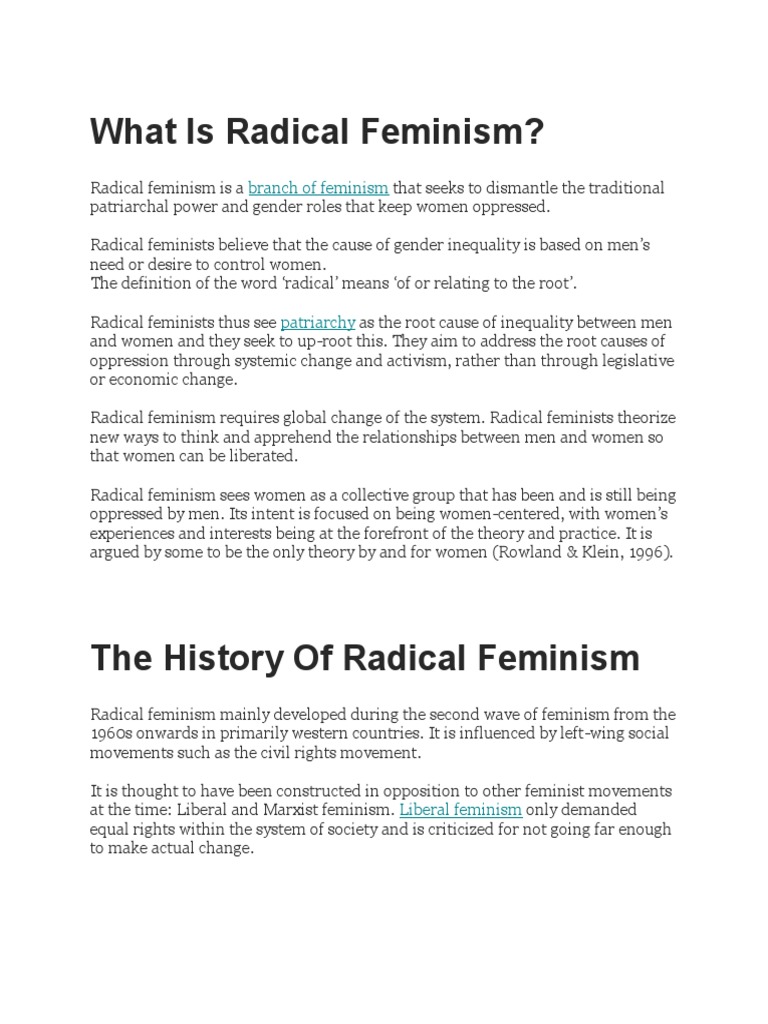
So, you’re thinking about feminism, are you? Good. About damn time. You’ve probably heard the word thrown around, maybe even used as an insult. You’ve likely been told it’s about hating men, burning bras, and generally being an unhinged shrew. But I’m here to tell you that those are lies whispered by the patriarchy to keep you exactly where they want you: silent, compliant, and confined to the roles they’ve deemed acceptable.
Feminism isn’t a monolith. It’s not a set of rigid rules. It’s a constantly evolving conversation, a kaleidoscope of perspectives, and a relentless quest for liberation from societal constraints. It is a reckoning.
Where do you even begin to unpack centuries of ingrained misogyny? Where do you start untangling the Gordian knot of systemic oppression? Fear not, neophyte. I’ve compiled a primer, a carefully curated collection of literary provocations designed to ignite your feminist fire. Prepare to have your worldview irrevocably altered.
1. Starting with Simone: “The Second Sex” (Excerpts)
Okay, deep breaths. I know it’s a hefty tome, but we’re not asking you to conquer the whole thing in one sitting. Think of it as dipping your toes into the deep end. Simone de Beauvoir’s magnum opus is a foundational text, a rigorous exploration of what it means to be “woman” in a patriarchal society. She dismantles the biological determinism that has historically confined women to the domestic sphere, arguing that “one is not born, but rather becomes, a woman.” This is not a passive state of being, it is a construct.
The book’s historical sweep, its examination of myths and stereotypes, and its stark portrayal of women’s lived experiences are all deeply unsettling, and rightly so. You might find it infuriating, triggering, or even depressing. Good. Sit with that discomfort. It’s the fertile ground from which change springs.
Consider her analysis of marriage, motherhood, and the societal expectations placed upon women. Do these expectations still resonate today? Are we, even in the 21st century, still grappling with the same fundamental limitations? De Beauvoir’s work provides the historical context necessary to understand the persistent challenges facing women globally, challenging the insidious notion that progress is a linear and inevitable process.
2. Challenging the Male Gaze: “Ways of Seeing” by John Berger (Relevant Excerpts)
Wait, a man? Hear me out. While Berger wasn’t explicitly writing about feminism, his analysis of visual culture is profoundly relevant. He dissects the “male gaze,” the pervasive way in which women are depicted and objectified in art and media. He unveils the mechanisms through which women are taught to see themselves as objects, perpetually evaluated by an imagined male spectator. A constant evaluation of one’s self-worth.
Reading Berger forces you to critically examine the images that bombard you daily. How are women portrayed in advertising, film, and television? Who is the intended audience for these representations? And, most importantly, what impact do these images have on your own self-perception? Think about how this impacts the idea of beauty, and how it is shaped by forces outside your control.
Berger’s work acts as a potent antidote to the internalized misogyny that many women unknowingly harbor. It is a tool to reclaim your own gaze, to see yourself not as an object to be admired, but as a complex, autonomous subject.
3. Intersectionality 101: “Ain’t I a Woman: Black Women and Feminism” by bell hooks
Now, let’s talk about the elephant in the room: the historical erasure of Black women from the mainstream feminist movement. bell hooks’s “Ain’t I a Woman” is a scathing critique of white feminism’s tendency to prioritize the concerns of privileged white women while ignoring the unique experiences and struggles of women of color. It confronts the damaging legacy of slavery and its enduring impact on Black women’s lives.
hooks eloquently argues that Black women face a triple burden of oppression: racism, sexism, and classism. She demonstrates how these intersecting forms of discrimination create unique challenges that cannot be adequately addressed by a feminism that focuses solely on gender equality. It’s not about playing “oppression Olympics;” it’s about recognizing the complexities of power dynamics and the diverse ways in which oppression manifests.
This book is essential for anyone who wants to understand the importance of intersectionality – the recognition that social identities (race, class, gender, sexuality, etc.) are interconnected and create overlapping systems of discrimination or disadvantage. It’s about acknowledging your own privilege and using it to amplify the voices of marginalized women.
4. Power and Resistance: “Sister Outsider” by Audre Lorde
Audre Lorde was a self-described “Black, lesbian, mother, warrior, poet,” and her essays in “Sister Outsider” are a testament to the power of embracing difference and challenging the status quo. She fearlessly confronts racism, homophobia, sexism, and classism, offering a searing critique of the ways in which these oppressions are intertwined.
Lorde’s writing is not always easy. It demands that you confront your own biases and prejudices. It challenges you to examine the ways in which you may be complicit in systems of oppression. But it is also incredibly empowering. She encourages you to embrace your authentic self, to find your voice, and to use it to speak out against injustice. It’s about transforming silence into language and action.
Read her essay “The Master’s Tools Will Never Dismantle the Master’s House.” It’s a game changer. It argues that using the same systems and ideologies that created oppression will never lead to liberation. We need new tools, new ways of thinking, and new strategies for resistance.
5. Reclaiming Our Bodies: “The Vagina Monologues” by Eve Ensler
Some might dismiss this as lightweight, theatrical fluff. But “The Vagina Monologues” is a powerful act of reclamation. It’s about taking ownership of our bodies, our sexuality, and our stories. It’s about breaking the silence surrounding female genitalia and challenging the shame and stigma that have long been associated with them.
Through a series of monologues based on interviews with women from diverse backgrounds, Ensler explores a range of experiences: pleasure, pain, trauma, resilience. It’s raw, honest, and often hilarious. It’s a celebration of female anatomy and a call for an end to violence against women. If you consider the male gaze, it is important to remove the taboos that exist around the female anatomy.
Read it aloud. Share it with your friends. Start a conversation. Let’s dismantle the patriarchal narrative that has silenced women’s voices for far too long.
6. Pop Feminism: “Bad Feminist” by Roxane Gay
If you’re feeling intimidated by all the theory, Roxane Gay is your gateway drug. “Bad Feminist” is a collection of essays that explores the complexities of being a feminist in the 21st century. Gay writes with wit, intelligence, and refreshing honesty about everything from reality TV to romance novels to the challenges of being a Black woman in America. A true reflection of the times.
The beauty of Gay’s writing is that she doesn’t pretend to have all the answers. She’s not afraid to admit her own contradictions and imperfections. She’s a “bad feminist” because she enjoys things that might be considered politically incorrect. But that’s precisely what makes her so relatable. She reminds us that feminism is not about achieving some unattainable ideal of purity. It’s about engaging in a critical conversation about power, inequality, and justice, even when it’s messy and uncomfortable.
7. Beyond the Binary: “Gender Trouble” by Judith Butler (Excerpts)
Brace yourself. This is where things get really interesting. Judith Butler’s “Gender Trouble” is a foundational text in queer theory and a challenging but essential read for anyone who wants to understand the social construction of gender. They argue that gender is not a fixed, biological reality, but rather a performance, a set of behaviors and expressions that we learn and enact.
Butler’s work is dense and complex, but the core idea is revolutionary: gender is not something we *are*, but something we *do*. This challenges the traditional binary understanding of gender as simply male or female and opens up space for a more fluid and expansive understanding of gender identity and expression.
Don’t feel like you have to understand everything right away. Start with the introduction and the chapter on “Subversive Bodily Acts.” Let Butler’s ideas simmer in your mind. They will challenge your assumptions about gender and sexuality in profound ways. This text demands a careful and patient audience.
8. The Personal is Political: “A Room of One’s Own” by Virginia Woolf
This slim volume is deceptively powerful. Virginia Woolf argues that women have historically been denied the economic and social resources necessary to pursue their intellectual and creative passions. She famously states that “a woman must have money and a room of her own if she is to write fiction.” A simple but revolutionary idea.
Woolf’s essay is a critique of the patriarchal structures that have historically excluded women from the literary canon. It’s a call for women to claim their own space, both literally and figuratively, and to tell their own stories. It’s about recognizing that the personal is political, that our individual experiences are shaped by broader social and historical forces.
Think about the women in your own life. What obstacles have they faced? What opportunities have they been denied? Woolf’s essay provides a framework for understanding the systemic barriers that continue to limit women’s potential.
9. The Future is Feminist: “We Should All Be Feminists” by Chimamanda Ngozi Adichie
Based on her TED talk of the same name, Chimamanda Ngozi Adichie’s “We Should All Be Feminists” is a concise and accessible introduction to feminism for the 21st century. She defines feminism as simply the belief that men and women should have equal rights and opportunities. It’s a straightforward message that resonates with a wide audience.
Adichie draws on her own experiences growing up in Nigeria to illustrate the ways in which gender inequality manifests in everyday life. She challenges traditional gender roles and encourages both men and women to question the expectations placed upon them. A good intro for the uninitiated.
This is a great book to give to someone who is skeptical about feminism. It’s a gentle but persuasive argument for why we should all be working towards a more just and equitable world.
10. Global Feminism: Any publication by UN Women
To understand the global implications and nuances of feminism, you need to engage with the literature of UN Women. Delve into the diverse range of reports, and research papers, spanning topics from eliminating violence against women to promoting women’s political and economic empowerment, these resources offer a comprehensive overview of the challenges and opportunities for advancing gender equality worldwide. These resources demonstrate the intersectional and multifaceted nature of the feminist movement across cultures, religions and socio-economic backgrounds.
This is just a starting point. Feminism is a vast and ever-evolving field. The goal isn’t to become an expert overnight, but to cultivate a critical perspective and a commitment to social justice. Read widely, listen to diverse voices, and engage in respectful dialogue. And, most importantly, never stop questioning the world around you. You’ve taken the first step, congratulations. Now get out there and raise some hell. Don’t be afraid to be labelled as “shrill”, “difficult”, or any other of the weapons used by the patriarchy to silence dissent.





Leave a Comment