So, you think smashing the patriarchy is a unified front, a chorus of sisterhood echoing the same tune? Honey, bless your heart. Welcome to the intellectual Thunderdome that is feminist theory, where ideologies clash with the force of a thousand suns. Are you ready to untangle the Gordian knot of feminist thought?
Prepare yourself. It’s not a monolithic entity. It’s a vibrant, argumentative, and often contradictory collection of perspectives vying for dominance in the fight for gender equality. Buckle up buttercup, because we’re diving deep.
I. Liberal Feminism: The Suffragette’s Legacy
At its core, liberal feminism champions equality through legal and political reforms. Think of it as the inheritor of the suffragettes’ mantle. The aim? Equal opportunity within the existing system. This isn’t about tearing down the establishment, darling. It’s about ensuring women can climb the corporate ladder just as efficiently as men, that they have equal access to education, and that laws don’t discriminate based on gender. Easy peasy, right?
The problem, however, lies in its inherent reliance on the very systems that perpetuate inequality. Is access to the same flawed system actually equality? Does simply achieving parity within a patriarchal framework dismantle the power structures that birthed the disparity in the first place? That’s the million-dollar question, isn’t it?
II. Radical Feminism: Revolution, Not Reform
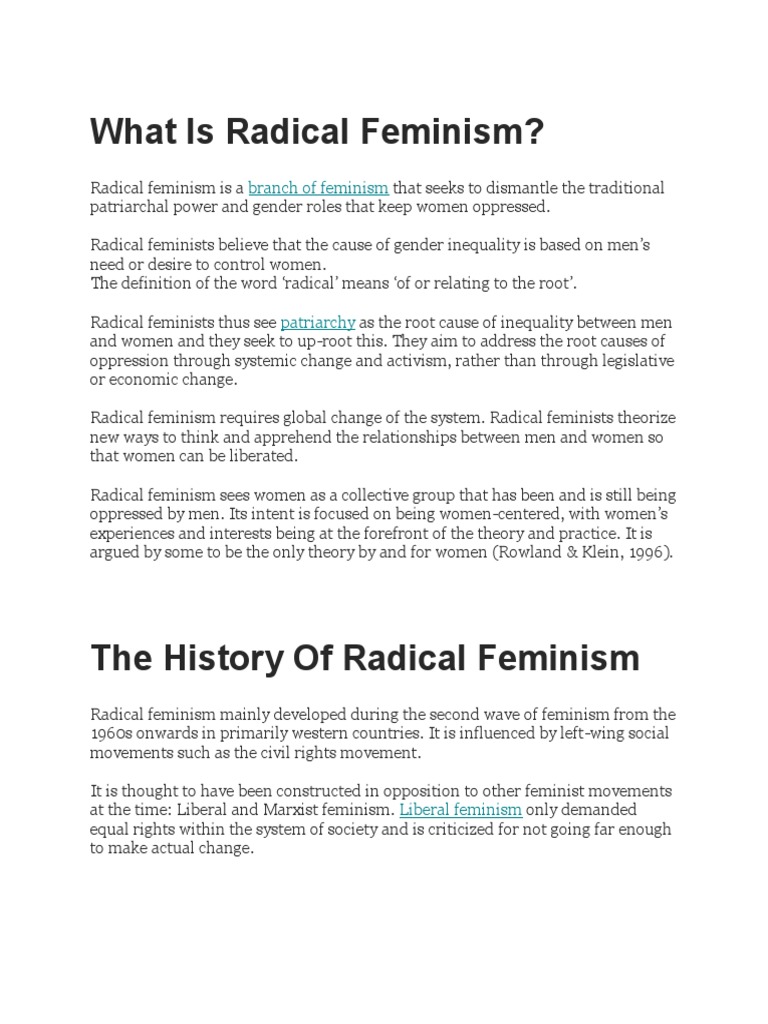
Now we’re talking. Radical feminism posits that patriarchy – the systemic domination of women by men – is the root of all oppression. It’s not just about equal pay or access. It’s about fundamentally dismantling the entire power structure. Everything. From the nuclear family (seen as a tool of female subjugation) to societal norms around beauty and sexuality. Radical feminists often focus on issues such as reproductive rights, violence against women, and challenging traditional gender roles.
Within radical feminism, you’ll find further schisms. Separatist feminism advocates for women withdrawing from male-dominated institutions and creating their own spaces. Lesbian feminism views lesbianism as a political choice, a rejection of heteronormativity and male dominance. These are not tea parties; these are calculated acts of rebellion.
However, radical feminism has faced criticism for potentially essentializing gender, assuming a universal experience of womanhood that may not accurately reflect the complexities of intersectionality. And can a complete separation truly be achieved, or does it simply create an echo chamber, divorced from the messy reality of everyday life?
III. Marxist Feminism: Class Consciousness and Gendered Labor
Enter Marx, stage left. Marxist feminism integrates Marxist theory with feminist principles, arguing that capitalism and patriarchy are inextricably linked. The oppression of women is seen as a tool to maintain the capitalist system. Women’s unpaid labor in the home, their roles as consumers, and their lower wages in the workforce all contribute to the accumulation of capital. This isn’t just about gender; it’s about class warfare with a feminist twist. Are you keeping up?
Marxist feminists advocate for socialist revolution as a means of achieving gender equality. Only by dismantling capitalism can the material conditions that perpetuate women’s oppression be eliminated. Sounds simple enough, but is capitalism *the* singular source of oppression? Does this framework adequately account for the myriad ways gender intersects with race, ethnicity, and other forms of identity?
IV. Socialist Feminism: The Best of Both Worlds?
Socialist feminism attempts to bridge the gap between Marxist and radical feminism. It acknowledges that both capitalism and patriarchy contribute to women’s oppression and advocates for simultaneous struggles against both systems. This is where it gets really interesting. It’s about understanding the interplay between economic exploitation and gendered power dynamics. For example, a socialist feminist might analyze how gender roles are reinforced through advertising to increase consumption or how the state regulates women’s bodies to control labor reproduction.
While aiming for a more holistic approach, socialist feminism sometimes faces criticism for lacking a clear, unified theory. Does trying to be everything to everyone dilute its effectiveness? Does it risk becoming a watered-down version of both Marxism and radical feminism, lacking the revolutionary fervor of the latter and the economic precision of the former?
V. Psychoanalytic Feminism: Delving into the Subconscious
Freud, but make it feminist. Psychoanalytic feminism draws upon psychoanalytic theory to understand the psychological underpinnings of gender inequality. It examines how societal expectations, unconscious biases, and the construction of gendered identities shape individual experiences and perpetuate patriarchal norms. This school of thought often grapples with concepts like the Oedipus complex, penis envy (though often reinterpreted), and the power of the symbolic order.
Think about it: how do societal narratives shape our desires, our fears, and our understanding of ourselves as women? Psychoanalytic feminists like Julia Kristeva and Luce Irigaray have challenged traditional Freudian concepts and offered new perspectives on female subjectivity and the construction of the feminine. But is it just a fancy way of saying “mommy issues”? Can we really understand systemic oppression through individual psychology?
VI. Existentialist Feminism: Freedom and Responsibility
Simone de Beauvoir, the OG existentialist feminist, famously argued that “one is not born, but rather becomes, a woman.” Existentialist feminism emphasizes individual freedom and responsibility. It rejects the notion that women are inherently different from men and argues that societal expectations and cultural norms limit women’s choices and possibilities. It’s about challenging the “feminine mystique” and embracing the freedom to define oneself. If that isn’t bad-ass, then what is?
By emphasizing individual agency, existentialist feminism empowers women to take control of their lives and resist oppressive forces. But does it adequately address the structural inequalities that limit women’s choices in the first place? Can individual acts of rebellion truly dismantle systemic oppression, or does it require a more collective and structural approach?
VII. Post-Structuralist Feminism: Deconstructing Gender
Enter the realm of discourse, power, and deconstruction. Post-structuralist feminism, heavily influenced by thinkers like Michel Foucault and Jacques Derrida, challenges the very foundations of gender as a fixed and binary category. It argues that gender is a social construct, shaped by language, discourse, and power relations. Think of it as taking a sledgehammer to the idea of “male” and “female” as inherent truths. The goal? To expose the ways in which gender is used to maintain hierarchies and to create space for more fluid and diverse identities. Gender is performed, not intrinsic.
Judith Butler, a prominent post-structuralist feminist, argues that gender is performative, meaning that it is enacted through repeated performances of social norms. By disrupting these performances, we can challenge the dominant gender regime and create new possibilities for self-expression. But does this focus on deconstruction lead to paralysis? Does it offer concrete solutions to real-world problems, or does it simply leave us adrift in a sea of relativism?
VIII. Postcolonial Feminism: Amplifying Marginalized Voices
Recognizing that mainstream feminist discourse often centers the experiences of white, Western women, postcolonial feminism seeks to amplify the voices of women from the Global South and challenge the legacy of colonialism. It critiques the ways in which Western feminist theories may be imposed on other cultures and contexts, ignoring the unique experiences and challenges faced by women in postcolonial societies. It’s a call for inclusivity, for understanding how colonialism, racism, and other forms of oppression intersect with gender inequality.
Think about the impact of globalization on women’s labor, the legacy of colonial laws on women’s rights, and the ways in which cultural stereotypes reinforce power imbalances. Postcolonial feminists like Gayatri Chakravorty Spivak have interrogated the concept of the “subaltern” and the challenges of representing marginalized voices. But is it possible to truly “speak for” others? How do we avoid essentializing the experiences of women from the Global South?
IX. Intersectional Feminism: The Mosaic of Identity
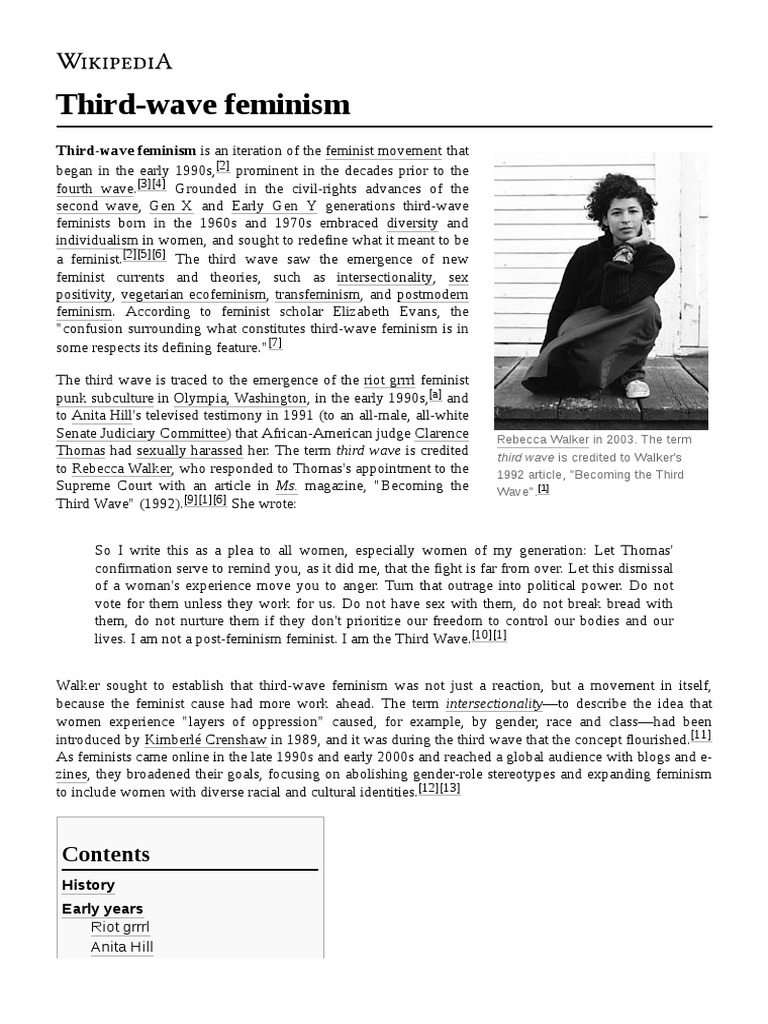
Coined by Kimberlé Crenshaw, intersectionality is not just a buzzword. It is a crucial framework for understanding how different forms of oppression – such as racism, sexism, classism, and homophobia – intersect and create unique experiences of marginalization. It recognizes that women are not a homogenous group and that their experiences are shaped by their multiple identities. A Black woman, for example, faces challenges that are distinct from those faced by a white woman or a Black man.
Intersectionality calls for a more nuanced and inclusive approach to feminist activism, one that takes into account the complexities of identity and power. But how do we navigate the potential for infinite fragmentation? How do we build solidarity across differences without erasing the unique experiences of marginalized groups?
X. Ecofeminism: Connecting Women and Nature
Ecofeminism posits that there is a connection between the domination of women and the domination of nature. It argues that patriarchal systems often exploit and devalue both women and the environment. Think about the ways in which women are often associated with nature and the body, while men are associated with culture and reason. Ecofeminists challenge this dualism and advocate for a more holistic and sustainable approach to life.
Whether it’s fighting against environmental destruction or promoting sustainable agriculture, ecofeminism seeks to create a more just and equitable world for both women and the planet. But is the connection between women and nature an essentialist one? Does it risk reinforcing traditional gender roles? And how do we ensure that environmentalism is not just a movement for the privileged?
So, there you have it. A whirlwind tour through the intellectual landscape of feminism. It’s messy, it’s complicated, and it’s constantly evolving. But one thing is clear: the fight for gender equality is far from over. And the more we understand the diverse perspectives within feminism, the better equipped we will be to dismantle the patriarchy once and for all. Now, go forth and conquer… or at least engage in a spirited debate.





Leave a Comment