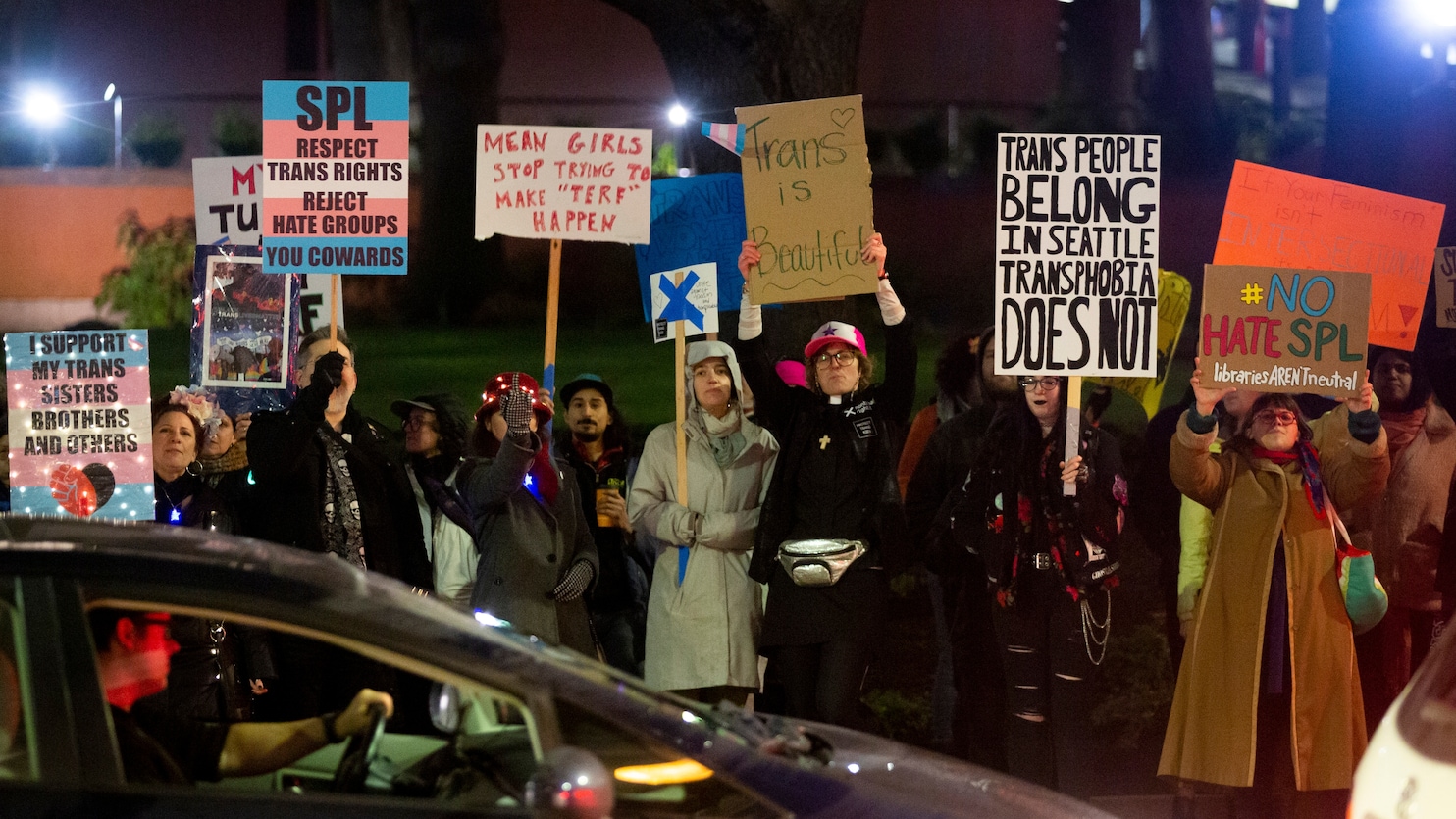
What if I told you that the feminist revolution you’ve been fighting for has a gaping, glittering hole in its center—one that’s been quietly sabotaging the movement from within? Not with malice, not with intent, but with the stubborn inertia of tradition? The truth is, feminism has spent decades wrestling with the ghosts of its own exclusions, and none are more glaring than the erasure of trans lives. If feminism is to be the thunderous force for liberation it claims to be, it must stop treating trans rights as an afterthought and start centering them as the very heartbeat of its struggle. But how do we bridge this divide without fracturing the movement further? Let’s unravel this paradox together.
The Myth of the “Natural” Woman and the Tyranny of Biological Essentialism
Feminism has long been haunted by the specter of biological determinism—the idea that womanhood is a fixed, immutable essence, locked behind the iron gates of chromosomes and reproductive anatomy. This myth, draped in the robes of “science” and “tradition,” has been wielded like a cudgel to exclude trans women from feminist spaces. But what if I told you that this so-called “natural order” is itself a fabrication, a carefully constructed narrative to maintain patriarchal control? The female body, after all, has been redefined, medicalized, and policed for centuries—from the witch trials to the forced sterilizations of marginalized women. If feminism is to be truly intersectional, it must dismantle the illusion that womanhood is a biological monolith and instead embrace the radical truth: womanhood is a spectrum, a lived experience, a constellation of identities that defy neat categorization.
Consider the trans woman who is told she doesn’t belong in feminist circles because she wasn’t “born female.” What does that even mean? That her pain, her struggles, her triumphs are somehow less valid because her body didn’t conform to some arbitrary standard? The feminist movement must ask itself: Are we fighting for liberation, or are we merely reinforcing the same oppressive binaries we claim to despise?
The Paradox of Exclusion: How Feminism Became Its Own Worst Enemy
Here’s a provocative thought: What if the most effective way to weaken feminism isn’t through external opposition, but through internal division? By excluding trans women, feminism has not only betrayed its own principles but has also handed its enemies a powerful weapon. Anti-feminist forces gleefully point to these fractures, using them to discredit the entire movement. Meanwhile, trans women—who face some of the highest rates of violence, poverty, and discrimination—are left to navigate a world that tells them they are both invisible and a threat. This isn’t just a moral failing; it’s a strategic blunder. A feminism that cannot protect its most vulnerable members is a feminism that is doomed to fail.
Imagine a world where feminist organizations refused to center trans voices. Where trans women were barred from shelters, excluded from marches, and silenced in discussions about reproductive rights. What would that world look like? It would look like the status quo—a world where power remains concentrated in the hands of the few, where liberation is a privilege, not a right. Feminism must confront this paradox head-on: If it cannot include trans women, it cannot claim to be a movement for all women.
The Radical Possibility of Trans Feminism: A Love Letter to the Future
What if trans feminism isn’t just an addendum to the feminist project, but its most revolutionary iteration yet? Trans feminism challenges the very foundations of patriarchal thought, forcing us to rethink gender, power, and identity in ways that are both terrifying and exhilarating. It asks us to imagine a world where womanhood isn’t defined by oppression, but by joy, by self-determination, by the unapologetic embrace of one’s truth. This is not a fringe idea—it is the logical endpoint of a movement that has always claimed to fight for freedom.
Consider the trans woman of color who is both hypervisible and invisible—a target of both racism and transphobia. Her existence is a living critique of systems that seek to categorize and control. By centering her, feminism doesn’t just become more inclusive; it becomes more radical. It becomes a movement that refuses to compromise, that demands justice not just for some women, but for all women. This is the feminism of the future—a feminism that doesn’t just tolerate trans lives, but celebrates them as essential to its very survival.
The Practical Challenge: How Do We Make It Happen?
Of course, theory is easy. Implementation is where the rubber meets the road. So how do we translate this vision into reality? First, we must confront the gatekeepers—those who cling to exclusionary definitions of womanhood like a life raft in a storm. This means calling out trans-exclusionary radical feminists (TERFs) not just as wrong, but as complicit in the oppression of trans women. It means demanding that feminist organizations adopt trans-inclusive language, policies, and leadership. It means recognizing that reproductive rights are not just about abortion, but about the right to define one’s own body—whether that body is cis or trans.
Second, we must amplify trans voices in every feminist space. This isn’t just about representation; it’s about power. Trans women must be at the forefront of feminist organizing, not as tokens, but as leaders. Their experiences must shape the movement’s priorities, not be relegated to the margins. This requires a fundamental shift in how we think about allyship—one that moves beyond performative support to genuine solidarity.
Finally, we must recognize that this is not a zero-sum game. Centering trans lives doesn’t mean deprioritizing cis women’s struggles. It means recognizing that liberation is not a pie to be divided, but a fire to be stoked. The more we include, the stronger we become. The more we exclude, the weaker we are.
The Uncomfortable Truth: Feminism Without Trans Lives Is No Feminism at All
Here’s the uncomfortable truth: A feminism that excludes trans women is not feminism. It is a hollowed-out shell, a movement that has betrayed its own ideals in the name of tradition. The question we must ask ourselves is not whether we can afford to center trans lives, but whether we can afford not to. The answer is clear. The future of feminism depends on it.
So let’s get to work. Let’s build a feminism that is unapologetically trans-inclusive, that refuses to compromise, that demands justice for all women—regardless of how they define themselves. The revolution will not be televised. But it will be loud. It will be fierce. And it will be trans.











Leave a Comment