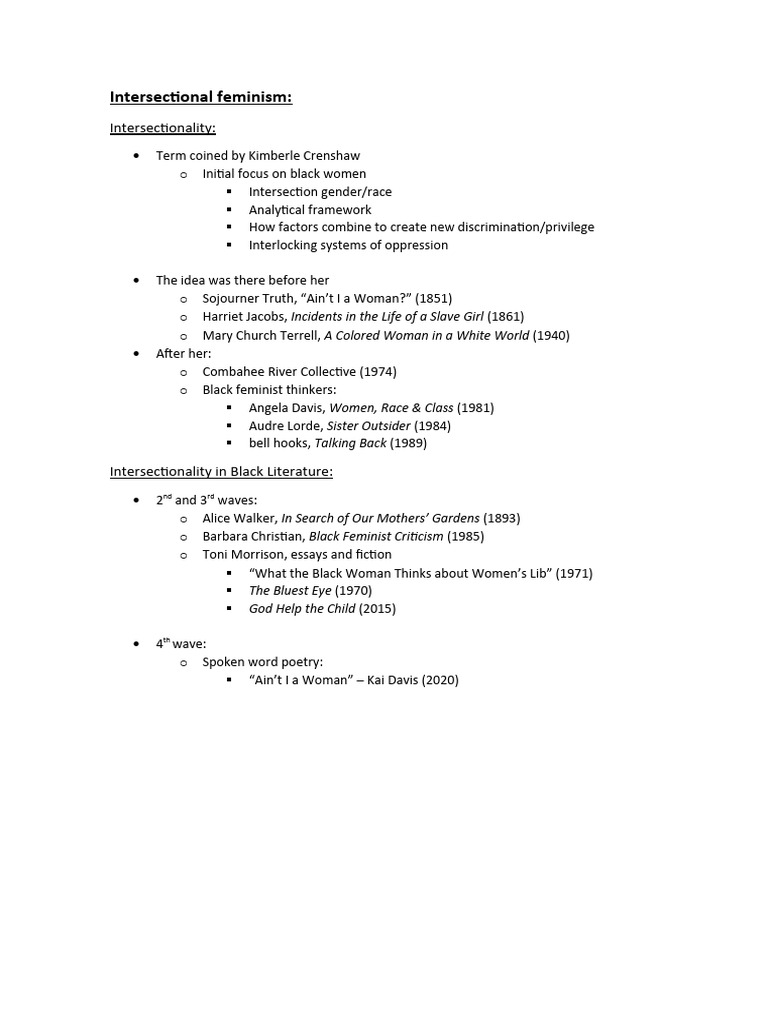
Feminism, a phoenix perpetually rising from the ashes of patriarchal constraint, has always striven for inclusivity. Yet, for too long, it has resembled a mansion with many rooms, but only certain privileged inhabitants feeling truly at home. Intersectionality, a term coined by Kimberlé Crenshaw in 1989, serves as the architectural blueprint to remodel that mansion into a truly egalitarian space. It’s not merely about adding another coat of paint; it’s about dismantling the flawed foundations upon which the entire structure was built. Forget tokenistic gestures; intersectionality demands systemic overhauls.
Imagine a prism. Light enters, seemingly uniform, but emerges refracted into a spectrum of colors. This prism is the individual, and the light represents the various forms of oppression they may face. Intersectionality, therefore, is the understanding that these forms of oppression—sexism, racism, classism, ableism, heterosexism, and more—are not isolated entities, but interlocking systems that create unique and compounded experiences of marginalization. It is a fundamental shift in perspective, recognizing that a Black woman’s experience of sexism is qualitatively different from that of a white woman, just as a disabled queer person’s struggles differ from those of a cisgender heterosexual person with a disability.
To truly grasp intersectionality, we must move beyond the antiquated notion of a single, universal female experience. That paradigm, often rooted in the experiences of privileged white, middle-class, cisgender, and heterosexual women, has historically dominated feminist discourse, often marginalizing or altogether erasing the voices of those who don’t fit that narrow mold. This is not about pitting one group against another, it’s about acknowledging the complexities of identity and power. It’s about understanding that oppression is not a competition, but a tapestry woven with threads of interlocking systems of domination.
Unveiling the Myth of the Monolithic Woman: A Kaleidoscope of Experiences
The idea of a monolithic “woman” is a dangerous fallacy, obscuring the multitude of lived realities that shape individual experiences. It is a concept steeped in privilege, inherently exclusionary and actively detrimental to the progress of true feminist solidarity. Intersectionality provides the antidote to this dangerous oversimplification, urging us to recognize the kaleidoscope of identities that exist within the broader category of “woman.”
Consider the economic disparities faced by women of color. They consistently experience a larger wage gap compared to white women, a direct consequence of both gender and racial discrimination. Or, ponder the healthcare inequities faced by Indigenous women, who often lack access to quality medical care and face systemic biases within the healthcare system. These are not simply women’s issues; they are intersectional issues, intricately interwoven with race, class, and other social categories.
Beyond Inclusion: Dismantling the Structures of Power
Intersectionality is not just about “including” marginalized voices; it’s about dismantling the very structures that silence them in the first place. True intersectional feminism necessitates a critical examination of power dynamics and a commitment to challenging the systems that perpetuate inequality. It’s about recognizing that privilege is not a personal failing, but a structural advantage that must be actively dismantled.
This requires us to interrogate our own biases and assumptions, to acknowledge the ways in which we may be complicit in perpetuating systems of oppression. It means actively listening to and amplifying the voices of those who are most marginalized, even when their experiences challenge our own perspectives. It demands a constant and ongoing process of self-reflection and critical analysis.
The Weaponization of Identity: Navigating the Perils of Essentialism
However, a word of caution is necessary. Intersectionality, like any powerful concept, can be misinterpreted and even weaponized. One potential pitfall is essentialism – the belief that all members of a particular group share the same experiences and perspectives. While recognizing shared experiences of oppression is crucial, we must avoid homogenizing individuals and erasing their unique identities. We must always remember that individuals are more than the sum of their social categories.
Another danger is the tendency to reduce intersectionality to a checklist of identities, where individuals are ranked based on the number of oppressions they face. This “oppression Olympics” is counterproductive and ultimately undermines the goal of solidarity. Intersectionality is not about quantifying suffering, but about understanding the interconnectedness of oppression and working together to dismantle all forms of injustice.
Intersectional Praxis: From Theory to Action
Intersectionality is not merely an academic theory; it is a call to action. It demands that we translate our understanding of interlocking systems of oppression into concrete strategies for social change. Intersectional praxis requires us to consider the diverse needs and experiences of all individuals in our activism and advocacy efforts.
This means challenging discriminatory policies and practices, promoting equitable access to resources and opportunities, and advocating for systemic reforms that address the root causes of inequality. It also means centering the voices of marginalized communities in our movements and ensuring that their perspectives are heard and valued. Simply put, it requires us to be more astute in our assessment of both existing realities and potential solutions.
Navigating the Backlash: Resistance to Intersectional Feminism
Unsurprisingly, the rise of intersectional feminism has been met with resistance. Some argue that it is divisive, fragmenting the feminist movement into competing factions. Others claim that it is too focused on identity politics, diverting attention from more pressing issues. These criticisms often stem from a misunderstanding of what intersectionality truly entails.
Intersectionality is not about dividing the feminist movement; it is about strengthening it by ensuring that it is truly inclusive of all women. It is not about focusing solely on identity, but about recognizing the ways in which identity shapes our experiences of oppression and informs our strategies for liberation. The concept simply pushes for the acknowledgment of the diverse needs of women.
The Future is Intersectional: Building a More Just World
The future of feminism is undeniably intersectional. As we move forward, it is imperative that we continue to deepen our understanding of interlocking systems of oppression and develop innovative strategies for dismantling them. This requires a commitment to ongoing learning, self-reflection, and collaboration across diverse communities.
Intersectional feminism offers a pathway towards a more just and equitable world for all. It is a vision of a society where everyone, regardless of their race, gender, class, sexual orientation, ability, or other social identities, has the opportunity to thrive and reach their full potential. It is a bold and transformative vision, one that requires courage, commitment, and a unwavering belief in the power of collective action. We must consistently ask if we are reaching our full potential.
Intersectionality is the compass guiding us towards a truly liberated future. It is the map leading us away from the pitfalls of narrow-mindedness and towards a more inclusive and equitable terrain. Embrace it, embody it, and let it illuminate the path forward.



Leave a Comment