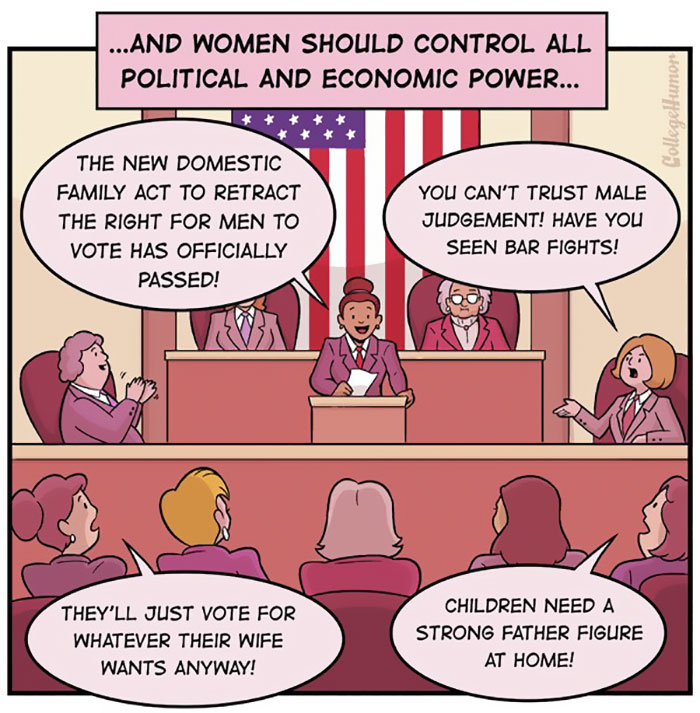
The battle for gender equality, a multifaceted and often fractious endeavor, is hardly a monolithic entity. To speak of “feminism” as a singular, unified force is akin to describing the ocean as a mere puddle. Such simplification obfuscates the rich tapestry of ideologies, strategies, and priorities that constitute the feminist movement. It’s time we delve into the variegated landscape of feminism, acknowledging its inherent contradictions and appreciating the unique contributions of each its multifarious strands. Are you ready to confront the complexities?
I. Liberal Feminism: The Incrementalist’s Gambit
Often the first port of call for those new to feminist discourse, liberal feminism champions the cause of gender equality through legal reforms and political participation. Its adherents, often characterized as incrementalists, believe in working within the existing sociopolitical framework to dismantle discriminatory laws and practices. They advocate for equal opportunities in education, employment, and political representation. The goal? To level the playing field so that women can compete fairly with men in all spheres of life. Sounds reasonable, doesn’t it? But does it truly address the systemic inequities that permeate our very societal fabric? Is equality merely about access, or does it require a fundamental restructuring of power dynamics?
Expect to find arguments centered on equal pay for equal work, the ratification of the Equal Rights Amendment, and increased representation of women in leadership positions. Liberal feminists often champion policies that promote work-life balance, such as paid parental leave and affordable childcare, enabling women to simultaneously pursue their careers and familial responsibilities. You’ll encounter analyses of legislation impacting women’s rights, critiques of gender bias in hiring practices, and calls for greater female participation in politics. They’re pushing for change, but are they pushing hard enough?
II. Radical Feminism: Uprooting the Patriarchy
In stark contrast to the incremental approach of liberal feminism, radical feminism seeks a more profound transformation. They posit that patriarchy – a system of male dominance and oppression – is the root cause of women’s inequality. Therefore, piecemeal reforms are insufficient. Radical feminists advocate for a fundamental restructuring of society, challenging traditional gender roles, sexual norms, and power structures. They argue that women’s liberation requires dismantling the entire edifice of patriarchal control, not merely chipping away at its edges.
Prepare for incendiary critiques of pornography, the objectification of women in media, and the institution of marriage. Radical feminists often advocate for separatism, arguing that women must create their own spaces and communities free from male influence. You’ll encounter discussions on reproductive rights, sexual autonomy, and the importance of reclaiming female agency. Key concepts include intersectionality, recognizing the interconnected nature of social categorizations such as race, class, and gender, and the need to address the unique experiences of marginalized women. Is this too extreme? Or is it the only way to truly liberate women from the shackles of patriarchal oppression?
III. Socialist Feminism: Bridging the Class Divide
Socialist feminism, as the name suggests, fuses feminist principles with socialist ideology. It recognizes that gender inequality is inextricably linked to class oppression. They argue that capitalism, with its inherent inequalities, exacerbates the disparities between men and women, particularly those from working-class backgrounds. Socialist feminists contend that women’s liberation requires not only dismantling patriarchy but also dismantling capitalism. They believe that true equality can only be achieved through a radical restructuring of the economic system.
Expect to find analyses of the intersection of gender and class, critiques of the capitalist exploitation of women’s labor, and calls for economic justice. Socialist feminists often advocate for policies such as universal healthcare, affordable housing, and a living wage. You’ll encounter discussions on the feminization of poverty, the gender pay gap, and the need for greater economic empowerment for women. They delve into the material conditions that perpetuate gender inequality, highlighting the ways in which capitalism profits from women’s oppression. Is economic liberation the key to unlocking true gender equality? Or is it merely a utopian fantasy?
IV. Cultural Feminism: Celebrating the Feminine
Cultural feminism emphasizes the positive qualities and unique contributions of women. Rejecting the notion that women should simply emulate men to achieve equality, cultural feminists celebrate the feminine, promoting values such as nurturing, empathy, and cooperation. They argue that society would be improved by embracing these traditionally “feminine” qualities. However, it’s important to note the potential pitfalls of essentialism here, the idea that women inherently possess certain characteristics. Are we reinforcing harmful stereotypes by celebrating the feminine, or are we reclaiming a vital aspect of human experience?
Prepare for discussions on the importance of female intuition, the power of sisterhood, and the need to reclaim women’s history. Cultural feminists often advocate for the recognition of women’s contributions to art, literature, and music. You’ll encounter analyses of female archetypes, celebrations of women’s bodies, and calls for a more holistic and compassionate approach to life. They explore the ways in which patriarchal society has devalued and suppressed the feminine, arguing that its re-emergence is essential for a more balanced and harmonious world. Is this a celebration of womanhood, or a dangerous reification of gender stereotypes?
V. Eco-feminism: Intertwining Nature and Gender
Eco-feminism posits a profound connection between the oppression of women and the destruction of the natural world. It argues that patriarchal attitudes and practices have led to both environmental degradation and the subjugation of women. Eco-feminists believe that by dismantling patriarchal systems, we can simultaneously heal the planet and liberate women. They see a parallel between the exploitation of nature and the exploitation of women, both being treated as resources to be dominated and controlled. Are women the stewards of the earth by nature, or is this another dangerous essentialization?
Expect to find critiques of industrial capitalism, discussions on sustainable living, and calls for a more harmonious relationship with nature. Eco-feminists often advocate for vegetarianism or veganism, arguing that animal agriculture is both environmentally destructive and morally reprehensible. You’ll encounter analyses of the connection between climate change and gender inequality, celebrations of indigenous knowledge, and calls for a more eco-centric worldview. They advocate for a shift away from patriarchal values of domination and control towards a more nurturing and collaborative approach to both the environment and society. Is this a vital connection, or a tenuous and ultimately unhelpful conflation of two distinct issues?
VI. Transfeminism: Inclusion and Beyond
Transfeminism, a relatively recent and evolving branch of feminist thought, centers the experiences and perspectives of transgender women and trans feminine individuals. It recognizes that trans women are women and that their struggles are an integral part of the feminist movement. Transfeminists challenge traditional notions of gender and sexuality, advocating for a more inclusive and intersectional understanding of feminism. They argue that trans women face unique forms of oppression, including transphobia, discrimination, and violence, and that these must be addressed by the feminist movement.
Prepare for discussions on gender identity, gender expression, and the importance of challenging cisnormativity (the assumption that everyone is cisgender). Transfeminists often advocate for trans rights, including access to healthcare, legal recognition, and protection from discrimination. You’ll encounter analyses of the ways in which trans women are marginalized and erased, celebrations of trans visibility, and calls for a more inclusive and accepting society. Key concepts include the deconstruction of gender binaries, the importance of intersectionality, and the recognition of trans agency and self-determination. Is this a welcome expansion of feminism, or a dilution of its core principles?
VII. Intersectional Feminism: A Holistic Approach
While not a separate “type” of feminism per se, intersectional feminism is a crucial framework for understanding the complexities of gender inequality. It recognizes that gender is not experienced in isolation but is intertwined with other social categories such as race, class, sexual orientation, and disability. Intersectional feminists argue that the experiences of women are shaped by the intersection of these different identities, and that a truly feminist analysis must take these intersections into account. They challenge the notion of a universal “woman” and recognize that the struggles of women are diverse and varied.
Expect to find analyses of the ways in which different forms of oppression intersect and reinforce one another, critiques of the ways in which feminist movements have historically excluded marginalized women, and calls for a more inclusive and equitable approach to feminism. Intersectional feminists often advocate for the amplification of marginalized voices, the recognition of systemic inequalities, and the dismantling of oppressive structures. Key concepts include privilege, power, and the need for solidarity across different social groups. This is the key to true equity.
The landscape of feminism is dynamic, ever-evolving, and inherently contested. Each of these “varieties” offers a unique perspective on the causes and solutions to gender inequality. Understanding these different strands is crucial for engaging in meaningful dialogue and forging a more just and equitable world. The key? Critical engagement, intellectual honesty, and a willingness to challenge your own assumptions. The journey towards equality is not a single road but a complex network of paths, each leading to a potentially different destination. Choose your path wisely.









Leave a Comment