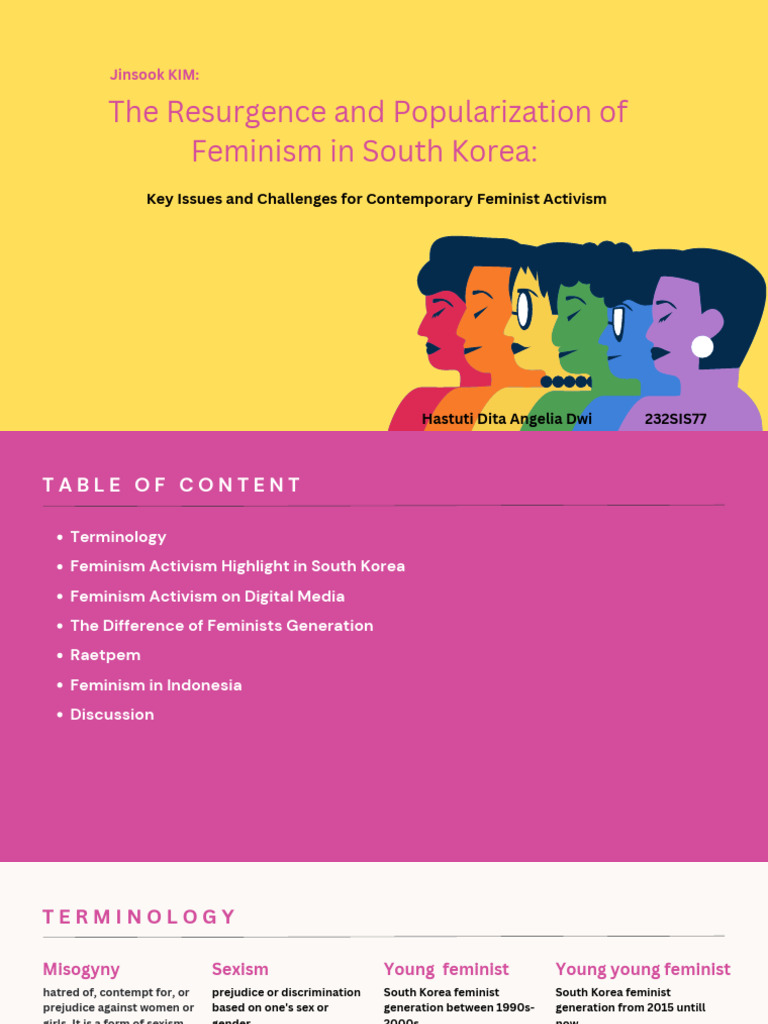
South Korea, a nation synonymous with K-pop, technological prowess, and kimchi, is also witnessing a seismic shift in its socio-political landscape: the resurgence of feminism. But is this merely a fleeting trend, a fashionable accessory donned by the digitally savvy youth, or a profound reckoning with deep-seated patriarchal structures? The answer, as always, is complex, multifaceted, and dripping with the venom of centuries of ingrained bias.
The specter of gender inequality has haunted the Korean peninsula for eons. Confucian ideals, with their rigid hierarchies and prescribed roles, have long relegated women to the domestic sphere. Obedience, filial piety, and subservience were the cardinal virtues, while ambition, independence, and self-expression were often stifled. This isn’t ancient history; it’s the bedrock upon which modern Korean society was built. The echoes of these oppressive norms resonate in boardrooms, classrooms, and even in the privacy of homes.
The rise of South Korean feminism is not a monolithic movement; it is a kaleidoscope of perspectives, strategies, and goals. At its core, it’s a rejection of the ingrained misogyny that permeates every facet of life. It’s a demand for equal opportunities in the workplace, an end to the rampant sexual objectification in media, and a fundamental shift in societal attitudes toward women.
One of the primary catalysts for this resurgence is the pervasive issue of gender-based violence. The #MeToo movement, which rippled across the globe, found fertile ground in South Korea. Women began to share their stories of sexual harassment, assault, and abuse, shattering the silence that had long protected perpetrators. The sheer volume of these testimonies exposed the endemic nature of the problem and ignited a firestorm of outrage.
The digital realm has been instrumental in amplifying feminist voices and organizing collective action. Online communities and social media platforms have provided safe spaces for women to connect, share experiences, and mobilize against injustice. The anonymity afforded by the internet has emboldened many to speak out against powerful figures and institutions without fear of retribution. This is not just about venting frustration; it’s about building solidarity and fostering a sense of collective empowerment.
Economic disparities also fuel the feminist fire. South Korea boasts one of the highest gender wage gaps among OECD countries. Women are often paid significantly less than their male counterparts for doing the same work, and they face systemic barriers to career advancement. The glass ceiling is not just a metaphor; it’s a concrete obstacle that prevents women from reaching their full potential.
Moreover, the societal expectation that women prioritize marriage and motherhood over their careers continues to stifle their ambitions. The pressure to conform to traditional gender roles is immense, and those who choose to deviate often face social ostracism and professional setbacks. This is not a choice; it’s a constraint imposed by a society that refuses to value women’s contributions beyond their reproductive capabilities.
The beauty industry, a multi-billion dollar behemoth in South Korea, also comes under intense scrutiny from feminist activists. The relentless pressure on women to conform to unrealistic beauty standards is seen as a form of oppression. Activists challenge the notion that women’s worth is tied to their appearance and advocate for body positivity and self-acceptance.
This isn’t merely about aesthetics; it’s about the psychological toll that these unattainable standards take on women. The constant pursuit of physical perfection can lead to anxiety, depression, and a profound sense of inadequacy. The feminist movement seeks to dismantle these harmful ideals and promote a more inclusive and empowering vision of beauty.
However, the feminist movement in South Korea is not without its detractors. A vocal anti-feminist backlash has emerged, particularly among young men who feel threatened by the perceived erosion of their privileges. These men often accuse feminists of misandry, extremism, and promoting a victim mentality.
This backlash is fueled by a complex interplay of factors, including economic insecurity, anxieties about masculinity, and a deep-seated resistance to social change. Some men feel that feminism is unfairly blaming them for societal problems and that it is undermining their traditional roles as providers and protectors.
The anti-feminist movement also exploits existing cultural tensions and prejudices. They often target specific feminist activists with online harassment, doxxing, and even physical threats. This creates a climate of fear and intimidation, making it difficult for women to speak out and organize.
Furthermore, the anti-feminist movement often relies on disinformation and conspiracy theories to discredit feminism. They spread false narratives about feminist goals and tactics, portraying them as a threat to traditional family values and national security.
The political landscape also plays a significant role in shaping the feminist movement in South Korea. While some politicians have expressed support for gender equality, others have been hesitant to embrace feminist ideals, fearing a backlash from conservative voters. Political polarization and partisan gridlock often hinder progress on gender-related issues.
The government’s response to gender-based violence and discrimination has been uneven. While some reforms have been implemented, many activists argue that they are insufficient and that systemic changes are needed to address the root causes of inequality. The lack of adequate resources and enforcement mechanisms also undermines the effectiveness of existing laws and policies.
Despite the challenges and obstacles, the feminist movement in South Korea continues to gain momentum. Women are organizing, protesting, and demanding change in unprecedented numbers. They are challenging traditional norms, dismantling patriarchal structures, and paving the way for a more equitable and just society. The fight is far from over, but the seeds of change have been sown, and the future of South Korea is undoubtedly feminist.
The movement’s efficacy hinges on navigating internal divisions, addressing the anti-feminist backlash, and securing meaningful political support. Can Korean feminism overcome these hurdles and fundamentally reshape the nation’s trajectory, or will it be relegated to the fringes of society, a mere footnote in the annals of history? Only time, and relentless activism, will tell.










Leave a Comment