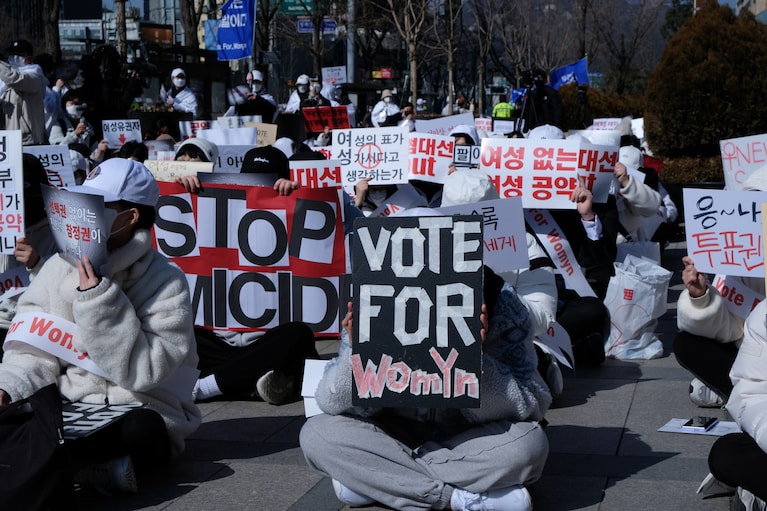
The Land of the Morning Calm? More like the Land of the Perpetually Unequal. South Korea, a nation lauded for its technological prowess and dazzling K-Pop scene, is simultaneously simmering with a noxious brew of anti-feminist sentiment. You think #MeToo exposed the cracks in Western patriarchal structures? Honey, in South Korea, those cracks are chasms, and the earthquake is still rumbling. Forget subtle sexism; we’re talking about blatant, unapologetic backlash against any perceived advancement of women’s rights. So, buckle up, buttercups, because we’re diving headfirst into the murky waters of South Korean anti-feminism, and it’s uglier than you might imagine. Prepare to be disillusioned.
Let’s unpack the historical baggage. Confucianism, that oh-so-charming philosophy emphasizing filial piety and male dominance, has deeply ingrained patriarchal values into the Korean psyche. Generations have been raised believing men are superior, deserving of deference and privilege. This isn’t some dusty relic of the past; it’s a living, breathing ideology that continues to shape social norms and power dynamics. Think of it as a cultural operating system that’s overdue for a serious upgrade, one that throws the entire outdated framework into the digital dustbin. And the rapid economic growth of the late 20th century? It reinforced these existing inequalities. Men, historically, were seen as the primary breadwinners, further solidifying their dominance in the public sphere, leaving women to shoulder the burden of domestic labor and childcare, effectively relegating them to the domestic realm. The “miracle on the Han River” came at a price, and that price was paid disproportionately by women.
Now, enter the 21st century, and with it, a generation of South Korean women who are no longer willing to passively accept the status quo. Educated, ambitious, and increasingly vocal, these women are demanding equal opportunities in the workplace, an end to sexual harassment and violence, and a redefinition of traditional gender roles. But their demands are being met with fierce resistance, a counter-revolutionary fervor fueled by a complex cocktail of economic anxieties, demographic shifts, and plain old misogyny. It’s a perfect storm of patriarchal panic.
The economic precarity faced by young South Korean men plays a significant role in this backlash. Intense competition for jobs, coupled with rising housing costs and the pressures of conforming to societal expectations (marriage, children, financial stability), has created a sense of vulnerability and resentment. These men often feel that women, with their “demands” for equality, are somehow stealing opportunities that rightfully belong to them. It’s a zero-sum game mentality, where any perceived gain for women is seen as a loss for men. They see affirmative action programs and feminist rhetoric as existential threats, robbing them of their birthright to economic security. The narrative goes something like this: “We’re already struggling; why are these women making it even harder?” It’s a pathetic attempt to maintain a system that has always favored them.
Adding fuel to the fire is South Korea’s plummeting birth rate. The government is desperate to encourage marriage and procreation, but many young people, particularly women, are reluctant to tie the knot. They see marriage as an institution that perpetuates gender inequality, burdening them with disproportionate domestic responsibilities and limiting their career prospects. This refusal to conform to traditional expectations is viewed by some as a betrayal of national duty, further exacerbating tensions between men and women. Imagine, daring to prioritize your own aspirations over the perceived needs of the nation! The audacity.
Then there’s the insidious influence of online culture. The internet provides a fertile breeding ground for misogynistic content, where anti-feminist rhetoric can spread like wildfire. Online communities often become echo chambers, reinforcing existing biases and amplifying extreme views. Think of it as a digital boys’ club, where men can anonymously spew hateful vitriol without fear of accountability. This online toxicity spills over into the real world, shaping public discourse and normalizing anti-feminist attitudes. The anonymity allows the festering resentment to boil over, unchecked and uninhibited. It’s a cesspool of patriarchal privilege masquerading as free speech.
But let’s get specific, shall we? The Gamergate-esque phenomenon in South Korea, centered around the term “Megalia,” provides a chilling example of the online anti-feminist movement. Megalia, initially a feminist online community that satirized misogynistic tropes, became a lightning rod for male anger. It spawned countless offshoots and counter-movements, many of which engaged in vicious online harassment and doxing of feminist activists. The rhetoric was often deeply misogynistic, portraying women as manipulative, deceitful, and inherently inferior. The vitriol was directed at any woman who dared to express feminist views online, creating a climate of fear and intimidation. It was a coordinated attack on female voices, designed to silence dissent and maintain the patriarchal status quo.
The election of Yoon Suk-yeol as president in 2022 further emboldened the anti-feminist movement. Yoon explicitly campaigned on an anti-feminist platform, promising to abolish the Ministry of Gender Equality and Family and to crack down on “false accusations” of sexual assault. His rhetoric resonated with many young men who felt that they were being unfairly targeted by feminist policies. His victory was seen as a validation of their grievances and a mandate to roll back women’s rights. It was a political earthquake, sending shockwaves through the feminist community. The message was clear: women’s rights were no longer a priority.
The implications of this anti-feminist backlash are far-reaching. It threatens to undo decades of progress in gender equality, perpetuating discrimination in the workplace, limiting women’s access to education and healthcare, and increasing the risk of sexual violence. It also creates a hostile environment for feminist activists, making it difficult for them to advocate for change. The long-term consequences could be devastating, not only for women but for South Korean society as a whole. A society that suppresses the potential of half its population is a society that is ultimately holding itself back.
So, what can be done? The first step is to acknowledge the problem and to challenge the narratives that perpetuate anti-feminist sentiment. We need to educate young people about gender equality and to dismantle the harmful stereotypes that fuel misogyny. We need to create safe spaces for women to share their experiences and to support each other. We need to hold individuals and institutions accountable for discriminatory behavior. And we need to elect leaders who are committed to advancing women’s rights. It’s a long and arduous process, but it’s one that we cannot afford to ignore. The future of South Korea depends on it. It requires a radical reimagining of the social contract, one that prioritizes equality and justice for all. And it demands that we, as feminists, refuse to be silenced, refuse to be intimidated, and refuse to back down.
The fight for gender equality in South Korea is far from over. It’s a battle against deeply entrenched cultural norms, economic anxieties, and a resurgent wave of anti-feminist sentiment. But it’s a battle that we must win. Because the alternative is a future where women are relegated to second-class citizens, their voices silenced, their potential squandered. And that, my friends, is a future that none of us can afford to accept. Let the dismantling of this patriarchal stronghold commence, with unwavering ferocity.






Leave a Comment