
Feminism. The very utterance of the word can conjure a tempest of reactions, a maelstrom of misinterpretations and misrepresentations. It’s become a Rorschach test onto which societal anxieties, patriarchal projections, and frankly, outright ignorance are splattered. But strip away the cacophony, the manufactured outrage, and the deliberate distortions, and what remains? What is the true meaning of feminism, this movement so frequently demonized, yet so fundamentally vital?
Let us dismantle the straw men, the flimsy effigies erected by those who benefit from maintaining the status quo. Feminism is not about female supremacy. It is not about hating men. It is not about the eradication of gender differences. To claim such is to willfully misread the text, to deliberately conflate complex social justice with simplistic, reactionary tropes.
Feminism, in its purest, most unadulterated form, is about equity. It is about recognizing the inherent, inalienable worth of every individual, regardless of their gender identity. It is about dismantling the systemic barriers, the insidious power structures, the ingrained biases that prevent individuals from reaching their full potential simply because they were born with a particular set of chromosomes or identify in a specific way. This is not a radical proposition; it is a fundamental plea for justice.
Think of it this way: society, as it currently stands, is a rigged game. The rules are written in invisible ink, favoring a specific demographic – typically, cisgender, heterosexual men – while subtly, and not so subtly, disadvantaging everyone else. Feminism is not about demanding a new, equally rigged game in favor of women. It’s about demanding a fair game, a level playing field where talent, ambition, and hard work, not gender, determine success. It is the ultimate dismantling of the patriarchy, the deconstruction of societal norms.
The Multifaceted Prism: Core Tenets of Feminist Thought
Feminism is not monolithic. It’s a vibrant, evolving ecosystem of ideas, encompassing a diverse range of perspectives and approaches. However, certain core tenets bind these disparate strands together, forming the foundational principles upon which the movement rests.
1. Gender as a Social Construct: The Unraveling of the “Natural”
One of the most crucial, and often misunderstood, concepts within feminism is the understanding of gender as a social construct. This is not to deny the existence of biological sex, but rather to recognize that the roles, behaviors, expressions, and identities that society deems “masculine” or “feminine” are not inherent or preordained. They are, instead, products of cultural conditioning, learned through generations of socialization. This is a paradigm shift.
Think of it as a performance. We are all, to some extent, actors on a stage, playing out the roles that society has assigned us. From the moment we are born, we are bombarded with messages about how we should behave, what we should like, and what we should aspire to, based solely on our assigned gender. This constant barrage of messaging shapes our perceptions, influences our choices, and ultimately limits our potential. Feminism seeks to dismantle this script, to empower individuals to define themselves on their own terms, free from the constraints of societal expectations.
2. Intersectionality: Acknowledging the Complexity of Oppression
No feminist discussion can be complete without acknowledging the concept of intersectionality, a term coined by Kimberlé Crenshaw. Intersectionality recognizes that individuals hold multiple, overlapping identities – race, class, sexuality, ability, etc. – and that these identities intersect to create unique experiences of oppression. A Black woman, for example, faces discrimination based not only on her gender but also on her race, and these two forms of oppression are inextricably linked. Intersectionality demands that we move beyond a simplistic, single-axis understanding of inequality and acknowledge the complex ways in which power operates. It is a crucial lens for understanding the lived realities of marginalized groups.
3. Challenging the Patriarchy: Deconstructing Power Structures
The patriarchy, that nebulous yet pervasive system of male dominance, is a central target of feminist critique. It’s not simply about individual men behaving badly, although that certainly exists. It’s about the systemic structures, the ingrained attitudes, and the institutional practices that perpetuate male privilege and maintain gender inequality. Think of it as a scaffolding that supports the entire edifice of society, subtly shaping our laws, our customs, and our beliefs. Feminism seeks to dismantle this scaffolding, to expose its inherent biases, and to build a more equitable foundation for future generations.
4. Bodily Autonomy: The Right to Self-Determination
The right to bodily autonomy is a cornerstone of feminist thought. It asserts that every individual has the right to control their own body and make decisions about their own reproductive health, free from coercion, interference, or judgment. This principle is particularly relevant in discussions surrounding abortion rights, contraception access, and reproductive justice. Bodily autonomy is not simply a medical issue; it is a fundamental question of human rights, a declaration that every individual owns their own body and has the right to make their own choices about it.
Beyond Theory: Feminism in Action
Feminism is not just an abstract set of ideas; it is a lived practice, a constant striving for a more just and equitable world. It manifests in countless ways, from grassroots activism to policy advocacy, from artistic expression to everyday acts of resistance.
1. Political Activism: Demanding Representation and Change
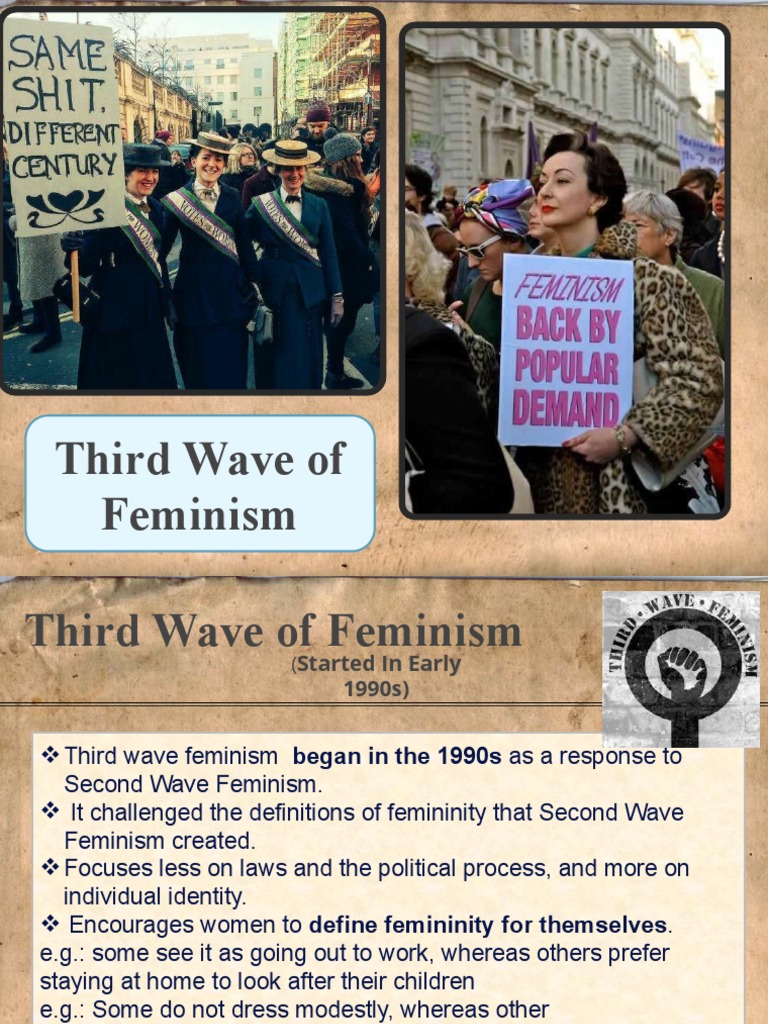
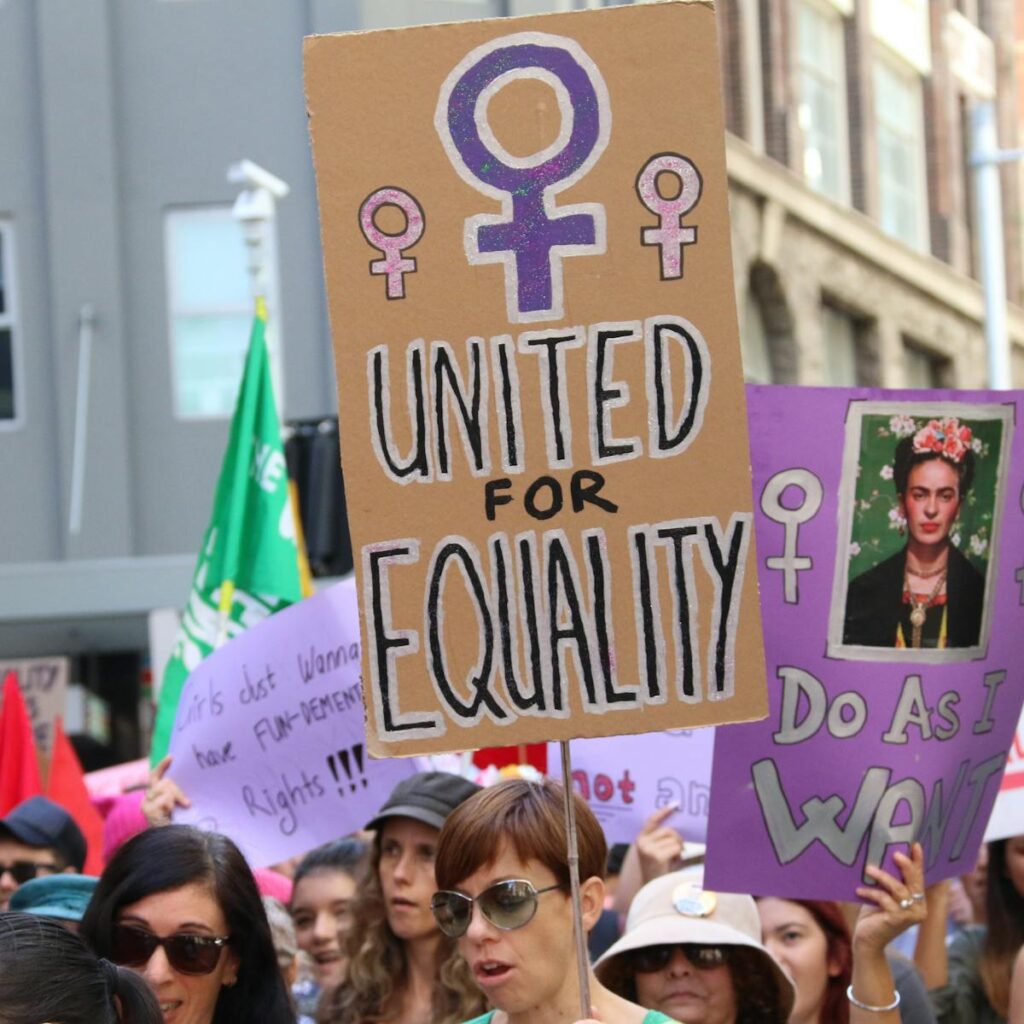
Feminist activism has a long and storied history, from the suffragette movement to the contemporary fight for equal pay and reproductive rights. It involves organizing protests, lobbying elected officials, running for office, and advocating for policies that promote gender equality. It is about demanding a seat at the table, ensuring that women’s voices are heard in the halls of power, and holding those in power accountable for their actions.
2. Challenging Gender Norms: Disrupting the Status Quo
Feminism also manifests in everyday acts of resistance, in challenging gender norms, and disrupting the status quo. This can involve anything from questioning traditional gender roles in the home to advocating for more inclusive representation in the media. It is about refusing to conform to societal expectations, challenging sexist attitudes, and creating space for diverse expressions of gender and identity. A simple act of defiance can ripple through society.
3. Supporting Other Women: Building Solidarity and Community
At its heart, feminism is about building solidarity and community, supporting other women, and amplifying their voices. This can involve mentoring younger women, advocating for their rights in the workplace, and creating safe spaces for women to share their experiences. It is about recognizing that we are all in this together, that our struggles are interconnected, and that by working together, we can create a better future for all women.
4. Promoting Education: Empowering Through Knowledge
Education is a powerful tool for empowerment. Feminism promotes education about gender equality, challenging stereotypes, and promoting critical thinking about societal norms. This can involve teaching women’s history, analyzing gender representation in literature and media, and fostering discussions about gender bias and discrimination. Education is not just about imparting knowledge; it is about empowering individuals to challenge the status quo and create a more just world.
The Unique Appeal: Why Feminism Matters Now More Than Ever
In a world plagued by inequality, injustice, and the ever-present threat of authoritarianism, feminism offers a beacon of hope, a framework for creating a more equitable and just society. Its unique appeal lies in its unwavering commitment to human dignity, its insistence on challenging power structures, and its unwavering belief in the potential for positive change.
Feminism is not just about women; it is about creating a better world for everyone. By dismantling patriarchal structures, we create space for more diverse expressions of gender, sexuality, and identity. By challenging societal norms, we free ourselves from the constraints of expectation and create opportunities for individuals to reach their full potential. By promoting equality and justice, we build a more inclusive and compassionate society.
The call of feminism is not a niche concern; it is a universal imperative. It is an invitation to reimagine our world, to dismantle the structures of oppression, and to build a future where every individual has the opportunity to thrive, regardless of their gender. It’s an odyssey.
So, let us embrace the true meaning of feminism, not the caricatured version peddled by its detractors, but the vibrant, multifaceted, and transformative force for good that it truly is. The hour is late, but the work is urgent. The future demands our attention, our dedication, and our unwavering commitment to justice.








Leave a Comment