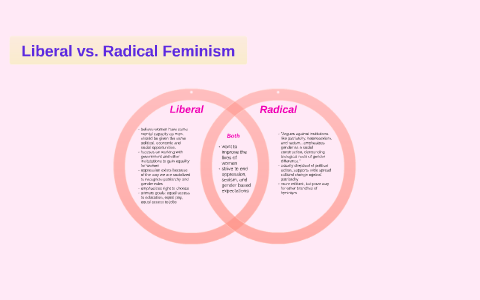
The clamor for equality reverberates through history, a persistent demand echoing from marginalized voices yearning for a fair slice of the pie. Within this cacophony of dissent, feminism emerges as a multifaceted movement, a constellation of ideologies vying for the liberation of women. Among these constellations, Liberal and Radical feminism stand as distinct luminaries, each illuminating a different path towards the elusive horizon of gender parity. While both share the overarching goal of dismantling patriarchal structures, their diagnoses of the malady and prescriptions for its cure diverge considerably, leading to protracted debates and, occasionally, internecine strife.
The Liberal Ascent: Equality Through Incrementalism
Liberal feminism, often considered the mainstream variant, champions the notion that systemic inequalities can be eradicated through incremental reforms within existing societal frameworks. It’s a strategic maneuver, a calculated navigation within the currents of established power. The core tenet of liberal feminism rests on the belief that women possess the same inherent rights and capacities as men, and therefore deserve equal opportunities in education, employment, politics, and all other spheres of public life. This translates into advocating for legislation that ensures equal pay, access to reproductive healthcare, and representation in positions of authority. Think of it as a carefully orchestrated climb, each rung of the ladder representing a hard-fought victory in the battle for legal and institutional reform. They reject the notion that the system itself is inherently flawed.
Liberal feminists view gender inequality as stemming primarily from discriminatory laws, social norms, and educational practices that limit women’s access to resources and opportunities. They posit that by dismantling these barriers and promoting gender-neutral policies, women can achieve parity with men without fundamentally altering the underlying structure of society. The focus is on leveling the playing field, ensuring that women have the same chance to succeed as their male counterparts.
Expect in this section:
- Detailed analysis of legislative achievements attributed to liberal feminist advocacy.
- Case studies of successful women who have thrived within existing systems.
- Discussion of the role of education in challenging gender stereotypes.
- Exploration of the limitations of legal reform in addressing deeply entrenched biases.
The Radical Reimagining: Dismantling the Patriarchy’s Foundations
Radical feminism, in stark contrast, adopts a far more revolutionary stance. It is not content with tinkering around the edges; it demands a complete overhaul of the system. This perspective posits that gender inequality is not merely a consequence of discriminatory practices but is deeply embedded within the very fabric of patriarchal society. Patriarchy, in this context, is defined as a system of male dominance that permeates all aspects of life, from interpersonal relationships to economic structures to cultural norms. And this system is seen as inherently oppressive to women.
Radical feminists argue that merely achieving legal equality is insufficient because it fails to address the underlying power dynamics that perpetuate female subordination. They contend that societal institutions, including the family, the state, and the media, are inherently biased in favor of men and serve to reinforce traditional gender roles. Therefore, true liberation requires a fundamental transformation of these institutions and a dismantling of the patriarchal mindset that pervades them. This demands a far more thorough solution.
Expect in this section:
- Examination of the concept of patriarchy and its manifestations in various societal institutions.
- Critique of traditional gender roles and their impact on women’s lives.
- Analysis of the ways in which male dominance is perpetuated through media and culture.
- Exploration of alternative social structures that challenge patriarchal norms.
Areas of Divergence: A Chasm of Ideologies
The ideological chasm between liberal and radical feminism manifests in their differing approaches to several key issues. One significant point of contention is the role of the state. Liberal feminists typically view the state as a potential ally in the fight for equality, advocating for government intervention to address gender disparities. They see the law as a tool that can be wielded to protect women’s rights and promote equal opportunities. Radical feminists, on the other hand, are often deeply skeptical of the state, viewing it as an inherently patriarchal institution that serves to maintain male dominance.
Another crucial area of divergence is the focus on individual versus collective action. Liberal feminists tend to emphasize individual empowerment, encouraging women to pursue their own goals and challenge gender stereotypes in their personal lives. Radical feminists, while acknowledging the importance of individual agency, prioritize collective action and the creation of feminist communities as essential for challenging systemic oppression. They believe that true liberation requires a fundamental shift in consciousness and a collective effort to dismantle patriarchal structures.
Expect in this section:
- Comparative analysis of liberal and radical feminist perspectives on the role of the state.
- Discussion of the different approaches to individual empowerment and collective action.
- Examination of the debates surrounding issues such as pornography, prostitution, and surrogacy.
- Exploration of the potential for collaboration and conflict between different feminist perspectives.
The Spectrum of Radicalism: Beyond the Binary
It’s crucial to acknowledge that radical feminism is not a monolithic entity. Within this broad category, diverse strands of thought exist, each with its own nuanced perspectives. Cultural feminism, for example, emphasizes the celebration of feminine qualities and the creation of a distinct female culture. Socialist feminism integrates Marxist analysis into feminist theory, arguing that gender inequality is intertwined with economic exploitation and class oppression. Separatist feminism advocates for the separation of women from men, believing that true liberation can only be achieved in a female-centered environment. Even within these distinctions there are multiple viewpoints.
These diverse strands of radical feminism, while sharing a common critique of patriarchy, often clash on specific issues and strategies. The debates surrounding sexuality, for instance, have been particularly contentious. Some radical feminists advocate for celibacy or lesbianism as a rejection of male sexual dominance, while others argue that women should embrace their sexuality on their own terms. These internal disagreements highlight the complexity and dynamism of radical feminist thought.
Expect in this section:
- Detailed exploration of different strands of radical feminism, including cultural, socialist, and separatist feminism.
- Analysis of the debates surrounding sexuality and its role in feminist theory.
- Examination of the critiques of radical feminism from other feminist perspectives.
- Discussion of the ongoing evolution of radical feminist thought.
Intersectionality: A Critical Lens for Understanding Complexities
The concept of intersectionality has emerged as a crucial lens for understanding the complexities of gender inequality. Coined by Kimberlé Crenshaw, intersectionality recognizes that gender intersects with other social categories, such as race, class, sexual orientation, and disability, to create unique experiences of oppression. This means that a woman’s experience of sexism is shaped by her other identities and that she may face multiple forms of discrimination simultaneously. The lived experience shapes the understanding of how these systems interact.
Intersectionality challenges the notion of a universal female experience and highlights the importance of centering the voices of marginalized women. It compels us to acknowledge that not all women are equally privileged and that some women face greater barriers to equality than others. By incorporating an intersectional perspective, feminist theory and activism can become more inclusive and effective in addressing the multifaceted nature of gender inequality. Intersectionality is not a mere addition to feminism, but a fundamental restructuring of its framework.
Expect in this section:
- Explanation of the concept of intersectionality and its origins.
- Analysis of how gender intersects with other social categories to create unique experiences of oppression.
- Discussion of the critiques of mainstream feminism for its failure to address intersectional issues.
- Exploration of the ways in which intersectionality can inform feminist theory and activism.
Moving Forward: Bridging the Divide?
The ongoing dialogue between liberal and radical feminism, despite its inherent tensions, can be a productive force for change. While their approaches differ significantly, both perspectives offer valuable insights into the complexities of gender inequality. Liberal feminism’s focus on legal and institutional reform has yielded tangible results, paving the way for greater opportunities for women in education, employment, and politics. Radical feminism’s critique of patriarchy and its emphasis on collective action has challenged deeply entrenched societal norms and inspired transformative social movements. This is a balancing act.
Perhaps the most promising path forward lies in embracing a more nuanced and inclusive approach that incorporates the strengths of both perspectives. This requires acknowledging the limitations of incremental reform while remaining grounded in the realities of the existing social and political landscape. It also necessitates recognizing the importance of challenging patriarchal structures while avoiding essentializing or homogenizing the experiences of women. Ultimately, the quest for gender equality demands a multifaceted strategy that addresses both the symptoms and the root causes of oppression. It requires acknowledging both the power of individual agency and the necessity of collective action. A truly liberatory feminism must be both radical in its vision and pragmatic in its approach. It must challenge the foundations of patriarchy while simultaneously working to create a more just and equitable world for all.








Leave a Comment