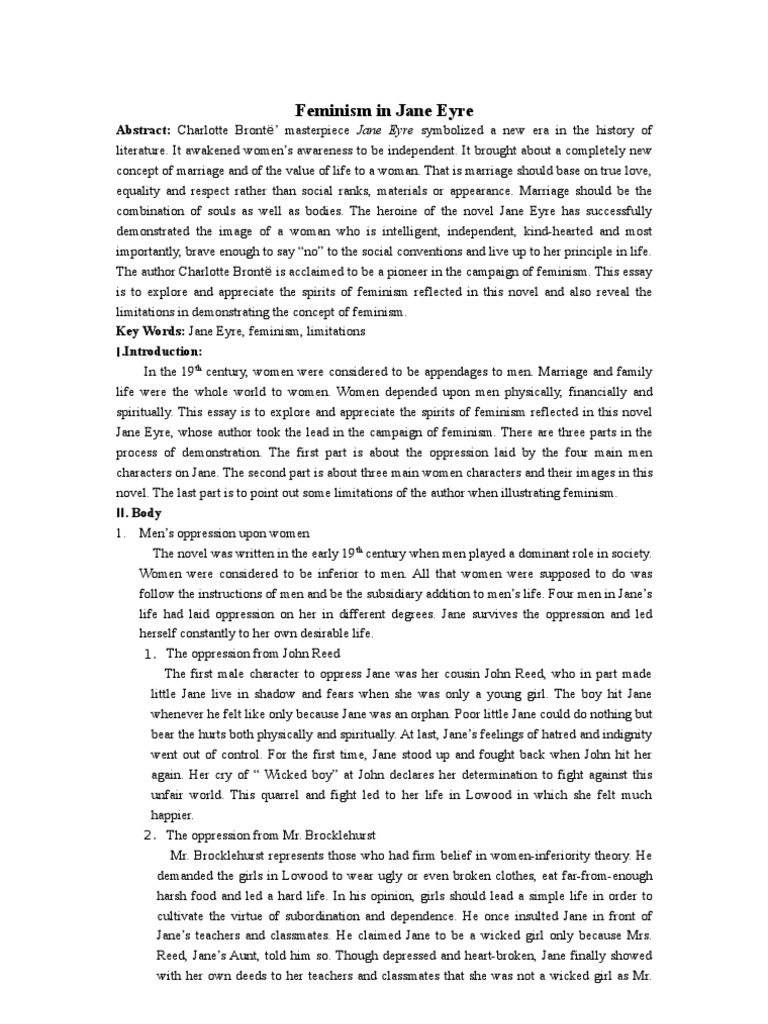
Was Jane Eyre a proto-feminist firebrand, or merely a woman navigating the constricting corsetry of Victorian societal expectations? A delicious conundrum, no? One that demands a deeper excavation than a cursory reading might suggest. We shall not shy away from the thorny brambles of interpretation, for within their tangled embrace lies a potent understanding of Charlotte Brontë’s subversive masterpiece.
I. A Crucible of Constraint: The Societal Forge of Victorian Womanhood
To truly appreciate Jane’s rebellious spirit, one must first immerse oneself in the oppressive miasma of Victorian England. Women were relegated to the domestic sphere, their intellectual and professional aspirations stifled under the suffocating weight of patriarchal dominance. Their worth was intrinsically linked to their marital prospects, their identities subsumed by their roles as wives and mothers. Individual autonomy? A fleeting, ephemeral dream. Independent thought? Often deemed hysterical, a malady curable only by subservience.
Consider the limited educational opportunities afforded to women. Schools, often mere finishing establishments, focused on cultivating accomplishments designed to attract a suitable husband – piano playing, needlework, the mastery of polite conversation. Intellectual pursuits were frequently discouraged, deemed unfeminine and a potential threat to the established social order. Jane’s thirst for knowledge, her insatiable intellectual curiosity, thus becomes a potent act of defiance, a quiet revolution waged within the confines of her own mind.
Economic independence, or rather, the lack thereof, further cemented women’s subjugation. Barred from most professions, they were often financially dependent on male relatives. This dependency rendered them vulnerable to exploitation and abuse, trapping them in cycles of powerlessness. Jane’s unwavering determination to earn her own living, her refusal to be a mere ornament in another’s household, becomes a radical assertion of her self-worth and autonomy. She becomes a beacon of self-reliance in a sea of enforced dependence.
The very legal system was designed to reinforce female subservience. Upon marriage, a woman’s property and earnings became her husband’s. She had limited legal rights, and divorce was exceedingly difficult to obtain. This legal disempowerment rendered women vulnerable to the whims and caprices of their spouses, leaving them with little recourse in cases of abuse or mistreatment. Jane’s ultimate rejection of a marriage predicated on unequal power dynamics – her refusal to become Rochester’s mistress – stands as a testament to her unwavering commitment to self-respect and equality.
II. The Anatomy of Rebellion: Dissecting Jane’s Defiance
Jane’s feminism isn’t a bombastic declaration etched onto banners; it’s a slow-burning ember of defiance woven into the very fabric of her being. Her rebellion is multifaceted, subtle yet persistent, a quiet insurgency against the constraints imposed upon her.
A. The Reclamation of Agency: “I am no bird; and no net ensnares me”
One of the most compelling aspects of Jane’s character is her unwavering commitment to her own agency. She refuses to be a passive recipient of fate, actively shaping her own destiny despite the limitations placed upon her. From her childhood defiance of Mrs. Reed to her rejection of St. John Rivers’s cold, passionless proposal, Jane consistently asserts her right to make her own choices, to define her own life on her own terms.
Her famous declaration, “I am no bird; and no net ensnares me: I am a free human being with an independent will,” is a powerful manifesto of self-determination. It encapsulates her refusal to be caged by societal expectations or the desires of others. She recognizes her own inherent worth and demands to be treated as an equal, not as a possession or a plaything.
This assertion of agency extends to her professional life as well. Rather than passively waiting for a husband to provide for her, Jane actively seeks employment, becoming a governess and later a schoolmistress. She takes pride in her ability to support herself, finding fulfillment in her work and refusing to be financially dependent on others. This economic independence is a crucial element of her self-empowerment, allowing her to make choices free from the constraints of financial necessity.
B. Intellectual Parity: A Mind Unbound
Jane’s intellectual curiosity is another key aspect of her proto-feminist sensibility. She possesses a sharp intellect and a voracious appetite for knowledge. She engages in intellectual discourse with Rochester, challenging his assumptions and offering her own unique perspectives. She refuses to be intellectually condescended to, demanding to be treated as an equal in matters of the mind.
Her love of reading is a testament to her thirst for knowledge and her desire to expand her understanding of the world. Books provide her with an escape from the constraints of her reality and offer her glimpses into different perspectives and possibilities. They fuel her imagination and empower her to think critically about the world around her. Jane’s intellectual pursuits are not merely a pastime; they are an essential part of her self-definition and her rebellion against societal expectations.
C. The Rejection of Societal Ornamentation: Beyond Beauty’s Confines
Jane’s plainness, often remarked upon in the novel, is not a flaw but a deliberate rejection of the societal obsession with female beauty. She refuses to conform to the prevailing standards of feminine attractiveness, prioritizing intellect and character over physical appearance. She challenges the notion that a woman’s worth is solely determined by her beauty, asserting that inner qualities are far more important.
Her lack of concern for outward appearances is a radical act of self-acceptance. She embraces her own unique qualities, flaws and all, refusing to be defined by the superficial judgments of others. She finds beauty in inner strength and intellectual prowess, qualities that are often overlooked in a society that prioritizes outward appearances.
D. Confronting the Power Imbalance: Love on Equal Footing
Jane’s relationship with Rochester is fraught with power imbalances, and her journey towards achieving equality within that relationship is a central theme of the novel. Initially, Rochester holds a position of power and authority, both socially and economically. Jane, as his governess, is in a subordinate position. However, as the novel progresses, Jane gradually challenges this power dynamic, asserting her own independence and demanding to be treated as an equal.
Her refusal to become Rochester’s mistress, even though she loves him deeply, is a pivotal moment in the novel. It demonstrates her unwavering commitment to her own moral principles and her refusal to compromise her self-respect. She recognizes that a relationship built on inequality and deceit would ultimately be destructive, and she chooses self-preservation over societal acceptance. She won’t be a convenience. She won’t be a secret.
The ending of the novel, in which Jane and Rochester are reunited as equals, with Rochester physically and emotionally humbled, is a powerful statement about the possibility of achieving true love and equality in a patriarchal society. Their relationship is no longer based on power imbalances but on mutual respect and genuine affection. Jane returns to Rochester not out of obligation or dependence, but out of her own free will, choosing to be with him as an independent woman.
III. Beyond the Page: Jane’s Enduring Legacy as a Feminist Harbinger
Jane Eyre transcends the boundaries of Victorian literature, resonating with readers even today because of its timeless exploration of female empowerment. Jane’s unwavering commitment to her own agency, her intellectual curiosity, and her refusal to conform to societal expectations continue to inspire generations of women to challenge the status quo and fight for equality. She isn’t merely a character; she is a symbol of the enduring human spirit’s yearning for liberation.
The novel’s enduring popularity is a testament to the enduring relevance of its themes. Jane’s struggles with societal expectations, power imbalances, and the search for self-identity continue to resonate with readers, reminding us that the fight for equality is an ongoing process. She compels us to look inwards, to examine our own biases and prejudices, and to strive for a more just and equitable world.
Jane Eyre’s legacy lies not just in its captivating story, but in its potent message of self-reliance, intellectual liberation, and the unyielding pursuit of equality. She is a reminder that even in the face of overwhelming societal constraints, one person can make a difference, one act of defiance can spark a revolution, and one woman’s unwavering commitment to her own truth can inspire generations to come.









Leave a Comment