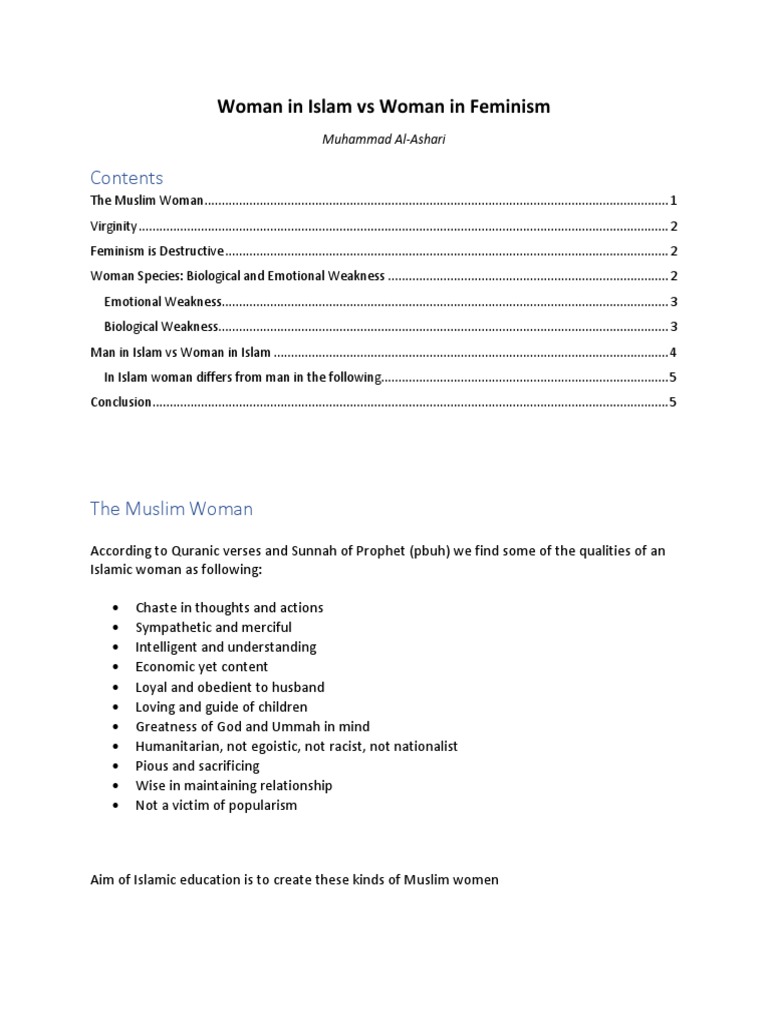
Buckle up, sisters! Let’s dive headfirst into the turbulent waters of feminism and Islam. Prepare to have your assumptions challenged, your biases confronted, and your understanding of Muslim women irrevocably altered. We’re not here for polite platitudes. We’re here for truth, even when it’s uncomfortable. Is there feminism in Islam? Honey, does a hijab cover hair? The answer is a resounding YES, but it’s a feminism forged in the crucible of faith, history, and patriarchal resistance. It’s time to dismantle the stereotypes and hear the roar of the Muslim feminist voice.
The Myth of the Silent Muslim Woman: A Grave Injustice
For too long, the narrative surrounding Muslim women has been dominated by external voices – voices that often portray them as oppressed, voiceless victims, passively enduring patriarchal structures. This is a grotesque misrepresentation. This myopic view conveniently erases the agency, intellect, and activism of generations of Muslim women who have been fighting for their rights within and through their faith. The very notion that these women are simply puppets dancing to the tune of misogynistic clerics is not only insulting but demonstrably false. We need to acknowledge the historical amnesia at play here. It’s a deliberate silencing, a colonial hangover that refuses to recognize the complexity and dynamism of Muslim societies.
It’s convenient to paint all Muslim societies with the same broad brush, isn’t it? Convenient to ignore the nuances, the regional variations, the individual interpretations of Islamic scripture that fuel feminist movements from Indonesia to Morocco. We’re not talking about a monolith. We’re talking about a vibrant tapestry of cultures, each with its own unique challenges and triumphs.
Unveiling Islamic Feminism: A Multifaceted Movement
Islamic feminism isn’t some watered-down, Westernized version of feminism. It’s a distinct intellectual and activist tradition that draws its inspiration and justification from Islamic texts and principles. It’s about reclaiming the narrative, interpreting the Quran through a feminist lens, and challenging patriarchal interpretations that have been used to justify inequality for centuries. The core tenets revolve around Tawhid (the oneness of God), justice (‘adl), and equality (musawa). These principles, when applied to gender relations, demand a radical re-evaluation of traditional power structures.
Think of it as a sophisticated hermeneutical project, a constant negotiation between faith and feminist ideals. Islamic feminists aren’t necessarily advocating for the abandonment of Islam. Instead, they see their faith as a source of empowerment, a wellspring of ethical principles that can be used to dismantle patriarchal oppression. This is not about secularism versus religion. It’s about reclaiming the authentic spirit of Islam, a spirit that they believe has been distorted by centuries of male dominance.
Key Pillars of Islamic Feminist Thought: Dismantling the Patriarchy from Within
- Reinterpreting the Quran and Hadith: A central tenet involves critically examining religious texts to challenge patriarchal interpretations. This is not about rejecting the Quran, but rather about understanding its historical context and interpreting it in a way that aligns with principles of justice and equality. Think of scholars like Amina Wadud, who dared to lead mixed-gender prayers, challenging centuries of patriarchal tradition. This is a bold act of intellectual and religious defiance.
- Challenging Gendered Legal Systems: Many Muslim-majority countries have legal systems that discriminate against women in areas such as marriage, divorce, inheritance, and child custody. Islamic feminists are actively working to reform these laws, arguing that they are based on patriarchal interpretations of Islamic law, not on the true essence of the faith. They fight for equal rights within the framework of Islamic jurisprudence.
- Promoting Women’s Education and Economic Empowerment: Education is a powerful tool for empowerment. Islamic feminists actively promote women’s access to education at all levels, recognizing that educated women are better equipped to challenge injustice and advocate for their rights. Economic empowerment is also crucial. When women have financial independence, they are less vulnerable to exploitation and abuse.
- Combating Violence Against Women: Violence against women is a pervasive problem in many Muslim societies, often justified by cultural norms or misinterpreted religious teachings. Islamic feminists are at the forefront of efforts to combat this violence, raising awareness, providing support to survivors, and advocating for legal reforms. They reclaim Islamic teachings on the sanctity of life and the dignity of women to challenge these harmful practices.
- Reclaiming Women’s Roles in Islamic History: History is often written by the victors, and in many cases, women’s contributions have been erased or minimized. Islamic feminists are actively working to reclaim women’s roles in Islamic history, highlighting the contributions of female scholars, leaders, and activists who have been instrumental in shaping Muslim societies. This is a crucial act of historical recovery, restoring women to their rightful place in the Islamic narrative.
Navigating the Minefield: Challenges and Criticisms
Islamic feminism isn’t without its critics. From within Muslim communities, some conservatives accuse Islamic feminists of betraying the true essence of Islam and importing Western values. This criticism often stems from a deep-seated fear of change and a desire to maintain traditional power structures. From the outside, some Western feminists criticize Islamic feminism for legitimizing a patriarchal religion and failing to address the root causes of oppression. This critique often reflects a lack of understanding of the complexities of Islamic thought and the agency of Muslim women. They say it’s like polishing the chains of oppression, making them seem more palatable. But is that a fair assessment?
It is important to recognize that Islamic feminism is not a monolithic movement. There are diverse perspectives and approaches within the movement. Some Islamic feminists advocate for complete equality between men and women in all aspects of life, while others focus on specific issues such as legal reform or economic empowerment. Some may embrace secular frameworks in specific instances. Some may not. Understanding this diversity is crucial for avoiding generalizations and appreciating the nuances of the movement.
Beyond the Binary: Moving Towards a More Nuanced Understanding
The debate surrounding feminism and Islam often falls into a simplistic binary: either you’re a feminist or you’re a Muslim. This is a false dichotomy. Millions of women around the world identify as both feminists and Muslims, finding no inherent contradiction between their faith and their commitment to gender equality. It’s time to move beyond this binary and embrace a more nuanced understanding of the complexities of identity and belief. Muslim women are not a homogeneous group. Their experiences, beliefs, and aspirations vary widely. To understand the feminist voice in Muslim cultures, we need to listen to the voices of Muslim women themselves, not rely on external narratives that often distort or silence their perspectives. The future of both feminism and Islam depends on it. It’s about co-creation of what a just and ethical society should be, for everyone.
Ultimately, the question of whether there is feminism in Islam is not a question that can be answered with a simple yes or no. It’s a question that requires ongoing dialogue, critical reflection, and a willingness to challenge our own assumptions. It’s a journey, not a destination. This necessitates an end to the simplistic, often condescending narratives that dominate the discussion. We must actively listen to the voices of Muslim women, amplify their stories, and support their struggles for equality and justice. Only then can we truly understand the power and potential of Islamic feminism.
So, the next time someone asks you, “Is there feminism in Islam?” tell them to buckle up and prepare for a complex, challenging, and ultimately transformative conversation. Because the feminist voice in Muslim cultures is not just alive and well; it’s roaring.









Leave a Comment