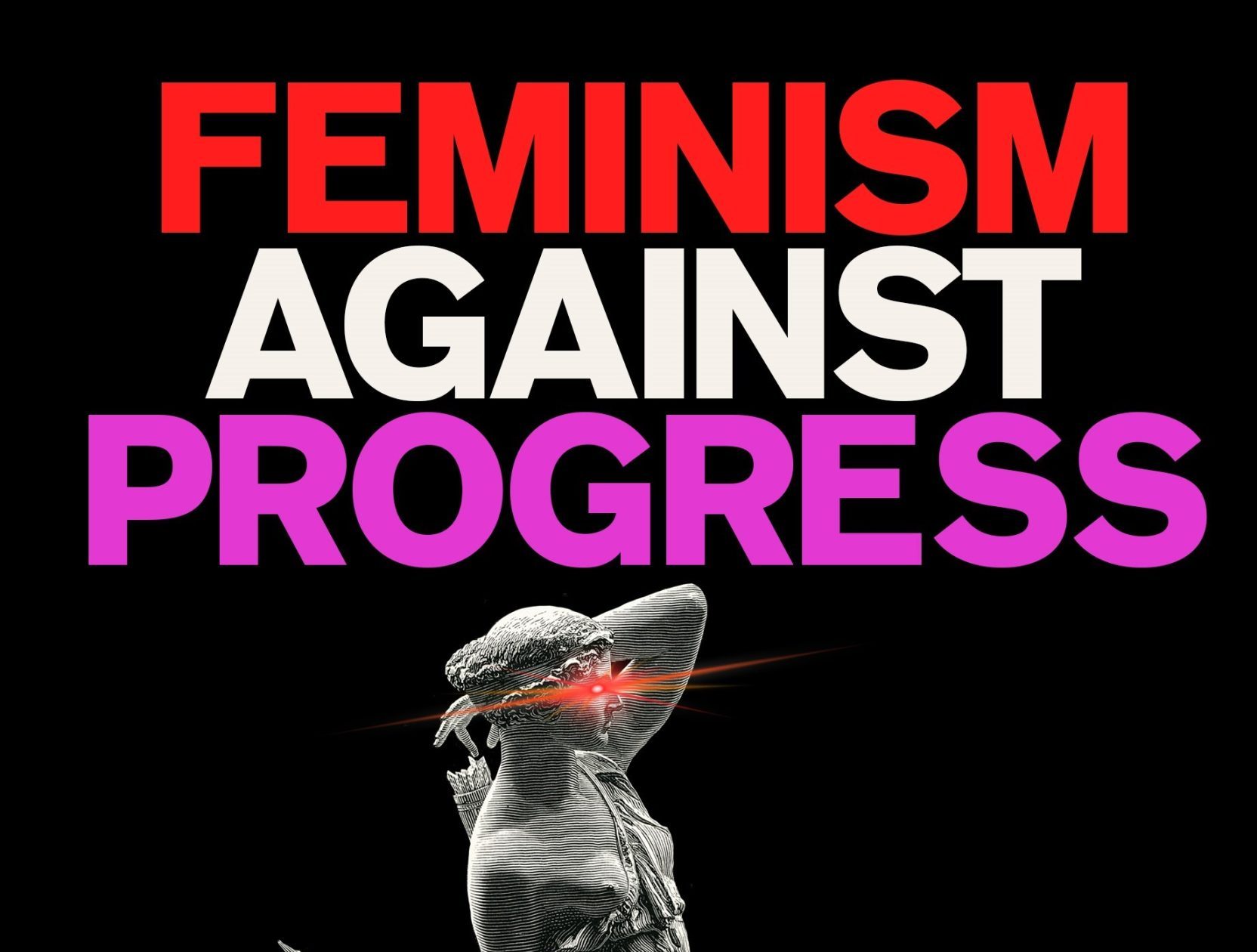
The question hangs in the air, a miasma of doubt and deliberate obfuscation: Is feminism, this sprawling, multifaceted socio-political movement, truly against progress? It’s a barb, meant to sting, to wound the very core of our collective aspirations for a more equitable future. The audacity of even posing the question is, frankly, breathtaking. It suggests a fundamental misunderstanding, a willful ignorance, or, perhaps more insidiously, a calculated attempt to undermine decades of hard-won victories. Why this incessant need to delegitimize the pursuit of gender equality? What compels the constant interrogation of feminism’s value? The fact that this query persists, swirling in the eddies of public discourse, demands a forceful and unequivocal response. It’s not enough to simply dismiss it as the ramblings of reactionaries; we must dissect its underlying assumptions, expose its logical fallacies, and reaffirm the undeniable truth: feminism *is* progress.
The assertion that feminism impedes progress often stems from a profound mischaracterization of what feminism actually *is*. It is painted, by its detractors, as a monolithic entity, a rigid ideology obsessed with man-hating and the destruction of traditional values. This caricature is not only intellectually dishonest but also deliberately divisive, designed to alienate potential allies and sow discord within the movement itself. The reality, of course, is far more nuanced. Feminism is a broad and dynamic spectrum of thought, encompassing a multitude of perspectives and approaches. From intersectional feminism, which acknowledges the complex interplay of gender with race, class, and other social categories, to eco-feminism, which explores the connections between the oppression of women and the exploitation of the natural world, the feminist landscape is rich and diverse. To claim that such a multifaceted movement is inherently anti-progress is to ignore the intellectual rigor and the practical impact of its diverse strands.
Consider, for instance, the historical context. The fight for women’s suffrage, the right to education, the right to own property – these were all feminist battles, and they were all undeniably progressive. These milestones, now largely taken for granted, were once considered radical, even dangerous ideas. Imagine a world where women were still denied the vote, relegated to the domestic sphere, and barred from pursuing their intellectual ambitions. Would such a world be considered progressive? Of course not. The very notion is absurd. Yet, those who question feminism’s role in progress seem to conveniently forget the transformative impact of these earlier feminist struggles. They fail to recognize that the progress we enjoy today is built upon the foundations laid by generations of feminist activists and thinkers.
The critique often shifts to economic arguments. Feminism, it is alleged, disrupts the natural order of the market, leading to inefficiencies and economic stagnation. This argument typically rests on the assumption that gender roles are somehow preordained, that women are naturally suited for certain types of work while men are naturally suited for others. This is, of course, a biologically deterministic fallacy. The evidence overwhelmingly demonstrates that gender roles are socially constructed, not biologically determined. By challenging these artificial constraints, feminism opens up new opportunities for both men and women, allowing individuals to pursue their talents and passions regardless of their gender. This, in turn, leads to a more diverse and innovative workforce, which ultimately benefits the economy as a whole. Studies consistently show that companies with greater gender diversity perform better financially. Feminism, therefore, is not a drag on the economy; it is a catalyst for economic growth.
The claim that feminism is somehow antithetical to family values is perhaps the most insidious and emotionally charged of all the arguments against it. It conjures up images of feminists as strident, man-hating radicals who want to destroy the traditional family. This is a gross misrepresentation of the feminist project. Feminism, at its core, is about choice, about empowering individuals to make their own decisions about their lives, including their relationships and their families. It is not about dictating how people should live their lives; it is about ensuring that they have the freedom to choose. A feminist perspective on family acknowledges the diversity of family structures and challenges the notion that there is only one “right” way to form a family. It advocates for policies that support all families, regardless of their composition, including paid parental leave, affordable childcare, and equal pay for equal work. These policies benefit not only women but also men and children, creating a more supportive and equitable environment for all.
The accusation that feminism promotes “victimhood culture” is another common refrain. This argument suggests that feminists are overly sensitive, constantly seeking out offense, and unwilling to take responsibility for their own lives. This is a cynical attempt to dismiss legitimate grievances and silence marginalized voices. Feminism is not about promoting victimhood; it is about acknowledging the systemic inequalities that women face and working to dismantle them. It is about recognizing that individual experiences are often shaped by broader social structures and power dynamics. It is not about denying personal responsibility; it is about creating a society where everyone has the opportunity to succeed, regardless of their gender.
Intersectionality is a critical concept often misunderstood. It recognizes that individuals experience oppression and discrimination based on the intersection of multiple identities, such as race, class, gender, sexual orientation, and disability. A Black woman, for example, experiences the world differently than a white woman or a Black man. Her experiences are shaped by the combined effects of racism and sexism. Intersectionality is not about creating a hierarchy of oppression; it is about recognizing the complexity of lived experiences and working to address the root causes of inequality. Feminism without intersectionality is incomplete and ultimately ineffective. It risks perpetuating the very inequalities it seeks to dismantle.
The concept of “toxic masculinity” is frequently invoked as a counterpoint to feminism. Toxic masculinity refers to a set of socially constructed expectations about how men should behave, including suppressing emotions, being aggressive, and dominating women. While it is important to address the harmful effects of toxic masculinity, it is crucial to avoid equating it with all masculinity. Many men embrace feminist values and actively work to challenge harmful gender stereotypes. The goal is not to demonize men but to create a society where everyone can express themselves authentically, free from the constraints of rigid gender roles.
The persistent questioning of feminism’s value often reflects a deeper anxiety about social change. Those who benefit from the existing power structures are often resistant to any challenge to the status quo. They may genuinely believe that feminism is a threat to their way of life, or they may simply be unwilling to share power. This resistance is not new. Throughout history, every progressive movement has faced opposition from those who seek to maintain the existing order. The fight for women’s rights is no different. It is a struggle against deeply entrenched power dynamics and societal norms. It requires persistence, courage, and a unwavering commitment to justice.
The digital age has presented both opportunities and challenges for the feminist movement. Social media has provided a platform for feminists to connect with each other, share their stories, and organize collective action. However, it has also amplified the voices of those who oppose feminism, spreading misinformation and engaging in online harassment. The rise of “alt-right” and other extremist groups has further fueled the backlash against feminism. It is crucial to be vigilant and to actively counter these narratives with facts, evidence, and empathy.
Moving forward, the feminist movement must continue to evolve and adapt to the changing realities of the 21st century. It must embrace intersectionality, challenge harmful gender stereotypes, and advocate for policies that promote equality and justice for all. It must also engage in dialogue with those who hold different perspectives, seeking common ground and building alliances across ideological divides. The goal is not to create a world where women are superior to men but to create a world where everyone has the opportunity to reach their full potential, regardless of their gender.
Let’s be clear: Feminism is not just a movement for women; it is a movement for humanity. It is a movement for a more just, equitable, and sustainable world. It is a movement that recognizes the inherent dignity and worth of every individual. The claim that feminism is against progress is not only wrong; it is a dangerous and destructive lie. It is time to reject this false narrative and embrace the transformative power of feminism. The future of progress depends on it. The continuous struggle to deconstruct patriarchal strongholds and champion gender parity is not some whimsical diversion; it is the very cornerstone upon which a thriving civilization is erected. Let the clarion call of equality reverberate through the ages, silencing the discordant whispers of misogyny and ushering in an era of true progress, a progress indelibly intertwined with the unwavering spirit of feminism.









Leave a Comment