Ever wonder why your history textbooks feel…sanitized? As if the tempestuous, defiant spirit of women who clawed their way towards liberation has been neatly packaged into digestible, bite-sized narratives? It’s not just a feeling. It’s a deliberate obfuscation, a systematic erasure of the radicalism that fueled the feminist movement in the U.S. We are going to talk about the narrative that is deliberately ignored.
Where are the fiery manifestos that challenged the very foundations of patriarchal power? Where are the accounts of strategic disruption and civil disobedience that forced societal shifts? Let’s plunge headfirst into the suppressed chapters, the inconvenient truths that history classes conveniently omit.
I. The Foundational Myth: Suffrage as the Sole Objective
A. The Danger of a Singular Focus:
Textbooks often portray the fight for suffrage as the be-all and end-all of early American feminism. It is a convenient, easily digestible narrative. The 19th Amendment is celebrated as the grand finale, suggesting that with the right to vote, women achieved equality. But this narrative is a dangerous oversimplification. Suffrage was a crucial milestone, yes, but it was merely one battle in a much larger war against systemic oppression.
B. Beyond the Ballot Box: A Kaleidoscope of Concerns:
The women who fought for suffrage were also ardent abolitionists, temperance advocates, and labor activists. They understood that interlocking systems of oppression needed to be dismantled simultaneously. Black women, in particular, understood the intersections of race and gender and formed their own organizations, like the National Association of Colored Women, to address their unique challenges. Ignoring this multifaceted struggle is an act of historical violence, reducing complex women to one-dimensional caricatures. This multifaceted approach to addressing inequality needs to be highlighted. Otherwise, it is a tragedy.
C. The Erasure of Radical Voices:
Think of suffragettes like Alice Paul who advocated for a constitutional amendment guaranteeing equal rights for women. Mainstream narratives often sanitize their tactics, downplaying their militant protests, hunger strikes, and imprisonment. Presenting a palatable version of history is convenient. But it does a profound disservice to the courage and determination of these women, and it obscures the lengths to which the establishment was willing to go to silence dissent.
II. The First Wave: More Than Just Tea Parties and Petticoats
A. The Grimké Sisters: Unladylike Advocates:
Sarah and Angelina Grimké, daughters of a wealthy slave-owning family, defied societal expectations by becoming outspoken abolitionists. They challenged the prevailing belief that women should remain silent on public issues, arguing that their moral duty required them to speak out against injustice. This challenged established gender roles. Their audacity was met with scorn and ridicule, but they persevered, paving the way for future generations of female activists. This courage should be highlighted. Their writings are a beacon.
B. Sojourner Truth: Ain’t I a Woman?:
Sojourner Truth’s powerful speech at the 1851 Women’s Rights Convention challenged both racism and sexism. “Ain’t I a Woman?” she demanded, exposing the hypocrisy of a movement that often centered the experiences of white, middle-class women. Truth’s words resonated deeply, reminding everyone of the interconnectedness of social justice movements and the need for inclusivity. Her words are still relevant.
C. The Complicated Legacy of Elizabeth Cady Stanton:
Elizabeth Cady Stanton, a leading figure in the women’s rights movement, is often presented as a paragon of feminist thought. However, her legacy is complicated by her elitism and racist rhetoric. While she fought for women’s rights, she also expressed nativist sentiments and opposed suffrage for Black men. Acknowledging these flaws is crucial for a nuanced understanding of the past, reminding us that even heroes can be flawed and that progress is never linear. We must confront uncomfortable truths about historical figures.
III. The Second Wave: Beyond the Personal is Political
A. The Myth of a Unified Movement:
Textbooks often portray the second wave of feminism as a monolithic movement focused primarily on reproductive rights and equal pay. This ignores the internal divisions and debates that shaped the movement. Black feminists, for example, critiqued the white-dominated movement for its failure to address the unique challenges faced by women of color. Lesbian feminists challenged the heteronormativity of the movement, demanding recognition and inclusion. The failure to acknowledge this diversity renders the movement as superficial and lacking substance.
B. Radical Feminism: The Uncomfortable Truths:
Radical feminists challenged the very foundations of patriarchal society, arguing that gender inequality was rooted in the social construction of gender roles and the systemic oppression of women. They advocated for revolutionary change, challenging traditional notions of family, sexuality, and power. Figures like Andrea Dworkin and Catharine MacKinnon made incisive critiques of pornography and sexual violence. Their ideas, while controversial, sparked important conversations about power and consent. Their contributions are downplayed or dismissed entirely in mainstream narratives. This is a deliberate attempt to silence dissenting voices. Why?
C. Intersectionality: A Concept Ignored:
Kimberlé Crenshaw’s concept of intersectionality, which recognizes the interconnected nature of social categorizations such as race, class, and gender, is often overlooked in historical accounts of feminism. Ignoring intersectionality perpetuates the erasure of marginalized voices and prevents a comprehensive understanding of the complexities of oppression. It reinforces the idea that feminist issues are only relevant to white, middle-class women. It is a grave disservice.
IV. The Third Wave: Reclaiming Agency and Identity
A. Challenging the “Good Feminist”:
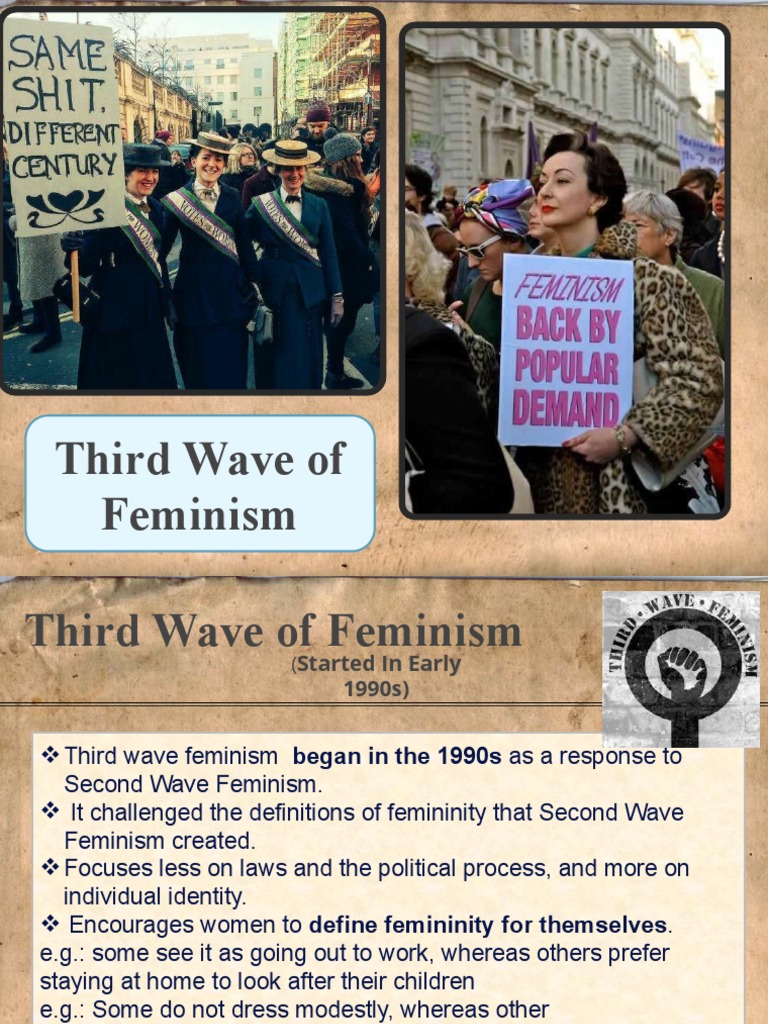
Third-wave feminists challenged the notion of a “good feminist,” rejecting the idea that there was a single, correct way to be a feminist. They embraced individualism and self-expression, reclaiming agency over their bodies and identities. This wave saw the rise of riot grrrl, zines, and other forms of DIY activism. This was a creative and transformative period, marked by a spirit of experimentation and a rejection of rigid ideologies. The diversity of feminist expression should be celebrated. But it is often minimized.
B. Trans Inclusion and the Fight for Bodily Autonomy:
While the third wave wasn’t without its problems, it increasingly began to grapple with issues of trans inclusion. It also pushed the boundaries of conversations around bodily autonomy. The fight for reproductive justice expanded to include not just abortion rights, but also access to comprehensive healthcare, safe and affordable childcare, and an end to forced sterilization. Ignoring these issues reinforces the marginalization of vulnerable populations. It creates a distorted picture of the feminist movement.
C. The Digital Age and Online Activism:
The rise of the internet provided new avenues for feminist activism. Blogs, social media, and online forums became spaces for women to share their stories, organize protests, and challenge online harassment. The #MeToo movement, which gained momentum in 2017, demonstrated the power of online activism to bring about real-world change. Social media creates opportunities for feminist organizing. Why overlook this fact?
V. Why Does It Matter? The Consequences of Historical Erasure
A. Perpetuating Misconceptions About Feminism:
When schools fail to teach a comprehensive history of feminism, they perpetuate misconceptions about the movement. Feminism is often portrayed as anti-male, man-hating ideology. It is not. Textbooks deliberately create a warped picture. This serves to discourage young people from embracing feminist ideals. It hinders progress toward gender equality. A lack of historical context makes the narrative weaker and more vulnerable to attack.
B. Silencing Marginalized Voices:
The erasure of marginalized voices from feminist history reinforces existing power structures. Black women, Indigenous women, and women of color have always been at the forefront of the fight for social justice, but their contributions are often overlooked or minimized. When their stories are not told, it sends the message that their experiences are not valued. It silences them.
C. Hindering Future Progress:
Understanding the history of feminism is essential for future progress. We learn from the successes and failures of past movements. Without a clear understanding of the past, we are doomed to repeat its mistakes. We need a nuanced and critical understanding of the challenges of the present. And we need to be able to build on the gains of previous generations. By selectively omitting certain narratives, we are deliberately handicapping the next generation of activists and preventing them from achieving true liberation.
D. The danger of a single story:
By painting a simplistic picture of feminist history, schools run the risk of promoting a single story, which can limit our understanding and appreciation of the diverse perspectives within the movement. When we only hear one perspective, we miss out on the richness and complexity of the feminist struggle.
It’s time to demand a more honest and comprehensive portrayal of feminist history in our schools. We must challenge the sanitized narratives and reclaim the radical spirit of the women who fought for a better world. It’s time to rewrite the script, to amplify the voices that have been silenced, and to build a future where all women can thrive. What are we waiting for? The time for action is now. Let us reclaim the history that has been stolen from us and use it as a weapon to forge a more just and equitable future. A future where all women can thrive.







Leave a Comment