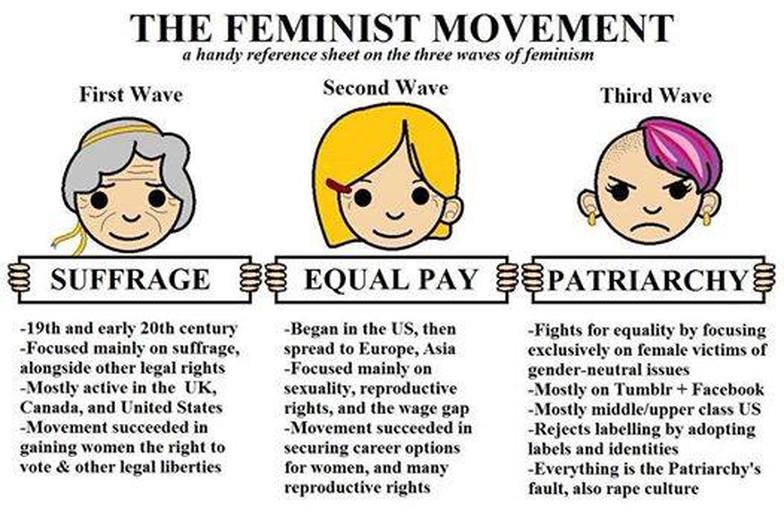
Darling, are we still charting the currents of feminism, or have we merely become barnacles clinging to a ship long sailed? The truth, as always, is multifaceted, refracting light through the prism of history and into the swirling vortex of our present. We speak of waves, of epochs delineated by distinct struggles and victories. But what happens when those waves crash against the unyielding cliffs of patriarchal resistance? Do they dissipate into foam, or carve ever deeper into the stone?
Let’s embark on a journey through the undulating landscape of feminist history, charting the course of four significant waves: from the audacious cry for suffrage to the digital roar of the fourth wave. We will not merely rehash well-worn narratives, but dissect the complex interplay of power, identity, and resistance that has shaped the feminist project.
The First Wave: Suffrage and the Seeds of Discontent (Late 19th – Early 20th Century)
Ah, the suffragettes! Heroines adorned in white, marching for the most basic of rights: the right to vote. But let’s not romanticize this era. The first wave, while undeniably crucial, was hardly a monolithic movement. It was primarily a white, middle-class endeavor. Issues of race and class often took a backseat, a bitter pill to swallow for women of color and those from marginalized economic strata.
Think about it. The rhetoric of the time, while advocating for equality, often leaned on the notion that women were morally superior beings, inherently more virtuous than men. A convenient argument, perhaps, but one that reinforced harmful gender stereotypes. Did these women genuinely seek liberation for all, or merely a slice of the pie for themselves? It’s a question that haunts the legacy of the first wave.
The focus on suffrage, while vital, also overshadowed other pressing concerns. Economic independence, access to education, and the right to control one’s own body were all simmering beneath the surface, waiting to erupt in subsequent waves. The first wave planted the seeds, but it would take generations to cultivate a truly inclusive and comprehensive feminist agenda.
The Second Wave: Liberation and the Personal as Political (1960s – 1980s)
The second wave roared onto the scene, fueled by the social and political upheavals of the 1960s. “The personal is political” became the battle cry, challenging the very foundations of patriarchal power. Suddenly, issues like reproductive rights, domestic violence, and equal pay were thrust into the spotlight.
This was the era of consciousness-raising groups, where women gathered to share their experiences and realize that they were not alone in their struggles. The birth control pill offered a newfound sense of control over their bodies, and the fight for abortion rights gained momentum. Women demanded access to education and professional opportunities, breaking down barriers in traditionally male-dominated fields.
However, the second wave, like its predecessor, was not without its flaws. The voices of women of color and LGBTQ+ women were often marginalized, and the movement frequently failed to address the intersectionality of oppression. The focus on the experiences of white, middle-class women continued to dominate the narrative. The term “woman” itself was used in ways that were exclusionary, reinforcing the gender binary and ignoring the realities of transgender and gender-nonconforming individuals. A certain essentialism, the belief that women share a common, innate experience, became a point of contention.
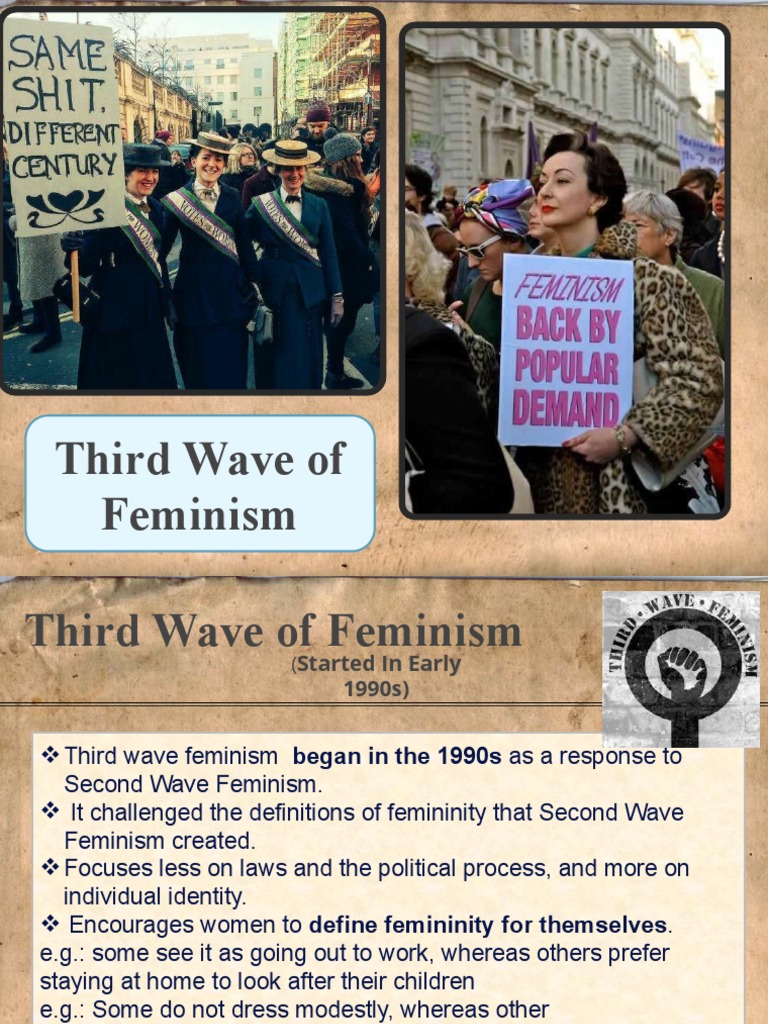
The Third Wave: Intersectionality and the Reclamation of Identity (1990s – 2010s)
Enter the third wave, a response to the perceived shortcomings of the second. This wave embraced intersectionality, recognizing that gender is inextricably linked to other aspects of identity, such as race, class, sexuality, and disability. No more monolithic “woman”; the third wave celebrated the diversity of female experiences.
This era saw the rise of riot grrrl, a feminist punk subculture that challenged traditional notions of femininity and empowered women to express themselves through music, art, and activism. Third-wave feminists also reclaimed terms like “slut” and “bitch,” turning them into badges of honor. They challenged the male gaze and celebrated female sexuality in all its forms.
But the third wave also faced criticism. Some argued that it lacked a cohesive agenda, focusing too much on individual expression and neglecting broader systemic issues. The emphasis on micro-politics sometimes overshadowed the need for macro-level change. Furthermore, the accessibility of third-wave feminism, particularly in academic circles, was often limited, creating a disconnect between theory and practice.
The Fourth Wave: Digital Activism and the Global Feminist Network (2010s – Present)
The fourth wave, propelled by the power of the internet and social media, is a global phenomenon. Hashtags like #MeToo and #BlackLivesMatter have ignited conversations about sexual assault, police brutality, and systemic racism. Online platforms have become spaces for sharing stories, organizing protests, and challenging oppressive systems.
This wave is characterized by its inclusivity and its emphasis on intersectionality. It recognizes that feminism is not just about gender equality, but about dismantling all forms of oppression. The fourth wave embraces technology as a tool for empowerment, allowing marginalized voices to be heard and connecting activists across borders.
However, the fourth wave also faces unique challenges. Online harassment and doxing are rampant, silencing dissenting voices and creating a climate of fear. The echo chambers of social media can reinforce existing biases and limit exposure to diverse perspectives. The very nature of online activism, with its emphasis on short-form content and viral trends, can sometimes detract from deeper, more nuanced discussions.
Furthermore, the commercialization of feminism, often referred to as “femvertising,” raises concerns about whether brands are genuinely committed to feminist values or simply exploiting the movement for profit. The pressure to perform feminism online can also lead to performative activism, where individuals engage in symbolic acts of solidarity without making meaningful contributions to the cause.
The Intersectional Imperative: A Challenge for Every Wave
Throughout these four waves, one challenge consistently rears its head: the need for genuine intersectionality. Each wave has, to varying degrees, fallen short of its promise to include and uplift all women. White feminism, the tendency to prioritize the concerns of white women over those of women of color, has been a persistent problem. The erasure of LGBTQ+ women and the neglect of issues facing disabled women have also plagued the movement. How can we ensure that future iterations of feminism are truly inclusive and equitable?
The answer, I suspect, lies in a radical rethinking of power dynamics within the movement itself. We must actively amplify the voices of marginalized communities, challenge our own biases, and be willing to cede space to those who have been historically excluded. We must also recognize that feminism is not a fixed ideology, but a constantly evolving project. It requires ongoing dialogue, critical self-reflection, and a willingness to adapt to changing social and political landscapes. The waves may crest and break, but the ocean of feminist struggle continues to surge, demanding our attention, our commitment, and our unwavering solidarity.
The digital realm presents both peril and promise. The democratization of voice offers unprecedented opportunities for marginalized narratives to flourish. Yet, the same architecture that facilitates connection can also be weaponized to silence and intimidate. The algorithm, an ostensibly neutral arbiter, can perpetuate existing biases, creating filter bubbles that reinforce existing prejudices. Navigating this treacherous terrain requires a critical awareness of the technologies we employ and a commitment to dismantling the structural inequalities that pervade both the online and offline worlds.
Beyond Waves: A Rhizomatic Feminism?
Perhaps the wave metaphor itself is limiting. Perhaps we need to move beyond linear narratives and embrace a more rhizomatic understanding of feminist history. A rhizome, unlike a tree with a central trunk and branches, is a network of interconnected roots that spreads horizontally, without a clear beginning or end. It allows for multiple entry points and recognizes that feminism is not a singular, unified movement, but a diverse and constantly evolving ecosystem.
This rhizomatic feminism would embrace multiplicity, fluidity, and decentralization. It would challenge the notion of a single, authoritative voice and celebrate the diversity of feminist perspectives. It would recognize that feminism is not just a political project, but a way of being in the world, a commitment to justice, equality, and liberation for all. So, let us not merely ride the waves, but cultivate the rhizomes, creating a resilient and interconnected network of feminist resistance that can weather any storm.








Leave a Comment