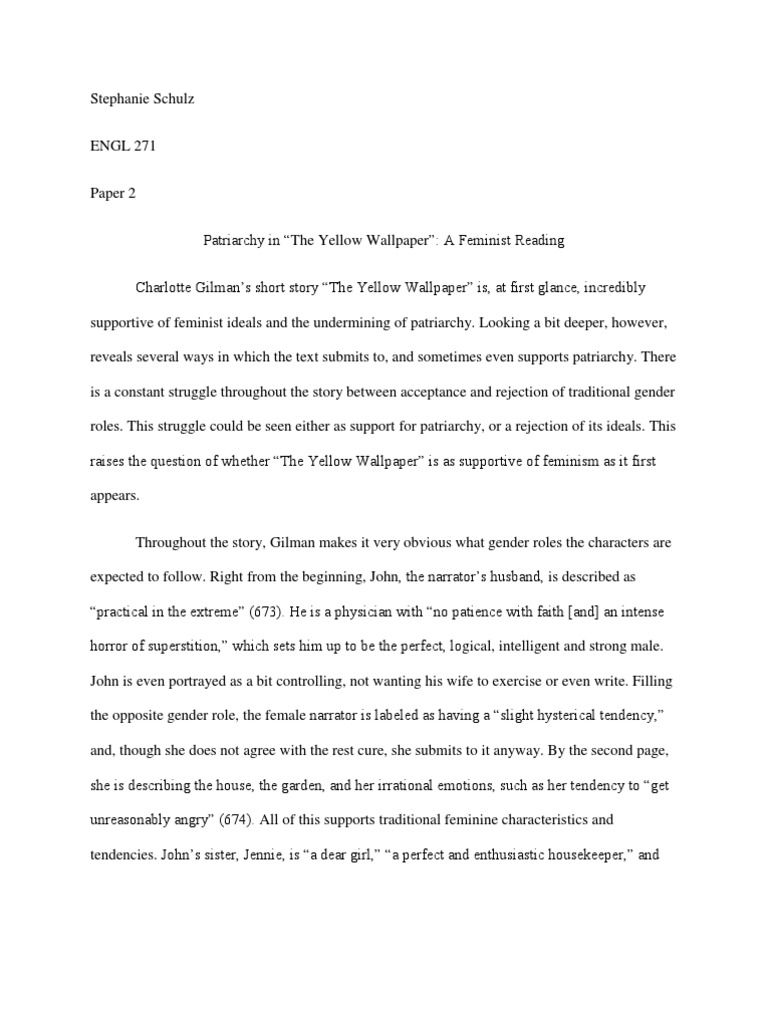
The Yellow Wallpaper. A seemingly innocuous title, yet a harbinger of a chilling descent into madness, meticulously crafted by Charlotte Perkins Gilman. But let’s eschew the surface reading, the easy categorization of a woman succumbing to hysteria. Instead, let’s dissect the patriarchal scaffolding that imprisons her, the insidious gaslighting that suffocates her spirit, and the nascent feminist consciousness that flickers within the oppressive yellow confines. This isn’t just a gothic horror story; it’s a searing indictment of a society that systematically silences and diminishes women. Are you ready to confront the unsettling truth of a woman’s struggle for autonomy against the backdrop of Victorian subjugation?
I. The Architectonics of Oppression: A Domestic Panopticon
The house itself, a relic of colonial excess, is the first weapon. Imagine, if you will, not a sanctuary, but a gilded cage. The narrator, whose name we are pointedly denied, is relegated to a former nursery, a space implicitly designated for childishness and infantilization. Her husband, John, a physician, assumes the role of benevolent guardian, dictating her movements, her thoughts, her very existence. He prescribes rest, forbidding intellectual stimulation, effectively severing her from the world of ideas, the very lifeline of her sanity. A short sentence. How subtly devastating!
This is not merely a husband acting out of misguided concern; it’s a calculated deployment of patriarchal power. John embodies the medical establishment of the time, a bastion of male authority that pathologized female dissent. He diagnoses her with a “temporary nervous depression – a slight hysterical tendency,” a catch-all diagnosis used to dismiss women’s concerns and reinforce their dependence on male expertise. This medicalized misogyny strips her of agency, reducing her to a passive recipient of treatment, devoid of self-determination. The infantilization is deliberate, the control absolute. He calls her “little goose”, a pet name that further diminishes her, highlighting his superior intellect and authority. This dynamic, though unsettling, is not an anomaly; it’s a microcosm of the systemic oppression that pervaded Victorian society.
The yellow wallpaper becomes a potent symbol of this entrapment. Initially repulsive, it soon captivates the narrator’s attention, becoming a canvas for her burgeoning rebellion. The grotesque patterns, the lurid colors, represent the societal expectations and constraints that confine her. But within this apparent chaos, she begins to discern a subversive narrative, a hidden figure trapped behind the superficial design. It’s a reflection of her own condition, a woman stifled by patriarchal norms, desperately seeking an outlet for her creative and intellectual energies.
II. The Deconstruction of Sanity: Gaslighting and the Erosion of Self
The insidious nature of John’s control lies in his systematic gaslighting. He consistently invalidates her feelings, dismissing her anxieties and anxieties as products of her “illness.” He insists that she is getting better, despite her obvious deterioration, creating a reality that contradicts her own lived experience. This constant undermining of her perception erodes her sense of self, making her doubt her own sanity. It’s a psychological warfare, designed to break her spirit and reinforce his dominance. Simple, short, yet devastatingly effective.
Consider the chilling effect of being told repeatedly that your thoughts and feelings are invalid, that your perceptions are distorted. The narrator is not simply experiencing mental illness; she is being actively driven mad by the very person who is supposed to care for her. John’s well-intentioned paternalism becomes a weapon, used to control and subdue her. This is the insidious nature of patriarchal oppression, disguised as benevolent concern. The constant denial of her reality forces her inward, fueling her obsession with the wallpaper.
The wallpaper becomes more than just a symbol; it becomes an obsession, a locus of resistance. As her mental state deteriorates, her fascination with the wallpaper intensifies. She sees a woman trapped behind the bars of the pattern, a representation of her own confinement. This “under-pattern” becomes a focal point for her repressed desires, her yearning for freedom and self-expression. The act of deciphering the wallpaper is an act of rebellion, a reclaiming of her agency in a world that seeks to deny it.
III. The Awakening: A Proto-Feminist Consciousness
Despite the devastating effects of her confinement, the narrator undergoes a profound transformation. Her descent into madness is not simply a tragedy; it’s a catalyst for her feminist awakening. The very act of writing, of keeping a secret journal, is an act of defiance. It allows her to express her thoughts and feelings, to reclaim her voice in a world that seeks to silence her. The journal becomes her sanctuary, a space where she can explore her inner world without fear of judgment or ridicule.
The progression of her obsession with the wallpaper mirrors the development of her feminist consciousness. At first, she is repulsed by its ugliness, reflecting her initial acceptance of societal expectations. But as she delves deeper into its patterns, she begins to discern a hidden narrative, a representation of female oppression. The woman trapped behind the bars becomes a symbol of all women confined by patriarchal norms. The narrator’s identification with this figure marks a crucial turning point in her journey.
The climax of the story is a radical act of liberation. The narrator tears down the wallpaper, freeing the woman trapped within, and in doing so, freeing herself. This is not simply an act of madness; it’s a symbolic rejection of patriarchal constraints. She embraces her “madness” as a form of resistance, a way to defy the expectations and limitations imposed upon her. John’s final collapse at the sight of his wife’s defiance is a powerful indictment of the destructive power of patriarchal control. He, the embodiment of societal authority, is rendered powerless by the woman he sought to subdue.
IV. Beyond the Yellow Room: The Enduring Legacy of Feminist Critique
“The Yellow Wallpaper” is more than just a story; it’s a seminal work of feminist literature that continues to resonate with readers today. It exposes the insidious ways in which patriarchal structures can undermine women’s mental and emotional well-being. It highlights the importance of female autonomy and the right to self-expression. The short story serves as a cautionary tale, reminding us of the dangers of silencing women and denying them agency over their own lives. Consider the long shadow of this oppression across the generations.
The story’s enduring power lies in its unflinching portrayal of the psychological effects of patriarchal oppression. The narrator’s descent into madness is not simply a personal tragedy; it’s a symptom of a systemic problem. The story challenges us to question the societal norms and expectations that contribute to women’s subjugation. It forces us to confront the uncomfortable truth that well-intentioned paternalism can be just as damaging as overt oppression.
Furthermore, “The Yellow Wallpaper” provides a valuable insight into the historical context of women’s mental health. The story critiques the medical establishment’s tendency to pathologize female dissent and to dismiss women’s concerns as products of hysteria. It highlights the importance of listening to women’s voices and taking their experiences seriously. How relevant is this still today? The legacy of this critique continues to inform contemporary discussions about women’s mental health and the need for a more equitable and compassionate approach to treatment.
Ultimately, “The Yellow Wallpaper” is a story of hope and resilience. Despite the devastating effects of her confinement, the narrator finds a way to reclaim her agency and to assert her own identity. Her act of rebellion, though born out of “madness,” is a powerful testament to the human spirit’s capacity for resistance. The story reminds us that even in the face of overwhelming oppression, the fight for freedom and self-determination is always worth pursuing.
The yellow wallpaper, once a symbol of confinement, becomes a symbol of liberation. The act of tearing it down is not merely an act of destruction; it’s an act of creation, a reclaiming of her own narrative. The woman who emerges from behind the wallpaper is not simply mad; she is empowered, defiant, and irrevocably changed. She has broken free from the patriarchal constraints that sought to define her, and in doing so, she has paved the way for other women to do the same. The story ends, but the struggle continues. Is that not the very essence of feminism?









Leave a Comment