The audacity of womanhood! It continues to unsettle, doesn’t it? We see it in the endless think pieces dissecting Taylor Swift’s every breath, in the pearl-clutching over Beyoncé’s unapologetic sexuality, and even in the quiet, simmering resentment directed at women who dare to occupy space, both literally and figuratively. Why this relentless fascination? Is it simply the novelty of a group historically relegated to the margins daring to claim the center? Or is it something far more insidious, a deep-seated anxiety rooted in the unraveling of patriarchal dominance?
Let’s dissect this beast, shall we? Feminism in the United States, a hydra-headed movement that has, for centuries, battled societal stagnation. To understand its future, we must first exhume its past, a past rife with contradictions, compromises, and courageous acts of defiance.
The First Wave: Suffrage and the Illusion of Equality
Picture this: corsets, restrictive both physically and ideologically. The late 19th and early 20th centuries. A time when women were legally, economically, and socially subservient to men. The first wave of feminism, primarily composed of white, middle-class women, centered on a single, potent demand: suffrage. The right to vote. They believed, naively perhaps, that this one act would unlock the floodgates of equality.
Suffrage was undeniably a victory, a chink in the armor of patriarchal control. But let’s not romanticize it. The movement was often exclusionary, prioritizing the concerns of white women while marginalizing the experiences of women of color. Figures like Sojourner Truth, a Black abolitionist and women’s rights advocate, faced constant racism within the movement itself. This inherent flaw, this failure to recognize the intersectionality of oppression, continues to haunt feminism to this day. The 19th Amendment was passed, but it wasn’t a universal liberation. Jim Crow laws continued to disenfranchise Black women, and systemic inequalities persisted across various racial and ethnic groups. The “universal” of universal suffrage was a white-washed abstraction.
The Second Wave: Beyond the Ballot Box – Consciousness Raising and Radical Critique
Fast forward to the 1960s and 70s. The second wave of feminism exploded onto the scene, fueled by the Civil Rights Movement, the anti-war protests, and a growing awareness of the pervasive sexism embedded within American culture. This wave broadened the scope of feminist concerns, moving beyond legal equality to address issues such as reproductive rights, domestic violence, equal pay, and sexual harassment. Betty Friedan’s *The Feminine Mystique* shattered the myth of the happy housewife, exposing the suffocating reality of suburban domesticity. Consciousness-raising groups sprang up across the country, providing safe spaces for women to share their experiences and collectively analyze the patriarchal structures that shaped their lives. “The personal is political” became the rallying cry. It was about challenging power dynamics in every sphere of life, from the bedroom to the boardroom.
Radical feminists pushed the boundaries even further, questioning the very foundations of patriarchal society. They critiqued traditional gender roles, challenged the nuclear family structure, and advocated for female separatism. This era saw the rise of iconic feminist figures like Gloria Steinem, Angela Davis (a Black Communist activist, mind you), and Andrea Dworkin, each contributing their unique perspectives and challenging the status quo in their own ways. But the second wave, too, had its shortcomings. It was often criticized for being too focused on the experiences of white, heterosexual, middle-class women, neglecting the concerns of women of color, lesbians, and working-class women. The concept of “sisterhood” was often invoked, but the reality was far more complex and fractured.
Third Wave Feminism: Embracing Diversity and Deconstructing Identities
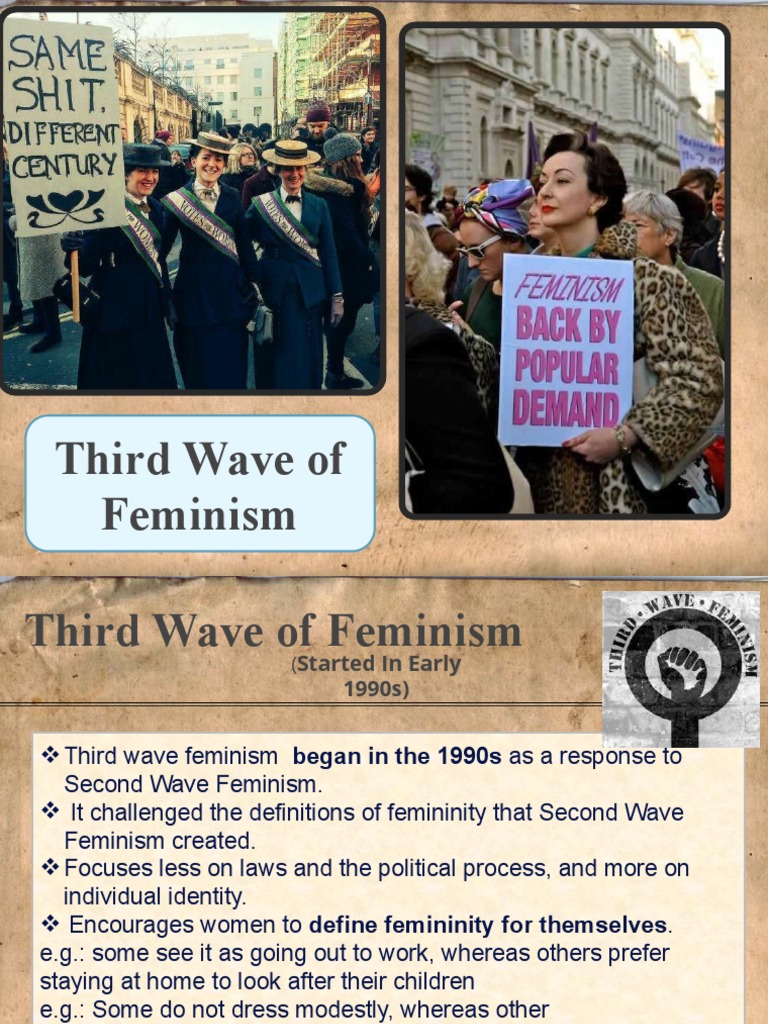
The 1990s ushered in the third wave, a reaction to the perceived limitations of the second wave. This generation embraced diversity, celebrated individuality, and challenged essentialist notions of womanhood. Intersectionality, a term coined by Kimberlé Crenshaw, became a central concept, recognizing that women’s experiences are shaped by multiple, intersecting forms of oppression, including race, class, sexual orientation, and disability.
The third wave was characterized by a more fluid and decentralized approach, utilizing online platforms to connect activists and disseminate information. Riot grrrl, a punk rock feminist movement, emerged as a powerful force, using music and zines to challenge patriarchal norms and amplify the voices of young women. The third wave challenged the very definition of feminism, questioning whether there was a single, unified feminist agenda. It embraced complexity, celebrated contradictions, and acknowledged the multiplicity of female experiences. But this very fluidity also led to accusations of lacking focus and coherence. Critics argued that the third wave had become too individualistic, losing sight of the collective goals of the feminist movement.
The Fourth Wave: Digital Activism and the #MeToo Movement
And now, we find ourselves in the midst of what many call the fourth wave of feminism. Fueled by social media and digital technologies, this wave has brought feminist issues into the mainstream consciousness like never before. The #MeToo movement, sparked by allegations against Harvey Weinstein, exposed the pervasive nature of sexual harassment and assault in virtually every industry. Online platforms have provided a space for survivors to share their stories, hold perpetrators accountable, and demand systemic change.
The fourth wave is characterized by its focus on intersectionality, its use of digital tools, and its emphasis on dismantling systemic inequalities. Online activism has allowed for rapid mobilization and global reach, connecting activists across borders and amplifying marginalized voices. But the digital landscape also presents new challenges. Online harassment, doxing, and cyberbullying are rampant, often targeting women who speak out against injustice. The echo chambers of social media can reinforce existing biases and limit exposure to diverse perspectives. The very accessibility of online platforms can also lead to superficial activism, with performative gestures often prioritized over meaningful change. It is not enough to simply repost a hashtag. We must translate online awareness into offline action.
The Future of Feminism: Beyond Binary Thinking and Towards Collective Liberation
So, what does the future hold for feminism? I posit that it requires a fundamental shift in our thinking, a move beyond binary categories and towards a more nuanced understanding of power and oppression. We must recognize that patriarchy is not just a system that oppresses women, but a system that harms everyone, including men. We must challenge the toxic masculinity that perpetuates violence, promotes emotional repression, and reinforces rigid gender roles.
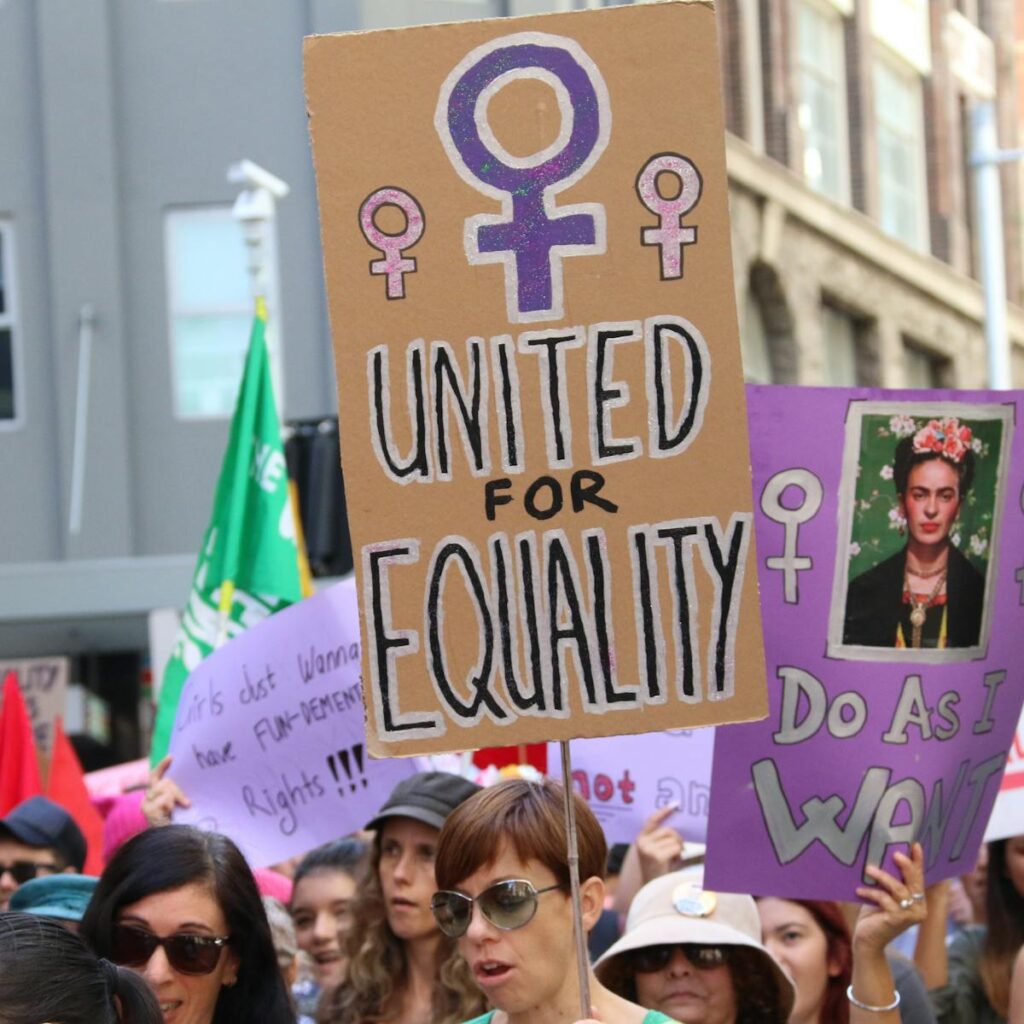
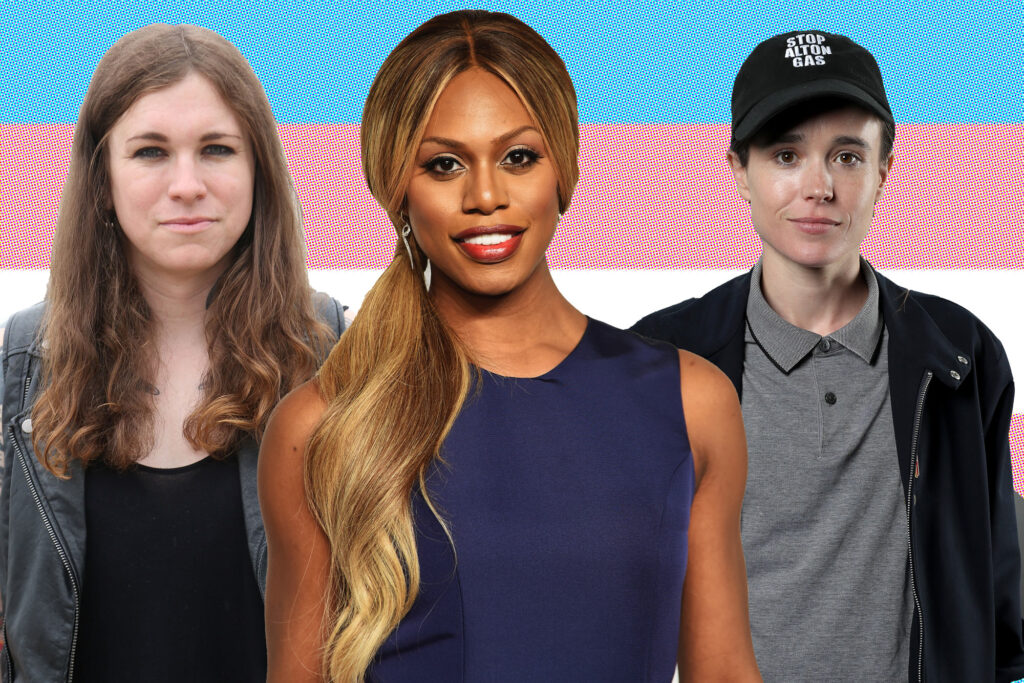
The future of feminism must be explicitly intersectional, centering the experiences of the most marginalized and ensuring that all voices are heard. We must amplify the voices of Black women, Indigenous women, trans women, disabled women, and all those who have been historically excluded from the feminist conversation. We must move beyond the narrow focus on individual achievement and embrace a vision of collective liberation, one that recognizes that we are all interconnected and that no one is free until everyone is free.
This requires a fundamental reimagining of our social, economic, and political systems. We must dismantle the capitalist structures that perpetuate inequality, challenge the carceral state that disproportionately targets people of color, and fight for universal healthcare, affordable housing, and a living wage. We must create a world where everyone has the opportunity to thrive, regardless of their gender, race, class, or sexual orientation.
It is not enough to simply demand equality within the existing system. We must create a new system, one that is based on principles of justice, equity, and sustainability. This is a long and arduous task, but it is one that we must undertake with courage, determination, and unwavering solidarity.
Let us not be lulled into complacency by the illusion of progress. The fight for liberation is far from over. The backlash against feminism is real and it is growing. We must remain vigilant, challenge injustice wherever we see it, and continue to push the boundaries of what is possible. The audacity of womanhood, of demanding a world where we are truly free and equal, must never be extinguished.
The future of feminism is not predetermined. It is up to us to create it. So, let us rise, sisters. Let us rise and claim our power. Let us rise and build a world worthy of our daughters, and our sons.







Leave a Comment