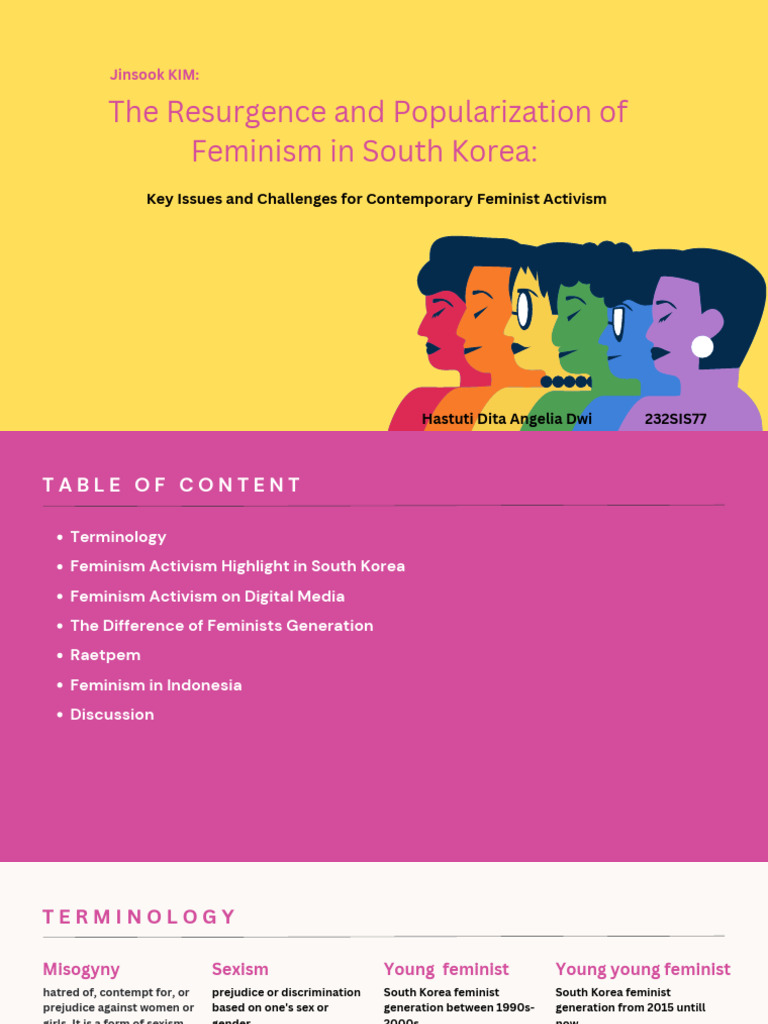
South Korea, a nation renowned for its technological prowess and captivating pop culture, harbors a simmering cauldron of social change, fueled by a burgeoning feminist movement spearheaded by its audacious youth. This isn’t your grandmother’s feminism; this is a fiery, unapologetic wave demanding seismic shifts in a society steeped in patriarchal traditions. Prepare to be challenged, because this is not a gentle discourse, but a battle cry.
This comprehensive exploration will delve into the multifaceted dimensions of this pivotal movement, laying bare the historical context, dissecting the prevailing challenges, spotlighting the strategies employed by these digital-native activists, and ultimately, contemplating the profound implications for South Korea’s future trajectory. We’re not just talking about equal pay; we’re talking about a complete dismantling of systemic oppression.
I. A Historical Tapestry: Weaving the Threads of Tradition and Resistance
Understanding the present requires excavating the past. South Korea’s history is intricately woven with threads of Confucianism, a philosophical and ethical system that, while valuable in some aspects, has historically reinforced hierarchical social structures and gender roles. Women were relegated to the domestic sphere, their voices muted, their ambitions curtailed. The post-Korean War era, marked by rapid industrialization and economic growth, further exacerbated these inequalities. Women were often relegated to low-paying jobs, their contributions undervalued, their potential squandered.
However, seeds of resistance were sown even in these seemingly barren grounds. Early feminist movements, often led by educated elites, challenged discriminatory laws and advocated for women’s education and suffrage. These pioneers paved the way for future generations, laying the groundwork for the current resurgence. Their struggles are not forgotten; they are the bedrock upon which this modern movement stands.
II. The Labyrinth of Patriarchy: Unmasking the Contemporary Challenges
Despite South Korea’s remarkable economic achievements, gender inequality persists as a stubborn blight on its social fabric. The challenges are multifaceted and deeply entrenched, ranging from blatant discrimination in the workplace to insidious cultural norms that perpetuate sexism. Let’s dissect the anatomy of this oppression:
A. The Glass Ceiling and the Gender Pay Gap: South Korean women face significant obstacles in career advancement, encountering a metaphorical glass ceiling that prevents them from reaching leadership positions. The gender pay gap remains stubbornly wide, reflecting the devaluation of women’s labor and the systemic biases that favor men. This isn’t just about money; it’s about recognition and respect.
B. Sexual Harassment and Violence: The prevalence of sexual harassment and violence against women is a deeply troubling issue. The #MeToo movement, while gaining traction globally, faced considerable resistance in South Korea, highlighting the societal norms that often silence victims and protect perpetrators. Justice is not a privilege; it is a right.
C. Hyper-Sexualization and Objectification: The hyper-sexualization and objectification of women in media and popular culture contribute to a toxic environment that normalizes sexism and reinforces harmful stereotypes. The pressure to conform to unrealistic beauty standards further exacerbates the problem, leading to body image issues and mental health challenges. Women are not objects for consumption.
D. The “Corset” Culture: The term “corset” culture encapsulates the societal pressures on women to conform to stringent beauty standards, often involving extensive cosmetic procedures and restrictive dieting. This pursuit of an idealized image is not only physically and mentally taxing but also reinforces the objectification of women. It’s time to break free from these suffocating constraints.
III. Digital Warriors: Forging a New Path Through Cyberspace
The contemporary feminist movement in South Korea is largely driven by digitally savvy young women who utilize the internet and social media as powerful tools for activism and mobilization. They are the architects of a new era of feminist discourse, challenging the status quo with unparalleled ferocity and ingenuity. Let’s examine their arsenal:
A. Online Communities and Solidarity Networks: Online platforms provide safe spaces for women to share their experiences, connect with like-minded individuals, and build solidarity networks. These virtual communities foster a sense of collective empowerment and enable women to amplify their voices. Isolation is the enemy; connection is the weapon.
B. Digital Activism and Hashtag Campaigns: Hashtag campaigns, such as #MeToo and #Escape_The_Corset, have played a crucial role in raising awareness about gender inequality and sparking national conversations. These campaigns provide a platform for victims to share their stories, challenge perpetrators, and demand accountability. The power of a hashtag should never be underestimated.
C. Counter-Narratives and Media Criticism: Feminist activists actively challenge the dominant narratives perpetuated by mainstream media, offering alternative perspectives and critiquing sexist representations of women. They create their own media content, providing platforms for marginalized voices and promoting feminist ideals. The pen, or in this case, the keyboard, is mightier than the sword.
D. Disrupting Traditional Power Structures: These digital warriors are adept at using online tools to disrupt traditional power structures and hold institutions accountable for their sexist practices. They expose instances of discrimination, organize boycotts, and lobby for legislative changes. The old guard is being challenged by a new generation of activists.
IV. The Backlash and the Battleground: Navigating the Hostile Terrain
The feminist movement in South Korea has faced considerable backlash from conservative elements within society, who often perceive it as a threat to traditional values and gender roles. This resistance manifests in various forms, from online harassment and intimidation to organized counter-movements that seek to undermine feminist goals. The fight is far from over; it is a constant struggle against entrenched opposition.
A. Misogynistic Attacks and Online Harassment: Feminist activists are often subjected to vicious misogynistic attacks and online harassment, ranging from hateful comments and threats to doxing and cyberstalking. This online violence aims to silence and intimidate women, discouraging them from speaking out against injustice. But they will not be silenced; they will only grow stronger.
B. The “Anti-Feminist” Movement: A vocal minority of men, often organized online, actively oppose feminist goals and promote anti-feminist ideologies. They often accuse feminists of being man-haters and distort feminist arguments to discredit the movement. This backlash is a testament to the movement’s effectiveness; it wouldn’t be challenged if it wasn’t making progress.
C. Institutional Resistance and Legal Challenges: Feminist activists often encounter resistance from institutions and face legal challenges when they attempt to address gender inequality. Discriminatory laws and practices persist, and the legal system often fails to adequately protect women from violence and harassment. The fight for legal equality is a long and arduous one.
V. A Glimpse into the Future: Reimagining South Korea’s Social Landscape
The feminist movement in South Korea is not merely a fleeting trend; it is a transformative force that has the potential to reshape the nation’s social landscape. The demands for gender equality are growing louder, and the younger generation is increasingly unwilling to accept the status quo. The future of South Korea hinges on its ability to embrace inclusivity and dismantle the structures of patriarchy.
A. Legislative Reforms and Policy Changes: The movement is advocating for legislative reforms that address gender inequality in areas such as employment, education, and healthcare. Policy changes are needed to promote gender equality in leadership positions and ensure equal opportunities for women. The law must be a shield for the vulnerable, not a weapon of oppression.
B. Cultural Shifts and Societal Transformation: The ultimate goal of the feminist movement is to achieve a profound cultural shift that challenges sexist norms and promotes gender equality at all levels of society. This requires a fundamental re-evaluation of traditional gender roles and a commitment to creating a more inclusive and equitable culture. Societal transformation is a marathon, not a sprint.
C. Intersectional Solidarity and Inclusive Feminism: The movement must embrace intersectionality, recognizing that gender inequality intersects with other forms of oppression, such as racism, classism, and ableism. Inclusive feminism is essential to ensure that the needs of all women are addressed, regardless of their background or identity. Solidarity is the cornerstone of progress.
D. The Enduring Legacy of Resistance: The feminist movement in South Korea is not just about achieving specific policy changes; it is about creating a lasting legacy of resistance that will inspire future generations to fight for gender equality. The courage and determination of these young activists are paving the way for a more just and equitable future for all. Their struggle is a beacon of hope, illuminating the path towards liberation.
The boldest youth movement in South Korea is challenging the very foundations of a patriarchal society. These digital warriors are wielding their keyboards as swords, demanding a future where women are not silenced, objectified, or oppressed. The fight is fierce, the opposition is formidable, but the spirit of resistance is indomitable. The future of South Korea depends on it.










Leave a Comment