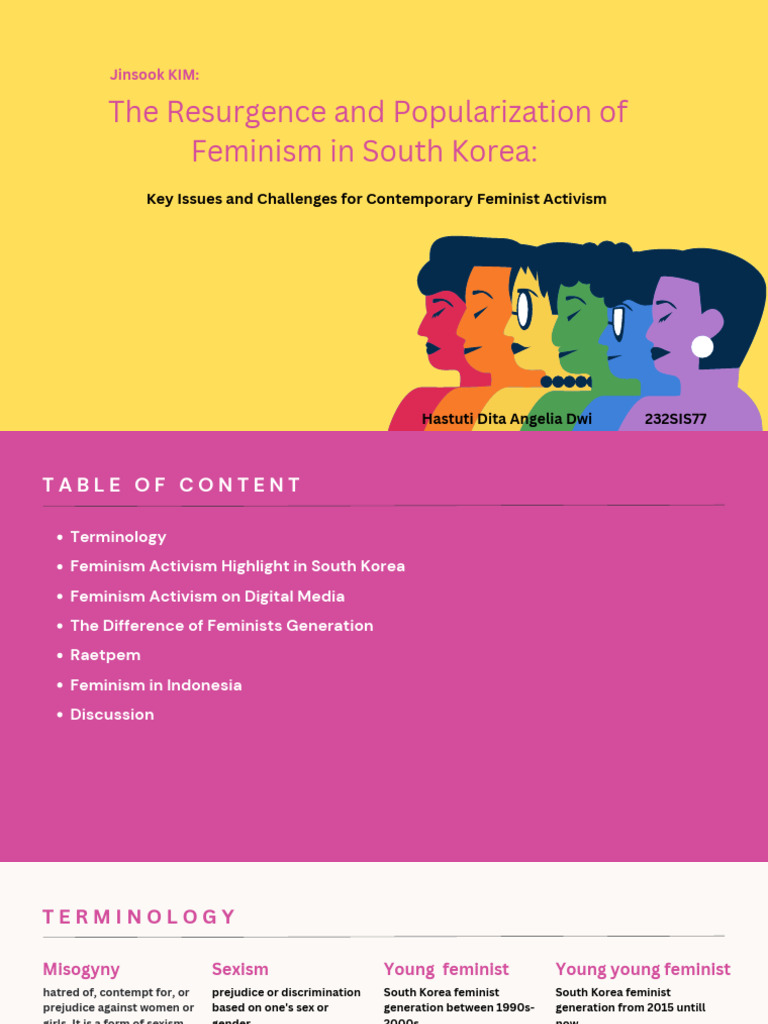
The effervescent rise of youth-led feminism in South Korea is not merely a transient trend, a fleeting fascination plastered across headlines. It’s a seismic shift, a tectonic realignment of the socio-political landscape. Observers from afar often perceive this phenomenon with a mixture of curiosity and cautious optimism, intrigued by its rapid ascent and its seemingly unwavering momentum. What fuels this inferno of defiance? Is it simply a reaction to existing patriarchal structures, or does it represent something far more profound, a deeper reckoning with the historical injustices that have long been simmering beneath the veneer of societal harmony?
This isn’t just about demanding equal pay or representation in boardrooms, though those are undeniably critical battlegrounds. This is about dismantling the very foundations of a system that systematically devalues and marginalizes women. It’s about challenging the insidious norms that permeate every facet of life, from the 가정 (gajeong – family, but carrying connotations of patriarchal expectations) to the workplace. It’s a generational rebellion against the suffocating expectations placed upon young women, a refusal to conform to the outdated script of docile obedience and subservience.
To truly understand the ferocity of this movement, we must delve into the historical context, dissect the intricate web of cultural norms, and examine the lived experiences of young South Korean women. Only then can we begin to grasp the significance of this resurgence and its potential to reshape the future of the nation. This exploration is not merely academic; it is a necessary act of solidarity, a crucial step towards dismantling the oppressive forces that seek to silence and marginalize women worldwide. Let’s begin.
The Crucible of Tradition: Unveiling the Historical Baggage
South Korean society, while undeniably modern and technologically advanced, remains deeply steeped in Confucian values that have historically dictated strict gender roles. The concept of 여성성 (yeoseongseong – womanhood) is often intertwined with notions of purity, submission, and self-sacrifice. This traditional paradigm has created a fertile ground for systemic discrimination, manifesting in various forms, from limited career opportunities to rampant sexual harassment. These historical constraints are not relics of the past; they continue to shape the realities faced by young women today, creating a persistent undercurrent of resentment and fueling the flames of feminist activism. This isn’t ancient history. These are lived experiences.
The patriarchal foundation of the Korean family structure, with its emphasis on male lineage and filial piety, further exacerbates gender inequality. Women are often expected to prioritize the needs of their husbands and children above their own aspirations, reinforcing the notion that their primary role is within the domestic sphere. This expectation, while seemingly benign on the surface, can have devastating consequences for women’s autonomy and economic independence. It’s a gilded cage, built on societal expectations and enforced by subtle but pervasive forms of social pressure.
Furthermore, the legacy of Japanese colonial rule and the subsequent Korean War has left a lasting impact on gender dynamics. The societal upheaval and economic hardship of these periods further solidified traditional gender roles, with women often bearing the brunt of the burden. This historical trauma continues to reverberate through generations, shaping the collective consciousness and contributing to the ongoing struggle for gender equality. To ignore this historical context is to ignore the very foundation upon which the current feminist movement is built.
The Digital Uprising: #MeToo and the Rise of Online Activism
The advent of the internet and social media has provided a powerful platform for young South Korean women to voice their grievances, organize collective action, and challenge the prevailing patriarchal narrative. The #MeToo movement, in particular, served as a catalyst for a surge in feminist activism, emboldening women to share their experiences of sexual harassment and assault, often under the hashtag #미투 (mitu). This digital uprising shattered the silence that had long shrouded these issues, exposing the pervasive nature of sexual violence and sparking a national conversation about gender equality.
Online platforms have also facilitated the formation of feminist communities, providing safe spaces for women to connect, share information, and support one another. These virtual spaces offer a refuge from the often-hostile environment of mainstream society, allowing women to express themselves freely and challenge the dominant discourse without fear of judgment or reprisal. The anonymity afforded by the internet has also empowered women to speak out against powerful individuals and institutions, holding them accountable for their actions and demanding systemic change. This is not just about online activism; it’s about building a digital sanctuary for marginalized voices.
However, the rise of online feminism has also been met with fierce opposition, including online harassment, doxing, and even physical threats. Anti-feminist groups and individuals have actively sought to silence and intimidate feminist activists, attempting to discredit their message and undermine their efforts. This backlash highlights the deep-seated misogyny that persists in South Korean society and underscores the challenges that feminist activists face in their pursuit of equality. This digital battleground is a testament to the power and the peril of online activism.
Beyond Equality: The Quest for Recognition and Respect
The South Korean feminist movement is not simply about achieving legal equality; it’s about dismantling the deeply ingrained cultural norms that perpetuate gender inequality. It’s about challenging the societal expectations that dictate how women should look, act, and behave. It’s about reclaiming agency and autonomy over their own bodies and lives. This is a fight for recognition, a demand for respect, and a refusal to be silenced any longer.
One of the key focuses of the movement is challenging the pervasive objectification of women in the media and popular culture. The emphasis on physical appearance and the constant pressure to conform to unrealistic beauty standards have a detrimental impact on women’s self-esteem and mental health. Feminist activists are actively working to promote more diverse and realistic representations of women in the media, challenging the narrow and often sexualized images that dominate the cultural landscape. This is about reclaiming the narrative, about redefining beauty on their own terms.
Furthermore, the movement is advocating for greater recognition and support for women in the workplace. Despite significant progress in education and employment, women continue to face discrimination in hiring, promotion, and pay. The glass ceiling remains a formidable barrier, preventing women from reaching their full potential and contributing to the economy on an equal footing. Feminist activists are pushing for policies that promote gender equality in the workplace, such as paid parental leave, affordable childcare, and equal pay for equal work. This is about leveling the playing field, about creating a workplace where women can thrive.
Intersectional Feminism: Amplifying Marginalized Voices
The South Korean feminist movement is increasingly embracing an intersectional approach, recognizing that gender inequality is often compounded by other forms of discrimination, such as race, class, sexual orientation, and disability. Intersectional feminism seeks to amplify the voices of marginalized women, acknowledging that their experiences are often overlooked or ignored in mainstream feminist discourse. This inclusive approach is essential for building a truly equitable society, one where all women are valued and respected.
For example, migrant women in South Korea often face additional challenges, including language barriers, cultural isolation, and discrimination based on their ethnicity. LGBTQ+ women may experience discrimination both as women and as members of the LGBTQ+ community. Women with disabilities may face barriers to employment, education, and healthcare. Intersectional feminism recognizes these intersecting forms of oppression and seeks to address them through targeted advocacy and policy interventions. This is about recognizing the complexity of identity, about understanding that oppression is not a one-dimensional phenomenon.
By embracing an intersectional approach, the South Korean feminist movement is becoming more inclusive and representative of the diverse experiences of women in the country. This is a crucial step towards building a more just and equitable society for all.
The Future of Feminism in South Korea: Challenges and Opportunities
The youth-led feminist movement in South Korea has made significant strides in recent years, raising awareness about gender inequality and advocating for systemic change. However, the movement still faces significant challenges, including strong resistance from conservative elements within society and the ongoing threat of online harassment and intimidation.
One of the key challenges is overcoming the pervasive cultural norms that perpetuate gender inequality. Changing deeply ingrained attitudes and beliefs requires a sustained and multifaceted approach, including education, media advocacy, and grassroots organizing. It also requires engaging men in the conversation and challenging them to become allies in the fight for gender equality.
Another challenge is addressing the economic disparities that disproportionately affect women. Ensuring equal pay for equal work, providing affordable childcare, and promoting women’s entrepreneurship are essential steps towards economic empowerment. Policies that support work-life balance and promote gender equality in the workplace are also crucial for creating a more equitable society.
Despite these challenges, the future of feminism in South Korea is bright. The passion, energy, and determination of young feminist activists are a powerful force for change. By continuing to challenge the status quo, amplify marginalized voices, and advocate for systemic reform, they have the potential to transform South Korean society and create a more just and equitable future for all. The inferno rages on, fueled by the unwavering spirit of a generation determined to dismantle the patriarchy and build a better world. The gauntlet has been thrown. The battle has begun.








Leave a Comment