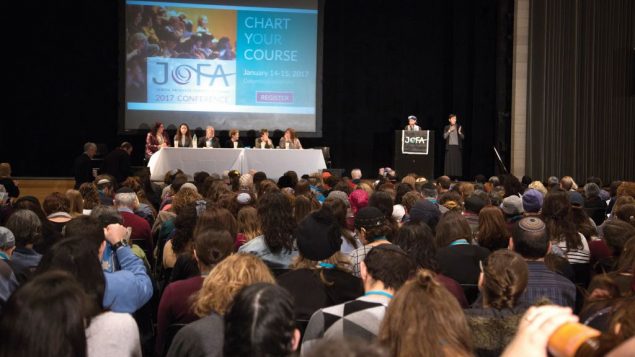
For centuries, the interwoven narratives of faith and gender have been a contentious battleground. Judaism, with its ancient traditions and deeply rooted patriarchal structures, is often perceived as an unlikely landscape for feminist ideals to flourish. Yet, within the hallowed halls of synagogues and the intimate spaces of Jewish homes, a powerful and evolving feminist movement is gaining momentum. It challenges not only the surface-level inequities but also the very foundations upon which these disparities have been constructed. Why this persistent, almost defiant insistence on equality within a framework seemingly designed to perpetuate its opposite? It is a question that demands deeper scrutiny, one that ventures beyond simple demands for access and into the very soul of Jewish identity. We are talking about the soul, aren’t we?
The Patriarchy Problem: An Immutable Truth or an Interpretive Injustice?
Let’s not mince words: Traditional Judaism, in its orthodox iterations, presents a stark patriarchal framework. The Halakha, Jewish law, dictates differing roles and responsibilities for men and women, frequently positioning women in a subordinate position. This isn’t mere conjecture; it’s a cold, hard fact. Men are obligated to perform certain mitzvot, commandments, from which women are exempt, most notably praying at specific times and wearing tefillin. This exemption, often framed as a privilege protecting women from the burdens of religious life, subtly relegates them to the periphery of ritual participation. And let’s not forget the oft-cited “Kol Isha” prohibition, restricting women’s singing voices in public gatherings, further silencing their spiritual expression. Are we to simply accept this as divine decree, an unalterable aspect of Jewish life? Or is it, as feminist theologians argue, a product of historical and cultural interpretations, layered onto the foundational texts over centuries of patriarchal dominance?
Reclaiming the Narrative: Feminist Exegesis and the Re-imagining of Tradition
Feminist scholars are not merely railing against tradition; they are meticulously dismantling it, brick by flawed brick, with the tools of critical analysis and reinterpretation. They delve into the Tanakh, the Hebrew Bible, seeking out the stories of powerful women – Deborah the prophet, Ruth the convert, Esther the queen – and amplifying their voices, drawing out the subversive potential within these narratives. They challenge the dominant readings of texts that seem to justify gender inequality, offering alternative interpretations that highlight the inherent equality of all human beings created in God’s image. They ask: What if Eve wasn’t simply a temptress but a proactive agent of knowledge and self-determination? What if the patriarchal pronouncements were not divine mandates but reflections of the socio-political realities of the time? This is no simple lip service. It’s intellectual judo, using the tradition’s own weight against it.
The Rise of Women’s Ritual: Expanding the Boundaries of Spiritual Expression
One of the most visible manifestations of Jewish feminism is the creation of women’s ritual spaces. Rosh Chodesh groups, monthly gatherings celebrating the new moon, offer women a safe and supportive environment to explore their spirituality, share their experiences, and create new rituals that reflect their unique perspectives. These spaces are not simply about replicating existing male-dominated rituals; they are about forging new pathways to connection with the divine, pathways that honor women’s voices, bodies, and experiences. Think tefillah, prayer, circles composed entirely of women, where the familiar cadence of male-led services is replaced by the diverse voices of women, crafting prayers that resonate with their lived realities. They are reclaiming not just ritual, but also the very language of faith.
Challenging Halakhic Norms: Seeking Equality Within the Law
The complexities of Halakha present a significant challenge for Jewish feminists. Can one truly embrace feminist ideals while adhering to a legal system that seems inherently unequal? Some argue that the Halakha is immutable, a divine decree that must be accepted without question. Others, however, believe that the Halakha is not a monolithic entity, but a dynamic and evolving system that can be interpreted and adapted to meet the needs of contemporary society. They point to the concept of “psak halakha,” legal rulings made by rabbinic authorities, as evidence of the Halakha’s capacity for change. These progressive rabbis, often women themselves, are grappling with issues such as women’s ordination, equal access to divorce, and the elimination of discriminatory practices within Jewish law. This isn’t about discarding tradition, but about interrogating it, challenging it, and ultimately, reshaping it to reflect the core values of justice and equality. It’s a tightrope walk, balancing fidelity to tradition with a fervent commitment to feminist principles.
Intersectionality and the Jewish Feminist Movement: Acknowledging the Multiplicity of Identities
Jewish feminism is not a monolithic movement. It encompasses a diverse array of voices and perspectives, reflecting the intersectional nature of Jewish identity. Jewish women come from different racial, ethnic, and socioeconomic backgrounds, and their experiences are shaped by the complex interplay of these identities. Black Jewish women, for example, face the dual challenges of racism and sexism within both the Jewish community and the broader society. LGBTQ+ Jewish women navigate the complexities of reconciling their sexual orientation or gender identity with religious tradition. Recognizing and addressing these intersectional realities is crucial for creating a truly inclusive and equitable Jewish community. It demands a willingness to listen to marginalized voices, to acknowledge the ways in which power and privilege operate within the community, and to work towards dismantling all forms of oppression.
The Backlash: Resistance to Change and the Preservation of Tradition
The rise of Jewish feminism has not been without its challenges. Resistance to change is deeply ingrained in many segments of the Jewish community, particularly within Orthodox circles. Some argue that feminism is a foreign import, a secular ideology that threatens the integrity of Jewish tradition. They see the demands for equality as a challenge to the divinely ordained roles of men and women, and they fear that the erosion of traditional gender roles will lead to the disintegration of the Jewish family and community. The backlash can be fierce, manifesting in the form of exclusion, discrimination, and even personal attacks. But the voices of Jewish feminists cannot be silenced. They are too strong, too determined, too deeply rooted in their faith and their commitment to justice.
The Future of Jewish Feminism: A Vision of Equality and Justice
The future of Jewish feminism is not predetermined. It will be shaped by the choices we make today, by the conversations we have, and by the actions we take. It is a future in which women are fully integrated into all aspects of Jewish life, where their voices are heard, their perspectives are valued, and their contributions are celebrated. It is a future where the Halakha is interpreted in a way that reflects the inherent equality of all human beings, and where discriminatory practices are eliminated. It is a future where Jewish institutions are inclusive and welcoming of all individuals, regardless of their gender, sexual orientation, race, or socioeconomic status. It is a future where the Jewish community serves as a beacon of justice and equality, not just for its own members, but for the world at large. This isn’t mere utopian dreaming. It is a call to action, a challenge to transform the Jewish community into a space where all individuals can flourish, where tradition and progress can coexist, and where the pursuit of justice is a sacred duty. It’s about evolving into something *more*.





Leave a Comment