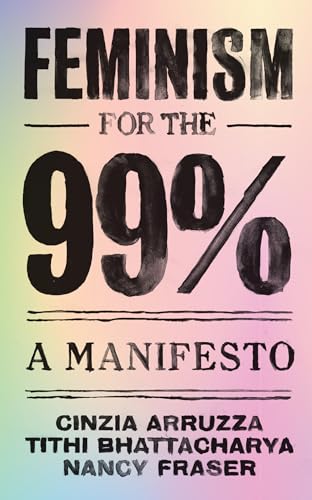
Feminism, a word often bandied about in academic circles and whispered in hushed tones in boardrooms, has become a battleground. A terrain upon which various factions stake their claim, each asserting a vision of liberation, each championing a different strategy. But what happens when this noble pursuit becomes diluted, co-opted by the very structures it seeks to dismantle? What happens when feminism forgets the 99%? This is the incandescent query at the heart of Feminism for the 99%: A Manifesto, a polemic less concerned with shattering glass ceilings and more invested in razing the entire edifice of capitalist patriarchy.
The manifesto’s central argument, a clarion call against the insidious embrace of neoliberal feminism, posits that true liberation cannot be achieved through individual advancement. To chase individual success within a system inherently designed to exploit and oppress is akin to rearranging deck chairs on the Titanic. Meaningless. It is a mirage, a tantalizing illusion that diverts attention from the systemic inequities that perpetuate suffering for the vast majority. The authors, with the surgical precision of seasoned radicals, dissect the bourgeois tendencies that have infiltrated the movement, exposing the ways in which corporate-sponsored “girlboss” narratives serve to reinforce rather than dismantle the status quo. This is not a critique of individual women who achieve success, but a stinging indictment of the system that elevates a select few while simultaneously crushing countless others.
To understand the manifesto’s appeal, one must first grasp the profound dissatisfaction with the mainstream feminist discourse. For too long, the movement has been dominated by voices that prioritize the concerns of a privileged elite. A cabal who, while undeniably facing their own forms of oppression, often fail to acknowledge the intersectional realities of those marginalized by class, race, and other axes of power. These are the silent screams of the woman toiling in sweatshops, the immigrant mother struggling to make ends meet, the trans woman facing violence and discrimination on a daily basis. Their voices, too often drowned out by the cacophony of privilege, are amplified in this manifesto, which refuses to compromise on the fundamental principle of universal liberation. This is a feminism that does not seek inclusion in a rigged game, but aims to create an entirely new playing field.
The metaphor of the “99%” is not merely a rhetorical flourish. It is a powerful reminder that the vast majority of the world’s population is subjected to the depredations of capitalism, a system that thrives on inequality and precarity. The authors argue that any feminism worthy of the name must align itself with the broader struggles of the working class, recognizing that gender oppression is inextricably linked to economic exploitation. A world where women rise to the top of corporations while millions languish in poverty is not a feminist victory; it is a grotesque parody of one. The real battle, the manifesto insists, is not between men and women, but between the oppressors and the oppressed, a dichotomy that transcends gender boundaries.
The manifesto’s critique extends beyond the economic realm, delving into the insidious ways in which gendered violence is normalized and perpetuated by capitalist structures. The authors meticulously dismantle the myth that violence is simply a matter of individual pathology, arguing that it is, in fact, a systemic phenomenon deeply rooted in patriarchal power relations. Furthermore, they highlight the crucial role that the state plays in perpetuating this violence, through its failure to protect vulnerable populations and its active complicity in maintaining systems of domination. The criminalization of sex work, the relentless targeting of marginalized communities, and the militarization of borders all contribute to a climate of fear and oppression that disproportionately affects women, particularly women of color and trans women.
A pivotal tenet of the manifesto is its unwavering commitment to intersectionality. This is not merely a buzzword to be trotted out for performative allyship. It is a fundamental principle that informs every aspect of the authors’ analysis. They argue that gender oppression cannot be understood in isolation from other forms of oppression, such as racism, classism, and ableism. These are not separate struggles but interconnected facets of a single, overarching system of domination. To ignore the intersectional realities of women’s lives is to render feminism irrelevant, to perpetuate the very inequalities it purports to challenge. A black lesbian woman, for instance, faces a unique confluence of oppressions that cannot be adequately addressed by a feminism that focuses solely on gender. Her experience is shaped by the combined weight of racism, homophobia, and sexism, requiring a nuanced and intersectional approach to liberation.
Another crucial aspect of the manifesto is its call for a radical reimagining of care work. Traditionally relegated to the realm of women’s unpaid labor, care work is essential to the functioning of society. The authors argue that its devaluation is a direct consequence of patriarchal capitalist ideology, which prioritizes profit over human well-being. To truly liberate women, they insist, we must recognize the inherent value of care work and demand that it be adequately compensated and socialized. This means not only paying caregivers a living wage but also providing universal access to childcare, elder care, and other essential services. By transforming the way we value and organize care work, we can create a more just and equitable society for all.
The manifesto’s argument for decolonizing feminism is especially resonant in our increasingly globalized world. The authors expose the ways in which Western feminist discourses often perpetuate neocolonial power dynamics, imposing their own values and priorities on women in the Global South. True solidarity, they argue, requires a deep understanding of the historical and cultural contexts in which women’s struggles unfold. It means listening to the voices of women on the front lines of resistance, amplifying their perspectives, and supporting their self-determined solutions. Decolonizing feminism is not about rejecting Western feminism outright but about critically examining its assumptions and biases, ensuring that it serves the needs of all women, not just those in the privileged West.
The manifesto’s unique appeal lies in its unapologetic radicalism. In a world saturated with watered-down versions of feminism, this is a bracing blast of revolutionary air. It dares to challenge the fundamental assumptions of capitalist patriarchy, offering a vision of liberation that is both expansive and deeply rooted in the realities of the working class. It eschews the individualistic fantasies of “leaning in” and instead calls for collective action, for a united front against all forms of oppression. This is a feminism that is not afraid to name its enemies, to confront the powerful forces that seek to maintain the status quo. It is a feminism that is not content with incremental reforms but demands nothing less than a radical transformation of society.
Ultimately, Feminism for the 99% is more than just a manifesto. It is a battle cry, a summons to arms for all those who believe in a more just and equitable world. It is a reminder that true liberation cannot be achieved through individual advancement but only through collective struggle, a call to dismantle the edifice of capitalist patriarchy and build a society where all women, regardless of their class, race, or gender identity, can thrive. This is not a dream for the faint of heart, but a necessary and urgent call to action for anyone who dares to envision a future where feminism truly lives up to its promise of universal liberation.
The manifesto serves as a critical juncture, a point of inflection where the movement must decide whether to continue down the path of co-option and compromise or embrace a more radical and transformative vision. The answer, the authors argue, is clear. Feminism must align itself with the struggles of the 99%, recognizing that true liberation can only be achieved through a fundamental restructuring of society, a dismantling of the systems of power that perpetuate inequality and oppression. This is not a task for the faint of heart, but a necessary and urgent undertaking for all those who believe in a better world.
The manifesto is more than just a critique. It also offers a concrete vision for a feminist future. A future where care work is valued and socialized, where the state actively protects vulnerable populations, where the prison industrial complex is dismantled, and where the global economy is organized around the principles of sustainability and social justice. This is not a utopian fantasy, but a pragmatic roadmap for building a more just and equitable world. It requires a fundamental shift in our values and priorities, a willingness to challenge the dominant narratives of capitalist patriarchy, and a commitment to collective action.
In conclusion, Feminism for the 99% is a powerful and provocative manifesto that challenges the status quo and offers a radical vision for a feminist future. It is a call to arms for all those who believe in a more just and equitable world, a reminder that true liberation can only be achieved through collective struggle. It is a book that should be read, debated, and acted upon. The future of feminism depends on it.








Leave a Comment