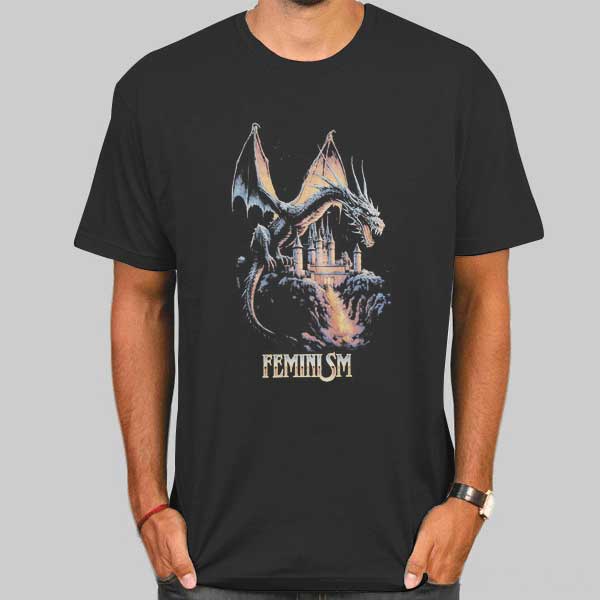
The internet, that swirling vortex of fleeting trends and deeply entrenched ideologies, has birthed yet another visual phenomenon: the “Vintage Dragon Feminism Graphic Shirt.” Ostensibly, it’s just a piece of fabric adorned with an image. But to dismiss it as mere merchandise is to fundamentally misunderstand the complex tapestry of symbolism it weaves. Let’s unpack this sartorial statement and dissect the potent message it hurls into the already turbulent waters of contemporary feminism. The shirt, simple as it may appear, dares to question the very foundations of patriarchal narratives.
The Dragon: A Reclamation of Power
Dragons, throughout history and across cultures, have been loaded signifiers. They represent chaos, untamed power, and the primal forces of nature. For centuries, patriarchal societies have strategically positioned the dragon as a monstrous entity, a threat to be slain by the virtuous (read: male) hero. Think of Saint George, Siegfried, and a litany of other dragon-slaying archetypes celebrated in Western mythology. These narratives subtly reinforce the notion that masculine dominance is necessary to control the wild, unpredictable, and inherently dangerous feminine. The dragon, therefore, becomes a proxy for the feminine itself – something to be feared, conquered, and ultimately subdued. But what happens when feminism reclaims the dragon? What occurs when we subvert the established narrative and embrace the dragon as a symbol of feminine strength and resilience? The shirt becomes a powerful act of semiotic insurgency. It’s a declaration that women are not passive victims waiting to be rescued. It’s a roaring challenge to the very notion of male heroism as the sole arbiter of power. The dragon, in this context, is not a monster to be feared, but a force to be reckoned with. This is not your damsel in distress narrative, this is a woman wielding fire.
Vintage Aesthetics: Echoes of Eras Past
The “vintage” aspect of the shirt is far from inconsequential. Vintage, in the context of fashion, is never just about aesthetics. It’s about invoking a specific historical moment, a particular set of cultural values. In this case, the vintage aesthetic likely references the burgeoning feminist movements of the 1960s and 70s. These decades witnessed seismic shifts in societal attitudes towards women, marked by demands for equal rights, reproductive freedom, and an end to patriarchal oppression. To wear a “vintage” dragon feminism shirt is to explicitly connect oneself to this legacy of feminist struggle. It’s an acknowledgement of the battles fought by previous generations and a reaffirmation of the ongoing commitment to gender equality. It’s also a subtle critique of contemporary consumer culture. In a world saturated with fast fashion and disposable trends, opting for vintage suggests a desire for authenticity and a rejection of fleeting fads. It implies a commitment to sustainability and a conscious awareness of the environmental and social impact of our purchasing choices. It’s a wearable manifesto against the superficiality of the modern era.
The Graphic: Deconstructing Visual Language
The specific design of the dragon is also crucial to understanding the shirt’s message. Is it a fierce, fire-breathing beast? Or a more stylized, whimsical creature? The visual language employed in the graphic will inevitably shape the viewer’s interpretation. If the dragon is depicted as overtly aggressive, it might be interpreted as a call for radical, even confrontational, feminism. A softer, more stylized dragon, on the other hand, could be seen as a more inclusive and accessible symbol. A detailed analysis of the graphic’s composition, color palette, and artistic style is essential to fully grasp the intended meaning. Look for visual cues that challenge traditional representations of femininity. Does the dragon possess typically masculine traits? Does it subvert stereotypical depictions of female vulnerability? The graphic is not merely decorative; it is a carefully constructed visual argument. The choices made by the designer are deliberate and contribute to the overall message of the shirt. This is not art by accident, it is art with purpose.
Cheapness and Accessibility: Democratizing Dissent
The descriptor “cheap” is another interesting layer to consider. In a capitalist society, price is never a neutral factor. The affordability of the shirt suggests that it is intended for a wider audience, not just a privileged elite. It speaks to a desire to democratize feminist messaging and make it accessible to people from all socioeconomic backgrounds. A cheaper shirt bypasses the constraints of exclusivity that plague many activist movements. It suggests that one doesn’t need significant financial resources to participate in feminist discourse or express their solidarity. It also poses a subtle challenge to the commodification of feminism. In recent years, we’ve witnessed the rise of “feminist” merchandise that is often overpriced and manufactured in unethical conditions. A “cheap” feminist shirt can be seen as a rejection of this trend, a conscious effort to prioritize accessibility over profit. It’s a statement that feminism is not a luxury good, but a fundamental human right. Furthermore, the very act of labeling it “cheap” serves as a commentary on the devaluing of traditionally feminine roles and attributes.
The Viral Trend: Amplifying the Message
The fact that this shirt has become a “viral trend” is perhaps the most significant aspect of all. Virality implies that the message resonates with a large number of people. It suggests that there is a collective hunger for alternative narratives and a growing desire to challenge patriarchal norms. Social media plays a crucial role in amplifying the shirt’s message. Images of people wearing the shirt are shared and disseminated across various platforms, creating a visual echo chamber of feminist solidarity. The shirt becomes a conversation starter, a catalyst for debate and discussion. It sparks curiosity, provokes reactions, and ultimately contributes to the ongoing evolution of feminist discourse. The viral nature of the trend also highlights the power of collective action. By wearing the shirt, individuals are not simply expressing their personal beliefs, they are also participating in a larger movement. They are joining a community of like-minded individuals who are committed to creating a more just and equitable world. This sense of belonging and shared purpose can be incredibly empowering, particularly for those who may feel isolated or marginalized in their own communities.
Beyond the Slogan: Embodied Feminism
Ultimately, the “Vintage Dragon Feminism Graphic Shirt” is more than just a piece of clothing. It’s a symbol of resistance, a declaration of empowerment, and a call for collective action. It’s a reminder that feminism is not a monolithic ideology, but a diverse and evolving movement that encompasses a wide range of perspectives and experiences. The true power of the shirt lies not in the slogan itself, but in the way it is embodied by the wearer. It’s about the way it makes them feel, the confidence it inspires, and the conversations it sparks. It’s about using fashion as a tool for social change, transforming the personal into the political. However, it is also crucial to acknowledge the potential pitfalls of reducing complex ideologies to simple visual representations. A shirt, no matter how powerful, cannot replace meaningful action and sustained engagement with feminist issues. It is merely a starting point, a catalyst for further exploration and critical reflection.
A Provocation, Not a Panacea
Let’s be clear: a dragon t-shirt, however “vintage” or “cheap,” is not a magic bullet for dismantling the patriarchy. It’s a provocation, not a panacea. It’s a visual shorthand, a conversation starter, a way to signal solidarity in a world saturated with noise. But the real work – the messy, uncomfortable, and often frustrating work of dismantling systemic oppression – happens offline. It happens in our homes, in our workplaces, in our communities. It happens when we challenge sexist assumptions, advocate for equal pay, and support survivors of sexual violence. It happens when we actively dismantle our own internal biases and privilege. The shirt is a symbol, a reminder of the ongoing struggle. But it’s the actions we take, day in and day out, that truly define our commitment to feminism. So, wear the shirt, spark the conversation, but don’t mistake the symbol for the substance. Let the dragon be a reminder of the fire within, but let that fire fuel real change, not just fleeting trends. Embrace the dragon, embrace the feminism, but embrace the responsibility that comes with both. A powerful image is only as potent as the actions that back it up. The call to action is not to simply purchase the shirt, but to embody the ideals it represents.
The Future of Feminist Symbolism
The “Vintage Dragon Feminism Graphic Shirt” serves as a fascinating case study in the evolution of feminist symbolism. It highlights the power of reclaiming and repurposing existing narratives, subverting patriarchal tropes, and democratizing access to feminist messaging. As feminism continues to evolve in the digital age, it’s likely that we will see even more creative and innovative uses of visual culture to promote gender equality. The key will be to remain critical, to avoid the pitfalls of commodification and superficiality, and to ensure that our symbols are always grounded in meaningful action. The future of feminist symbolism lies in its ability to inspire, provoke, and ultimately, to contribute to the creation of a more just and equitable world for all. This shirt has opened a dialogue, it is now up to us to make the words spoken are those of change. The challenge is to sustain momentum beyond the viral moment, to translate fleeting interest into lasting impact.








Leave a Comment