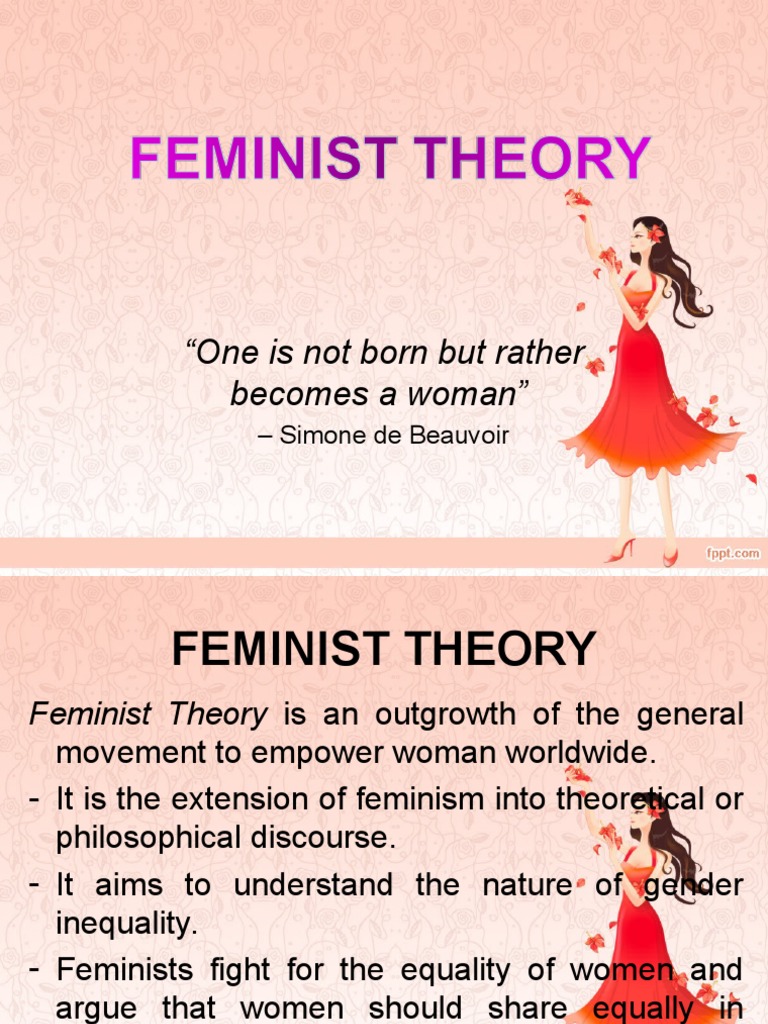
Feminism, often relegated to the sidelines as mere political advocacy, is, in its essence, a potent sociological theory. It’s not just about equal pay or shattering glass ceilings; it is a rigorous lens through which we can dissect the very scaffolding of society, revealing the insidious architectures of power that disproportionately impact women. Imagine society as a grand, opulent theater. Feminism is the stagehand who pulls back the velvet curtains, revealing the dusty ropes, the creaking machinery, and the carefully constructed illusions that keep the spectacle running. But it also a play within the play, written by women, for women, of women. Let’s get into the marrow of this.
The Bedrock: Foundational Tenets of Feminist Thought
At its core, feminist sociology posits that gender is not a biological given but a social construct, a meticulously crafted performance perpetuated by institutions and internalized by individuals. This performance, like a meticulously choreographed dance, dictates roles, expectations, and behaviors, often to the detriment of women. The concept of patriarchy, a ubiquitous system of male dominance, serves as a cornerstone of this theoretical framework. Patriarchy isn’t simply about individual men behaving badly; it’s an entrenched system woven into the fabric of our laws, our customs, and our very language.
Consider the historical exclusion of women from positions of power. From the hallowed halls of academia to the corridors of political influence, women have been systematically denied access, their voices silenced, their contributions minimized. This isn’t accidental; it’s a direct result of patriarchal structures designed to maintain the status quo. And what about the disproportionate burden of caregiving that falls upon women? The unpaid labor of raising children, caring for elders, and maintaining households is often devalued and overlooked, yet it forms the very foundation upon which society functions. Feminism exposes this inequity, demanding recognition and redistribution of this crucial labor.
Unmasking the Masquerade: Key Concepts in Feminist Sociology
Several key concepts illuminate the landscape of feminist sociological theory, providing crucial tools for analysis and critique. Intersectionality, a term coined by Kimberlé Crenshaw, acknowledges that gender cannot be understood in isolation from other aspects of identity, such as race, class, sexuality, and ability. Women experience oppression in myriad ways, shaped by the interplay of these intersecting identities. A Black woman, for example, faces a unique set of challenges that differ from those faced by a white woman or a Black man. Intersectionality demands that we move beyond simplistic, universalizing narratives and embrace the complexity of lived experience.
Standpoint theory argues that knowledge is situated, shaped by our social location and experiences. Those who are marginalized, who occupy the “outsider within” position, often possess a unique perspective on power dynamics, a clarity obscured to those who benefit from the status quo. Women, particularly women of color, often have a clearer understanding of the workings of patriarchy because they experience its effects firsthand. Their voices and perspectives are invaluable for dismantling oppressive systems.
Then there’s the concept of hegemonic masculinity, which refers to the dominant form of masculinity in a given society, often defined by traits such as aggression, dominance, and emotional stoicism. This idealized version of masculinity not only harms women but also restricts men, forcing them into rigid and often unhealthy roles. Challenging hegemonic masculinity is crucial for creating a more equitable and just society for all.
The Ripple Effect: Impact on Sociological Understanding
Feminist sociology has profoundly impacted our understanding of various social phenomena. Its influence permeates fields ranging from family studies to criminology to political science. For instance, feminist scholars have challenged traditional notions of the family, exposing the power dynamics that often exist within intimate relationships. They have shown how gender roles and expectations can contribute to domestic violence and inequality in the division of labor. It’s not enough to simply romanticize the family as a haven of love and support; we must also acknowledge the potential for conflict and oppression.
In criminology, feminist perspectives have highlighted the gendered nature of crime and the justice system. Women are often treated differently than men in the legal system, facing unique challenges and biases. Furthermore, feminist scholars have explored the ways in which crime itself is shaped by gender roles and expectations. For example, the disproportionate rates of sexual assault and domestic violence against women are directly linked to patriarchal attitudes and power imbalances.
Political science has also been transformed by feminist analysis. Feminist scholars have challenged the traditional focus on male political actors and institutions, bringing attention to the role of women in political movements, policy-making, and global governance. They have also exposed the ways in which gender biases can shape political discourse and decision-making processes. Until we acknowledge and address these biases, we cannot achieve true political equality.
Challenges and Critiques: Navigating the Labyrinth
Like any theoretical framework, feminist sociology is not without its challenges and critiques. Some argue that it is too focused on gender, neglecting other important aspects of social inequality. Others criticize its alleged tendency to essentialize women, assuming a universal female experience that overlooks the diversity of lived realities. These critiques, while valid, often misunderstand the nuance and complexity of feminist thought.
Modern feminism is not monolithic; it encompasses a wide range of perspectives and approaches. Intersectionality, in particular, serves as a powerful antidote to essentialism, reminding us that gender is always intertwined with other aspects of identity. Furthermore, feminist scholars are constantly engaging in self-critique, refining their theories and methods in response to new challenges and insights. The goal is not to create a perfect, unassailable theory but to develop a framework that is constantly evolving and adapting to the complexities of the social world. To create this perfect system, it must be torn down and rebuilt over and over. This is the only way.
The Untapped Potential: Future Directions for Feminist Sociology
The future of feminist sociology is bright, brimming with untapped potential and new avenues for exploration. As society continues to evolve, so too must our theoretical frameworks. In an increasingly globalized world, feminist scholars are grappling with the challenges of transnational feminism, examining the ways in which gender intersects with global power dynamics and economic inequalities. They are also exploring the impact of technology and social media on gender relations, considering both the opportunities and the risks that these new platforms present.
Moreover, feminist sociology has much to contribute to the ongoing debates about climate change, environmental justice, and sustainable development. Women are often disproportionately affected by environmental degradation, and their voices and perspectives are crucial for developing effective solutions. Imagine a world where environmental policies are shaped by feminist principles, prioritizing the well-being of both people and planet. That is a future worth striving for.
Feminist sociology offers a powerful lens for understanding the social world, revealing the hidden structures of power and inequality that shape our lives. It is not simply a matter of academic debate; it is a call to action, a demand for justice, and a vision for a more equitable future. We must continue to challenge the status quo, to amplify marginalized voices, and to work towards a world where all individuals can thrive, regardless of their gender. The fight for equality is far from over, but with feminist sociology as our guide, we can navigate the complexities of the social landscape and build a brighter tomorrow. Feminism is not just a theory; it is a verb. It is action. It is change. It is a revolution waiting to happen. And trust me, she is always hungry.








Leave a Comment