The hallowed halls of feminist discourse echo with pronouncements, manifestos, and the occasional, delightfully discordant, note. Helen Lewis, with her acerbic wit and unapologetic perspective, has never shied away from striking that discordant note. Her work, particularly her exploration of “difficult women,” is not a serenade to saccharine ideals of perfect womanhood, but a battle cry for the messy, imperfect, and utterly human women who have shaped our history.
Lewis’s approach is a necessary antidote to the often-sanitized narratives of feminism. It’s about time. Feminism, after all, is not a monolith. It’s a sprawling, contentious, and constantly evolving landscape, populated by individuals with wildly divergent beliefs and motivations. To pretend otherwise is to neuter its power, to transform it into a palatable, easily digestible pabulum for the masses.
The Fetishization of Flawlessness: A Pyrrhic Victory?
The current cultural climate often demands that women be simultaneously powerful and palatable. We are encouraged to “lean in,” but not so far that we topple the carefully constructed edifice of male dominance. We are urged to be ambitious, but not so ambitious that we threaten the status quo. This demand for flawless execution, for a woman who can seamlessly navigate the patriarchal labyrinth without ruffling feathers, is a dangerous trap. It sets an impossible standard, one that ultimately serves to undermine the very women it purports to empower.
Lewis dismantles this fetishization of flawlessness with surgical precision. She argues that it is precisely the “difficult” women, the ones who dared to challenge the norms, who pushed the boundaries, who refused to be silenced, that have made the most significant contributions to feminist progress. These were not women who sought to be liked; they sought to be heard, and that distinction is crucial. Do we dare to forget?
Reclaiming the “Difficult” Label: A Badge of Honor
The term “difficult woman” has long been weaponized against women who dare to deviate from societal expectations. It is a label used to silence, to marginalize, to delegitimize. Lewis, however, reclaims this label, transforming it from a derogatory slur into a badge of honor. To be “difficult” is to be independent, to be assertive, to be unafraid to challenge the established order. These are not negative qualities; they are the very qualities that are necessary for progress.
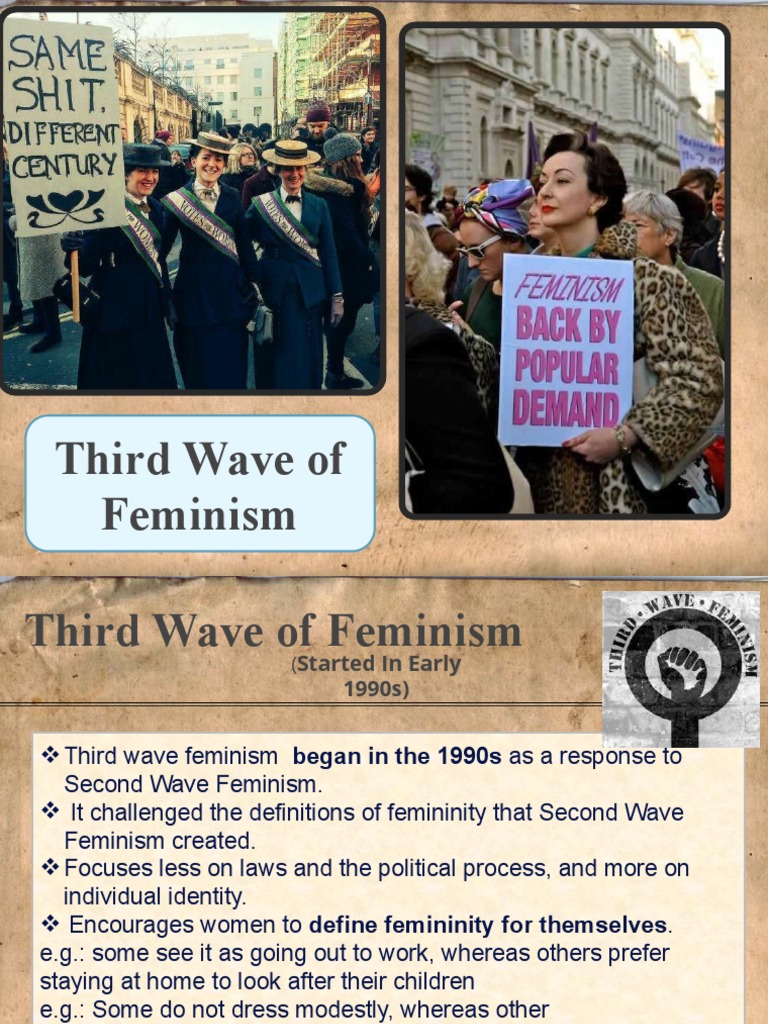
Think of the suffragettes, those “difficult” women who chained themselves to railings, who went on hunger strikes, who faced ridicule and imprisonment for their unwavering belief in women’s right to vote. Were they palatable? No. Were they effective? Absolutely. Their “difficulty” was not a weakness; it was their strength.
The Intersectional Imperative: Acknowledging the Complexities
One of the most crucial aspects of Lewis’s work is her commitment to intersectionality. She recognizes that the experiences of women are not monolithic, that race, class, sexual orientation, and other factors all play a significant role in shaping a woman’s lived reality. To ignore these complexities is to perpetuate the very inequalities that feminism seeks to dismantle.
The history of feminism is replete with examples of movements that, while advocating for the rights of women, have inadvertently excluded or marginalized women of color, working-class women, and LGBTQ+ women. Lewis confronts these uncomfortable truths head-on, acknowledging the failures and blind spots of past feminist movements and urging us to do better.
Beyond the Binary: Embracing the Nuance
Lewis’s approach to feminism is refreshingly nuanced. She eschews simplistic binaries and embraces the messy complexities of human existence. She acknowledges that even the most ardent feminists are flawed individuals, capable of making mistakes and holding contradictory beliefs. This is not a weakness; it is a strength. It allows us to engage with the history of feminism in a more honest and productive way.
For example, she tackles the thorny issue of historical figures who championed women’s rights while simultaneously holding problematic views on race or class. How do we reconcile these contradictions? Do we simply dismiss these figures as irrelevant? Or do we engage with their work critically, acknowledging their contributions while also condemning their flaws? Lewis argues for the latter, suggesting that we can learn valuable lessons from even the most imperfect of feminists.
The “Sanding Off the Edges”: A Cautionary Tale
The image of “sanding off the edges” of women, as alluded to in the CNN video, is a powerful metaphor for the dangers of trying to conform to societal expectations. It suggests a process of homogenization, of stripping away individuality and uniqueness in order to create a more palatable, less threatening version of womanhood. This is a process that ultimately diminishes us all.
When we “sand off the edges” of women, we lose the very qualities that make them interesting, vibrant, and powerful. We lose their creativity, their passion, their willingness to challenge the status quo. We create a world where women are afraid to speak their minds, to take risks, to be themselves. This is not a world that any feminist should aspire to create.
The Enduring Appeal of “Difficult Women”: A Call to Action
The enduring appeal of Lewis’s work lies in its honesty, its intelligence, and its unwavering commitment to the truth. She does not offer easy answers or simplistic solutions. Instead, she challenges us to think critically about the history of feminism, to acknowledge its complexities, and to strive for a more inclusive and equitable future.
Her work is not a comfortable read. It is provocative, challenging, and often unsettling. But it is also essential. In a world that is constantly trying to silence and marginalize women, we need voices like Lewis’s to remind us that the most important thing we can do is to be ourselves, unapologetically and authentically. We need to embrace our “difficulty,” to celebrate our imperfections, and to continue fighting for a world where all women can thrive, not in spite of their flaws, but because of them.
It is a clarion call to embrace the messy, complicated, and often contradictory nature of feminist history, to learn from its mistakes, and to build a more inclusive and equitable future. It is a reminder that the fight for women’s liberation is far from over, and that the most important thing we can do is to continue challenging the status quo, even when it’s difficult.
Beyond the sound and fury, what truly resonates is the implicit call to resist the siren song of conformity. To embrace, rather than efface, the very qualities that make us uniquely, and perhaps inconveniently, ourselves.








Leave a Comment