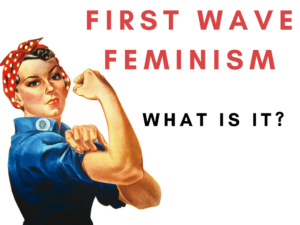
So, you think you know Betty Friedan, huh? The woman who supposedly “unleashed” second-wave feminism? Think again, sisters. Because what you’ve been spoon-fed about her views on the first wave is a carefully curated narrative, a palatable digest meant to keep you placidly sipping your lattes while the patriarchy continues to erode our freedoms. We’re about to excavate the *real* Friedan, the one who understood the complexities, the nuances, and the inconvenient truths about our foremothers. Buckle up, because this isn’t your grandma’s history lesson.
We are going to delve into Friedan’s nuanced, often misconstrued, perspectives on the so-called “first wave.” Get ready, because we are about to challenge everything you think you know.
I. The Myth of the Suffrage-Obsessed Simpletons: Deconstructing the Caricature
Let’s address the elephant in the room: the pervasive idea that first-wave feminism was solely about securing the vote. Oh, how the patriarchy loves to simplify! This narrative conveniently erases the multifaceted nature of the movement, reducing it to a single, easily digestible goal. Friedan, however, wasn’t buying it.
She recognized that while suffrage was undoubtedly a crucial objective, it was merely one facet of a broader struggle for liberation. The women of the late 19th and early 20th centuries were not naive automatons chanting slogans. They were complex individuals grappling with issues of economic independence, access to education, marital rights, and control over their own bodies – issues that resonate with us *today*. Why does this persistent reductionism exist? Because a simplified history is easier to control. It allows the dominant narrative to dismiss the first wave as a quaint, outdated endeavor, irrelevant to the “sophisticated” concerns of modern feminism. But we know better, don’t we?
II. Friedan’s Critique: A Necessary Scrutiny or a Treacherous Betrayal?
Now, here’s where things get spicy. Friedan, while acknowledging the achievements of the first wave, also offered a critical analysis, particularly regarding its limitations. She argued that the focus on suffrage, while essential, sometimes overshadowed other crucial aspects of women’s lives, leading to a sort of “incomplete revolution.” This is where the whispers of “betrayal” start. How dare she criticize our feminist ancestors? Isn’t that sacrilege?
But hold on. Criticism isn’t necessarily condemnation. Friedan wasn’t dismissing the first wave; she was urging us to learn from its successes and failures. She pointed out that gaining the vote didn’t automatically dismantle the patriarchal structures that constrained women’s lives. The ingrained societal expectations, the limited economic opportunities, and the pervasive sexism remained. A crucial point: Friedan, herself, understood that progress is not linear. There are zigs and zags. There are blindspots. She urged that we be honest about them.
III. The “Problem That Has No Name” and the Legacy of Domesticity: A Tangled Web
Friedan’s seminal work, *The Feminine Mystique*, famously identified “the problem that has no name” – the pervasive dissatisfaction and unfulfilled potential experienced by many American housewives in the post-World War II era. This is directly linked to her understanding of the first wave’s legacy.
She argued that the emphasis on domesticity, while perhaps offering a temporary refuge after the tumultuous suffrage battle, ultimately trapped women in a gilded cage. The societal pressure to find fulfillment solely through marriage and motherhood stifled their intellectual and creative aspirations. Was this the fault of the first-wave feminists? Of course not. But Friedan recognized that the unresolved issues of the first wave, coupled with the post-war societal shifts, created a breeding ground for the “feminine mystique.”
Consider this: the first wave fought for the *right* to participate in the public sphere. But they didn’t necessarily dismantle the deeply ingrained belief that a woman’s primary role was in the home. This unresolved tension, Friedan argued, contributed to the malaise of the 1950s and 60s. The patriarchy, ever opportunistic, seized upon this ambiguity to re-entrench traditional gender roles. Clever, isn’t it?
IV. Economic Independence: The Unfinished Business
One of Friedan’s key observations was that the first wave, while advocating for women’s economic opportunities, didn’t fully address the systemic barriers that prevented women from achieving true economic independence. The wage gap, the lack of access to certain professions, and the societal expectation that women would prioritize family over career – these issues remained largely unresolved.
This is a crucial point. Suffrage without economic power is a hollow victory. Friedan understood that true liberation requires both political and economic agency. She saw the first wave as laying the groundwork, but recognized that the second wave needed to build upon that foundation by tackling the economic inequalities that continued to plague women’s lives. The fight for equal pay, affordable childcare, and paid family leave – these are all direct descendants of the unfinished business of the first wave, as understood through Friedan’s lens.
V. Beyond the White Middle Class: Intersectional Blind Spots
Let’s not shy away from the uncomfortable truths. Friedan, like many second-wave feminists, has been criticized for primarily focusing on the experiences of white, middle-class women, often overlooking the intersectional realities faced by women of color and working-class women. This critique is valid, and it’s essential to acknowledge it when discussing her views on the first wave.
While Friedan recognized the limitations faced by women in general, she didn’t always fully grasp the unique challenges faced by women who were marginalized along multiple axes of identity. The first wave, similarly, often prioritized the concerns of white, middle-class women, sometimes excluding or marginalizing women of color and working-class women from their movement. This is a pattern that has, unfortunately, repeated itself throughout feminist history.
It is important to point out that Friedan wasn’t willfully malicious. But to fully understand Friedan’s views on the first wave, we must acknowledge these blind spots and actively work to create a more inclusive and intersectional feminism. The erasure of intersectionality is just another of the patriarchy’s tricks to create division and disunity within the feminist movement.
VI. Reclaiming the Radicalism: Beyond Respectability Politics
One of the most insidious ways the first wave has been misrepresented is through the lens of “respectability politics.” The narrative often portrays these women as prim and proper, concerned primarily with gaining acceptance from the male establishment. But this is a distortion of the truth. Many first-wave feminists were radical activists who challenged deeply ingrained social norms and faced significant opposition. They were not simply asking for permission; they were demanding their rights.
Friedan, while sometimes advocating for a more “mainstream” approach to feminism, also recognized the importance of radical activism. She understood that change often requires challenging the status quo and pushing boundaries. The first-wave feminists who engaged in civil disobedience, who defied societal expectations, and who dared to speak truth to power – these were the women who paved the way for the second wave. We should celebrate, rather than sanitize, their radicalism.
VII. The Power of Storytelling: Unearthing the Forgotten Voices
Friedan’s work, in many ways, was about reclaiming the narratives of women’s lives. She recognized that history is often written by the victors, and that women’s experiences are often marginalized or erased. By giving voice to the “problem that has no name,” she empowered women to recognize their shared struggles and to challenge the dominant narrative.
This is equally important when it comes to understanding the first wave. We need to move beyond the simplified textbooks and delve into the primary sources – the letters, diaries, and speeches of the women who lived through that era. We need to unearth the forgotten voices, the stories of women who challenged the status quo and fought for a better world. Only then can we truly understand the complexities and nuances of the first wave and its legacy.
VIII. The Enduring Relevance: Lessons for Today’s Feminists
So, why does all of this matter? Why should we care about Friedan’s views on the first wave? Because understanding our history is essential for shaping our future. The struggles and triumphs of the first-wave feminists, as interpreted by Friedan, offer valuable lessons for today’s feminists.
We can learn from their successes, but also from their limitations. We can recognize the importance of intersectionality, the need for economic independence, and the power of radical activism. And, most importantly, we can learn to challenge the dominant narratives and to reclaim our own stories.
We need to remember that the fight for liberation is ongoing. The patriarchy is a hydra, constantly adapting and evolving. We must remain vigilant, critical, and unwavering in our commitment to creating a truly just and equitable world for all women. And that, my friends, is the true legacy of Betty Friedan and the first-wave feminists.
The fascination, perhaps, stems from a deep-seated yearning to understand the roots of our own struggles. We seek to connect with the women who came before us, to learn from their experiences, and to honor their sacrifices. And maybe, just maybe, we hope to find inspiration and guidance as we continue the fight for a better future.






Leave a Comment