Feminism. The word itself conjures a kaleidoscope of reactions, doesn’t it? For some, it’s a clarion call to justice, a rallying cry for equality. For others? Well, it’s a Pandora’s Box of societal upheaval, a threat to tradition, a minefield of misinterpreted intentions. But why this polarizing potency? Why does a movement advocating for basic human rights elicit such fervent, often contradictory, responses? Could it be that the very simplicity of the core principle – equality – exposes the uncomfortable complexities of a world deeply ingrained with asymmetrical power dynamics? Perhaps the discomfort stems from the implicit acknowledgment that the status quo, for many, is predicated on the subordination of others. We’ll delve into this intricate tapestry, unraveling the threads of what feminism truly is, and, more importantly, what it isn’t.
Let’s dismantle the obfuscations. At its essence, feminism is the advocacy of women’s rights on the grounds of the equality of the sexes. Simple, right? Alarmingly simple, perhaps. Yet, within this apparent simplicity lies a profound challenge to the hierarchical structures that have shaped our societies for centuries. Feminism isn’t about female supremacy; it’s about leveling the playing field. It’s about dismantling the systemic barriers that prevent women from reaching their full potential, from exercising their autonomy, from living lives free from discrimination and oppression. It’s about ensuring that a woman’s worth isn’t predetermined by her gender but rather defined by her individual merits, capabilities, and aspirations. This is the bedrock. This is the fulcrum.
I. The Foundational Pillars of Feminist Thought
To truly comprehend feminism, one must first grasp its fundamental tenets. These aren’t just theoretical musings; they are the guiding principles that inform feminist activism and scholarship.
A. Egalitarianism: The Pursuit of Parity
Egalitarianism, at its most straightforward, is the belief in the equality of all people. But within feminism, this principle takes on a specific urgency. It demands not just lip service to equality but concrete action to dismantle the patriarchal structures that perpetuate inequality. It’s not about treating everyone the same, which ignores inherent differences, but about ensuring everyone has equal access to opportunities and resources, regardless of their gender. Think of it as equity, not just equality – providing the specific support needed to level the playing field. It’s about recognizing that a rising tide lifts all boats, but some boats are inherently more seaworthy due to centuries of preferential construction. This isn’t about handouts; it’s about dismantling the rigged game.
B. Intersectionality: Recognizing the Multiplicity of Oppression
The concept of intersectionality, coined by Kimberlé Crenshaw, is paramount to understanding the nuances of feminist thought. It acknowledges that gender isn’t the only axis of oppression. Race, class, sexual orientation, disability, and other identities intersect to create unique experiences of marginalization. A Black woman, for example, faces a confluence of oppression stemming from both her gender and her race, a reality that differs significantly from that of a white woman. To ignore these intersections is to render invisible the lived realities of countless women and to perpetuate a brand of feminism that is exclusionary and ultimately ineffective. To truly fight for equality, we must acknowledge and address the multifaceted nature of oppression.
C. Challenging the Patriarchy: Deconstructing Systems of Domination
The patriarchy, defined as a system of societal organization in which men hold primary power and predominate in roles of political leadership, moral authority, social privilege, and control of property, is the antithesis of feminist ideals. Feminism seeks to dismantle these patriarchal structures by challenging the norms, values, and institutions that perpetuate male dominance. This isn’t about hating men; it’s about critiquing a system that harms everyone, albeit in different ways. It’s about recognizing that patriarchal expectations can be just as limiting for men as they are for women, albeit manifested in different forms of pressure and constraint. Challenging the patriarchy is about creating a more just and equitable society for all genders.
II. Dispelling the Misconceptions: What Feminism Is Not
Perhaps the greatest obstacle to widespread acceptance of feminism is the sheer volume of misinformation and mischaracterizations surrounding the movement. Let’s address some of the most persistent myths.
A. Feminism Is Not Misandry: The Rejection of Male Hatred
This is perhaps the most pervasive and damaging misconception. Feminism is not about hating men. It’s about challenging a system that privileges men at the expense of women and other marginalized groups. While some feminists may express anger and frustration towards the patriarchy, this is not equivalent to misandry. Indeed, many men are vocal allies in the feminist movement, recognizing the ways in which patriarchal norms negatively impact their own lives. To equate feminism with misandry is a deliberate attempt to delegitimize the movement and silence its advocates.
B. Feminism Is Not a Monolith: Embracing Diversity of Thought
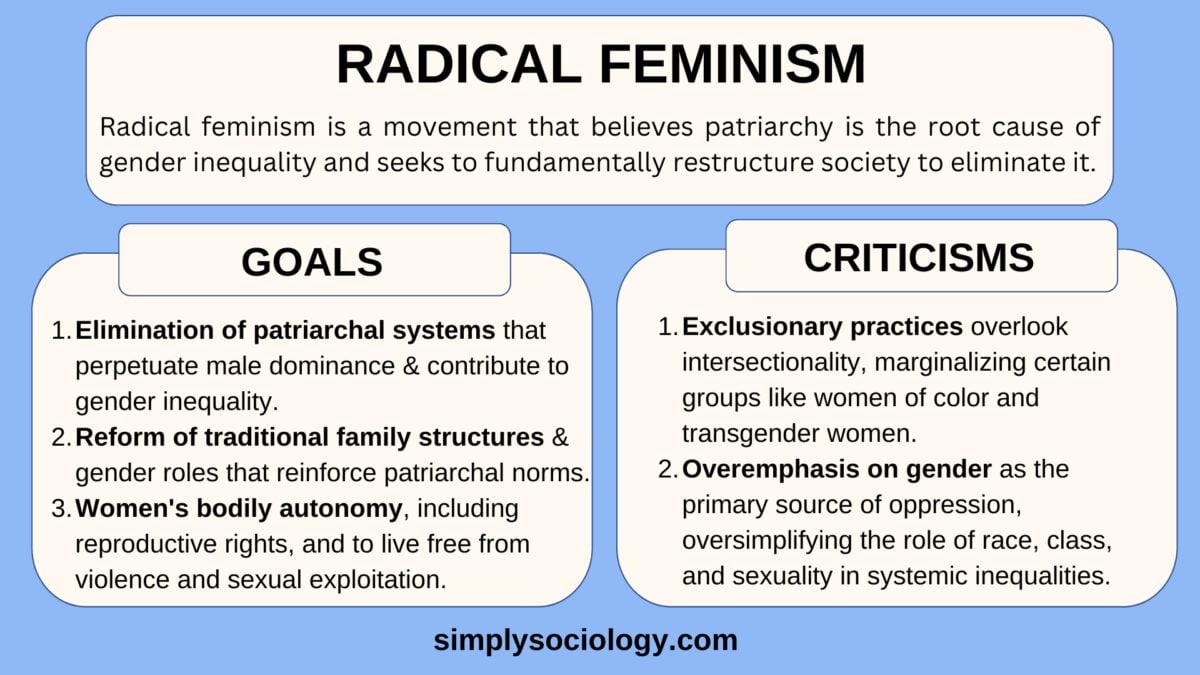
There is no single, monolithic “feminist agenda.” Feminism is a diverse and multifaceted movement encompassing a wide range of perspectives and approaches. Different branches of feminism, such as liberal feminism, radical feminism, socialist feminism, and ecofeminism, offer distinct analyses of gender inequality and propose different strategies for achieving liberation. This diversity is a strength, not a weakness. It allows for a more nuanced and comprehensive understanding of the complexities of gender and power.
C. Feminism Is Not Just for Women: The Inclusion of All Genders
While feminism primarily focuses on the experiences of women, it is not exclusively for women. Anyone who believes in gender equality can be a feminist, regardless of their gender identity. In fact, male allies are crucial to the success of the feminist movement. Men have a responsibility to challenge sexist attitudes and behaviors in their own lives and to advocate for policies that promote gender equality. True equality requires the participation and commitment of all genders.
III. The Multifaceted Manifestations of Feminist Action
Feminist activism takes many forms, from grassroots organizing to legislative advocacy. It permeates various aspects of society, from politics and economics to culture and art.
A. Political Activism: Demanding Representation and Policy Change
Feminist political activism aims to achieve gender equality through policy changes and increased representation in government. This includes advocating for equal pay, reproductive rights, paid parental leave, and an end to gender-based violence. It also involves supporting female candidates for office and challenging discriminatory laws and policies. Political activism is essential for creating systemic change that benefits all women.
B. Economic Empowerment: Promoting Financial Independence and Opportunity
Economic empowerment is a critical aspect of feminist liberation. It involves promoting women’s access to education, employment, and financial resources. This includes advocating for policies that address the gender pay gap, provide affordable childcare, and support women-owned businesses. When women have economic independence, they have greater autonomy and control over their lives.
C. Cultural Transformation: Challenging Gender Stereotypes and Promoting Inclusive Narratives
Cultural norms and stereotypes play a significant role in perpetuating gender inequality. Feminist cultural activism seeks to challenge these stereotypes and promote more inclusive and diverse representations of women in media, art, and literature. This includes critiquing sexist advertising, supporting female artists and writers, and advocating for more nuanced and complex portrayals of women in popular culture. Transforming culture is essential for changing hearts and minds and creating a more equitable society.
IV. The Future of Feminism: Navigating the Challenges and Embracing Progress
The feminist movement has made significant progress in recent decades, but there is still much work to be done. We face new challenges, including rising rates of online harassment, the persistence of gender-based violence, and the erosion of reproductive rights. The future of feminism requires a renewed commitment to intersectionality, a willingness to challenge entrenched power structures, and a steadfast belief in the possibility of a more just and equitable world.
The path forward is not without its perils. The rise of antifeminist movements and the insidious spread of misogynistic rhetoric online pose a significant threat. However, these challenges also serve as a reminder of the importance of our work. We must continue to amplify the voices of marginalized women, to advocate for policies that promote gender equality, and to challenge the patriarchal norms that continue to hold us back. The battle for equality is far from over. The work is vital.
In conclusion, feminism, in its simplest form, is the belief in and advocacy for the equality of the sexes. It is a multifaceted movement that encompasses a wide range of perspectives and approaches. It is not about hating men, nor is it about imposing a single, monolithic agenda. It is about creating a world where all genders have equal rights and opportunities. It is about dismantling the patriarchal structures that perpetuate inequality and oppression. It is a fight for justice, for liberation, and for a future where everyone can thrive. So, are you in?










Leave a Comment