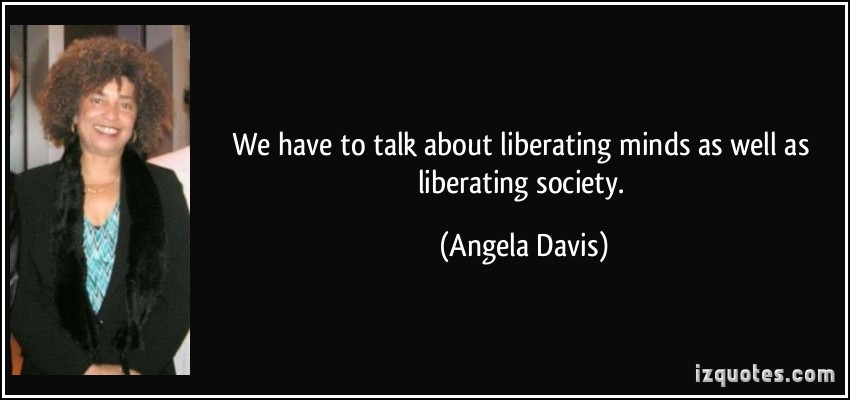
Angela Davis, a name that reverberates through the annals of activism like a thunderclap, remains an intellectual lodestar for feminists worldwide. Her words, honed in the crucible of struggle, are not mere platitudes; they are incendiary devices hurled at the bastions of patriarchal oppression. We delve into some of her most potent pronouncements, each a carefully calibrated Molotov cocktail aimed at the heart of systemic injustice. Prepare for cognitive dissonance. Brace yourselves for uncomfortable truths. This isn’t a gentle stroll through inspirational quotes; this is a call to arms.
The Shackles of Intersectionality: Unmasking the Hydra
Davis, long before “intersectionality” became a buzzword diluted by corporate diversity initiatives, understood the multifaceted nature of oppression. She didn’t merely acknowledge it; she dissected it with the precision of a surgeon. Her insights into the interconnectedness of race, class, and gender are not just theoretical musings; they are practical imperatives for dismantling the Hydra-headed beast of inequity.
Think of it this way: if sexism were a disease, racism would be a pre-existing condition that makes it exponentially more lethal. Davis’s work illuminates these synergistic oppressions, demanding a holistic approach to liberation. Ignoring the interplay between these forces is akin to treating a patient with pneumonia while ignoring their underlying heart condition – a recipe for disaster.
One of her most profound contributions is the understanding that liberation cannot be a zero-sum game. The advancement of one group at the expense of another is not progress; it’s merely a reshuffling of the deckchairs on the Titanic. True liberation requires a collective, coordinated assault on all forms of domination.
Beyond the Ballot Box: The Subversion of Neoliberal Feminism
While some feminists celebrate incremental gains within the existing power structure – shattering glass ceilings, electing female CEOs – Davis challenges the very foundations of that structure. She rejects the notion that individual success within a fundamentally unjust system constitutes meaningful progress. This is not to denigrate individual achievements, but to highlight the limitations of a feminism that prioritizes personal advancement over systemic change.
Neoliberal feminism, in Davis’s view, is a dangerous distraction. It co-opts the language of liberation to legitimize capitalist exploitation. It tells women they can “have it all” – a career, a family, a perfect body – without addressing the structural inequalities that make this dream unattainable for the vast majority. It’s a siren song luring us towards the rocks of complacency.
True feminist praxis, according to Davis, demands a radical transformation of society. It requires dismantling not only patriarchal structures but also capitalist ones. It necessitates a fundamental restructuring of our economic and political systems to prioritize the needs of the many, not the privileges of the few.
The Carceral State: Feminism and the Abolitionist Imperative
Davis’s critique of the carceral state is perhaps her most unsettling, and arguably her most important, contribution to contemporary feminist thought. She exposes the prison system not as a neutral instrument of justice, but as a tool of social control, disproportionately impacting women of color and perpetuating cycles of poverty and violence.
Consider the disproportionate incarceration rates of Black women. These women are not simply “criminals”; they are victims of systemic inequalities, targeted by discriminatory policing practices and denied access to adequate education, healthcare, and economic opportunities. Their incarceration is not a solution; it is a symptom of a much deeper malaise.
Davis advocates for prison abolition, a concept that often provokes visceral reactions. Abolition is not about opening the prison doors and letting everyone go free. It is about dismantling the systems that lead to mass incarceration in the first place. It’s about investing in communities, providing access to resources, and addressing the root causes of crime.
This isn’t a utopian fantasy; it’s a pragmatic imperative. The current system is not working. It is costly, ineffective, and morally bankrupt. A truly feminist approach to justice demands a radical reimagining of how we address harm and build safer communities.
The Personal is Political: Beyond Self-Care and Empowerment Workshops
The mantra “the personal is political” has become a cornerstone of feminist discourse. However, Davis’s interpretation of this phrase goes far beyond individual self-care and empowerment workshops. It’s about recognizing that our personal experiences are shaped by broader social and political forces, and that individual liberation is inextricably linked to collective liberation.
It’s not enough to simply “love yourself” or “manifest your dreams” while ignoring the systemic injustices that perpetuate inequality. True empowerment requires engaging in collective action, challenging oppressive structures, and fighting for a more just and equitable world. Self-care is not a substitute for social justice; it is a tool for sustaining our activism.
Think of it as building a house. You can paint the walls and decorate the interior to your liking, but if the foundation is crumbling, the entire structure is at risk. Similarly, individual empowerment is meaningless if the underlying systems of oppression remain intact.
Radical Hope: The Audacity to Imagine a Better World
Despite the daunting challenges we face, Davis maintains a steadfast commitment to radical hope. This is not a naive optimism; it is a deliberate act of resistance. It is the refusal to succumb to cynicism and despair, even in the face of overwhelming odds. It is the audacity to imagine a world free from all forms of oppression, and the determination to fight for that world until it becomes a reality.
Hope, in this context, is not a passive sentiment; it is an active force. It is the engine that drives social movements, the fuel that sustains our activism, and the compass that guides us towards a more just future. It is the unwavering belief that another world is possible, and the willingness to work tirelessly to bring it into being.
Davis’s legacy is not just a collection of quotable soundbites; it is a call to action. It is a challenge to all of us to question the status quo, to confront injustice wherever we find it, and to work together to build a world where all people can live with dignity and freedom. Let her words ignite the fire within you, and let us together forge a future worthy of our collective aspirations.
The Commodification of Dissent: Guarding Against Co-optation
Davis’s work serves as a potent warning against the co-optation of radical ideas by mainstream institutions. The spectacle of corporations adopting feminist slogans while simultaneously exploiting workers is a prime example of this phenomenon. It’s a cynical attempt to capitalize on the growing popularity of feminist discourse without making any meaningful commitment to social justice.
We must remain vigilant against these attempts to dilute and sanitize radical ideas. We must resist the urge to embrace superficial gestures of inclusivity while ignoring the underlying systems of oppression. True solidarity requires more than just wearing a feminist t-shirt; it requires actively challenging the structures that perpetuate inequality.
Think of it as a magician’s trick. The magician distracts you with dazzling illusions while secretly manipulating the cards. Similarly, corporations use feminist rhetoric to distract us from their exploitative practices.
Beyond Gender Binaries: Embracing Fluidity and Difference
Davis’s feminism extends beyond the traditional focus on gender binaries. She recognizes the fluidity and diversity of gender identities and embraces the experiences of transgender and non-binary individuals. Her work challenges the notion that gender is a fixed and immutable category, and advocates for a more inclusive and affirming understanding of identity.
This requires a willingness to challenge our own assumptions and biases, and to listen to the experiences of those who are marginalized and excluded. It requires recognizing that gender is not simply a matter of biology, but a complex and multifaceted social construct.
Imagine a kaleidoscope. Each shard of glass represents a different gender identity, and the beauty of the image lies in the diversity and interconnectedness of these fragments. Embracing fluidity and difference enriches our understanding of gender and creates a more just and equitable world for all.
The Unfinished Revolution: A Perpetual Imperative
Angela Davis’s work reminds us that the struggle for liberation is never truly over. It is a perpetual imperative, a constant striving towards a more just and equitable world. There is no finish line, no final victory. We must remain vigilant, constantly questioning the status quo and challenging oppressive structures. Let us carry the torch of her wisdom, and illuminate the path toward a future where freedom and justice reign supreme.









Leave a Comment