So, darling revolutionaries, let’s talk about “First Wave Feminism.” But first, let’s dismantle the quaint, sanitized version spoon-fed to us in polite society. Forget the prim, proper images of suffragettes in white dresses. We’re going deeper, darling. Much, much deeper. It’s not a neatly packaged historical artifact; it’s a seething cauldron of ambition, betrayal, intersectional failures, and audacious dreams. It’s time to wrench open this Pandora’s Box of feminist history and expose the raw, unvarnished truth. Prepare to be disillusioned. Prepare to be infuriated. Prepare to question everything you thought you knew.
The concept of “waves” itself is a bit of a flawed metaphor, isn’t it? As though feminism crests and then recedes, leaving only a sandy residue of accomplishment. It’s more accurate to think of it as a subterranean current, constantly shifting, ebbing, and flowing, sometimes erupting in violent geysers of protest, other times quietly eroding the foundations of the patriarchy. So, while we’re using the term “First Wave” for the sake of argument, know that we’re inherently acknowledging the limitations of this framework.
Let’s dive into the supposed temporal boundaries of this so-called “First Wave.” Officially, the timeframe generally cited is the mid-19th century to the early 20th century. We’re talking, roughly, from the 1840s to the 1920s. But even within these parameters, the narrative gets complicated.
The Genesis: Seeds of Dissent Sprouting in Unlikely Places
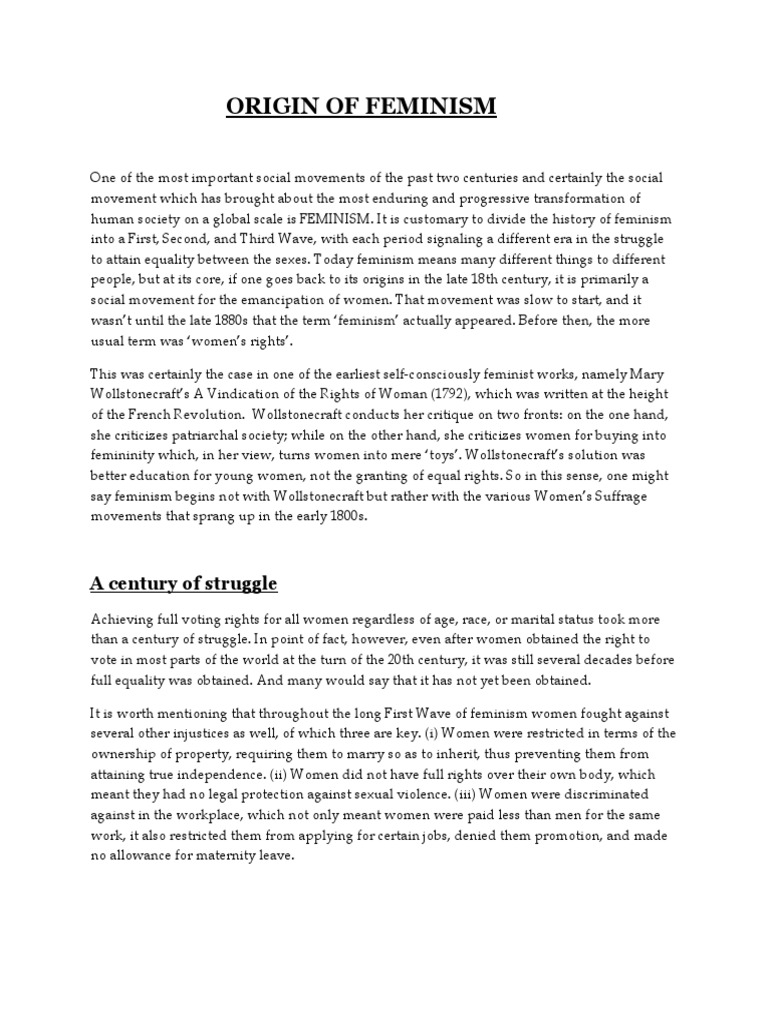
Were there whispers of feminist thought before the mid-19th century? Absolutely. Consider Mary Wollstonecraft’s A Vindication of the Rights of Woman (1792), a scorching indictment of societal expectations and a clarion call for female autonomy. It wasn’t just a book; it was an act of defiance, a cognitive hand grenade tossed into the drawing rooms of the aristocracy. Yet, while Wollstonecraft’s work undeniably foreshadowed the First Wave, it didn’t ignite a widespread movement. It was a lone ember, glowing in the darkness.
The actual ignition point is often attributed to the 1848 Seneca Falls Convention in the United States. This event, organized by Elizabeth Cady Stanton and Lucretia Mott, is widely considered the Big Bang of the First Wave. But why? What made Seneca Falls so seismic? It wasn’t simply the gathering itself, but the Declaration of Sentiments, a bold reimagining of the Declaration of Independence that demanded equal rights for women, including the radical notion of suffrage. This document was a gauntlet thrown down, a declaration of war against the suffocating constraints of Victorian society. It was the crystallization of simmering discontent into a tangible, actionable agenda.
Key Dates: Milestones on a Thorny Path
Forget the sanitized timeline. Let’s dissect the key moments, exposing the messy realities behind the carefully curated narratives.
1848: The Seneca Falls Convention: Yes, it’s important. But let’s acknowledge the inherent limitations. It was largely a gathering of white, middle-class women. The concerns of working-class women, enslaved women, and women of color were largely absent from the agenda. The universal sisterhood proclaimed was, in reality, tragically exclusionary.
1869: The Formation of the National Woman Suffrage Association (NWSA) and the American Woman Suffrage Association (AWSA): A schism, darlings! Even within the movement, factions emerged. The NWSA, led by Stanton and Susan B. Anthony, took a broader, more radical approach, advocating for a constitutional amendment granting women suffrage and addressing other issues like marriage and divorce laws. The AWSA, on the other hand, favored a state-by-state approach and focused solely on suffrage. This division weakened the movement, diverting energy into internecine squabbles rather than a united front against the patriarchy.
1890: The National American Woman Suffrage Association (NAWSA) is Formed: The two rival organizations merge, supposedly strengthening the movement. But did it really? The focus remained overwhelmingly on suffrage, often at the expense of other crucial issues affecting women’s lives. The promise of unity often masked deep-seated ideological differences.
Early 20th Century: The Rise of Radical Suffrage: Enter the Pankhursts in Britain! Emmeline, Christabel, and Sylvia Pankhurst, along with their Women’s Social and Political Union (WSPU), adopted militant tactics, including protests, hunger strikes, and even acts of arson. They were vilified as dangerous radicals, hysterical harpies threatening the social order. But their actions, however controversial, forced the issue of suffrage onto the national stage. They understood the power of disruption, the necessity of making the powerful uncomfortable.
1916: The National Woman’s Party (NWP) is Founded: Alice Paul, a brilliant and uncompromising strategist, formed the NWP in the United States, adopting similar militant tactics to the British suffragettes. They picketed the White House, staged hunger strikes in prison, and faced brutal police repression. They understood that polite requests and gentle persuasion were not enough to shatter the edifice of male supremacy.
1920: The 19th Amendment is Ratified in the United States: Victory! American women finally win the right to vote. But let’s not delude ourselves into thinking this was the end of the struggle. The 19th Amendment primarily benefited white women. Black women, particularly in the Jim Crow South, continued to face systemic disenfranchisement. The fight for true equality was far from over.
The Lingering Shadow of Colonialism and Imperialism
It’s crucial to remember that the First Wave was largely a Western phenomenon. While feminist movements emerged in other parts of the world, they were often intertwined with anti-colonial struggles and confronted entirely different sets of challenges. The concerns of women in colonized countries were often marginalized or ignored by Western feminists, perpetuating a pattern of dominance and exclusion. The “universal sisterhood” preached was often a fiction, masking the complicity of some Western feminists in the structures of imperialism.
The Unfinished Business: Intersectional Failures and Enduring Legacies
The First Wave achieved significant milestones, most notably the right to vote. But it also left a legacy of unresolved issues. The failure to adequately address the concerns of women of color, working-class women, and women with disabilities is a stain on the movement’s history. The obsession with suffrage often overshadowed other critical issues, such as economic equality, reproductive rights, and an end to gender-based violence.
Moreover, the focus on legal rights often neglected the deeper cultural and societal norms that perpetuated gender inequality. The patriarchy is not simply a matter of laws and policies; it’s a deeply ingrained system of beliefs, attitudes, and practices that shapes our lives in countless ways. Overturning a discriminatory law is one thing; dismantling the deeply rooted prejudices that underpin it is an entirely different challenge.
So, where does this leave us? Are we to dismiss the First Wave as a failed experiment? Absolutely not. Despite its shortcomings, it laid the groundwork for subsequent feminist movements. It established the vocabulary of feminist discourse, articulated the core principles of gender equality, and inspired generations of women to fight for a better world. It’s crucial to learn from the mistakes of the past, to acknowledge the complexities and contradictions of the First Wave, and to build a more inclusive and intersectional feminist movement for the future.
The First Wave was not a triumphant surge that crashed on the shores of victory. It was a turbulent, often contradictory current that carved channels through the landscape of social change. Understanding its complexities, its triumphs, and its failures is essential for navigating the treacherous waters of contemporary feminism. And remember, darling revolutionaries, the fight is far from over. The tide is still turning.






Leave a Comment