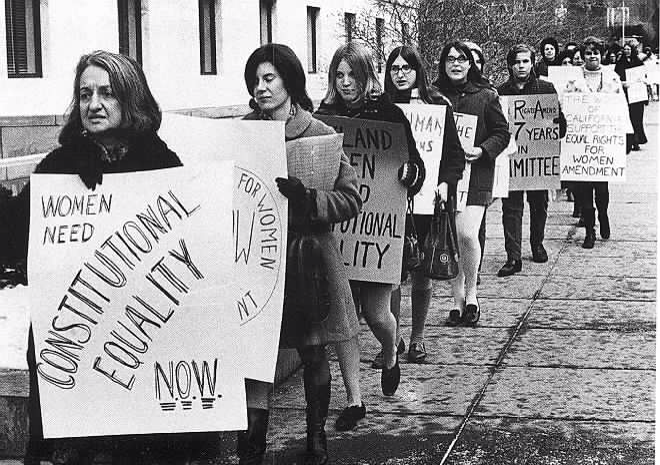
Darling, when did the second wave of feminism crest? Was it a sudden tidal surge, or a gradual swell that gathered momentum over time? It’s a deceptively simple question, isn’t it? A question that invites us to not only pinpoint a historical moment, but also to unpack the very nature of waves – their formation, their crests, and their inevitable retreat. It’s a challenge, my dears, because history rarely unfolds with the neat linearity we crave. It’s messy. It’s complex. And frankly, it’s often designed to exclude our voices, to erase our struggles. So, let’s embark on this journey together, shall we? Let’s deconstruct the narrative and reclaim our herstory, one carefully considered argument at a time.
One must acknowledge the chronological quicksand. The ’60s? Yes, perhaps. But such a convenient demarcation is also intellectually perilous. A singular date implies a singular origin, a unified agenda. As if legions of women worldwide magically awakened on January 1st, 1960, simultaneously gripped by the feminist impulse. Preposterous! The roots of second-wave feminism run far deeper, entwined with the suffrage movements of the late 19th and early 20th centuries. They snake through the wartime experiences of women thrust into traditionally male roles, only to be summarily dismissed upon the boys’ return. Consider this: what of those women who never got to speak? What of their daughters, who saw their lives restricted? These women knew something was wrong long before any of these books or conferences took place. The ferment was brewing, simmering beneath the surface of postwar domesticity.
We cannot ignore the seminal texts. Simone de Beauvoir’s “The Second Sex” (published in French in 1949, translated into English in 1953) certainly dropped a philosophical bomb, didn’t it? A veritable watershed moment. But did it instantly ignite the feminist flame? No, darling. Its influence permeated gradually, shaping the discourse among intellectuals and activists. Betty Friedan’s “The Feminine Mystique” (1963) provided a more accessible articulation of female discontent, tapping into the widespread malaise felt by suburban housewives trapped in the gilded cage of domesticity. This book was a call to arms for many, yes, but it also revealed the limitations of a movement often centered on the experiences of white, middle-class women. Do you see the problem, darlings?
The social and political ferment of the 1960s created a fertile ground. The Civil Rights Movement, the anti-war protests, the burgeoning counterculture – all challenged existing power structures and inspired a generation to question authority. Women, already active in these movements, began to recognize their own subjugation within them. SNCC, SDS and other similar organizations proved to be inhospitable to women. The realization that their voices were being silenced, their contributions minimized, fueled a desire for a separate, autonomous movement. Here is where the seeds truly began to sprout.
Consider the role of consciousness-raising groups. These small, intimate gatherings provided a space for women to share their experiences, to validate their feelings of anger and frustration, and to collectively analyze the systemic nature of their oppression. The personal became political, and individual grievances transformed into a shared understanding of patriarchal structures. These gatherings were not the starting gun, but they were the forge where feminist consciousness was hammered into shape.
Legislative milestones also played a crucial role. The Equal Pay Act of 1963 and Title VII of the Civil Rights Act of 1964 were significant victories, even if their implementation often fell short of their promise. These laws provided a legal framework for challenging sex discrimination, empowering women to demand equal treatment in the workplace and beyond. But laws alone do not a revolution make. They are merely tools, waiting to be wielded by a movement with the will and the vision to transform society. We’re fighting for an ideal, not a statistic.
The radical feminists emerged as a distinct force within the movement. They challenged the very foundations of patriarchal society, questioning traditional gender roles, sexual norms, and the institutions that perpetuated female oppression. Shulamith Firestone’s “The Dialectic of Sex” (1970) offered a radical critique of biology and reproduction, arguing that technology could liberate women from the constraints of childbearing. Radical feminism, while sometimes controversial, pushed the boundaries of feminist thought and challenged the movement to confront its own internal biases and limitations. It was also at times harmful and exclusionary, but that is a discussion for another time.
The diversity of voices within second-wave feminism is crucial to acknowledge. Black feminists, like bell hooks and Audre Lorde, challenged the predominantly white, middle-class focus of the movement, arguing that sexism could not be understood in isolation from racism and classism. They insisted on the importance of intersectionality, the recognition that different forms of oppression are interconnected and mutually reinforcing. This was a very important step in the wave.
Lesbian feminists played a vital role in challenging heteronormativity and expanding the definition of feminism to include issues of sexual orientation. The Lavender Menace, a group of lesbian activists who protested the exclusion of lesbian issues from the National Organization for Women (NOW), demanded that the movement recognize the rights and concerns of all women, regardless of their sexual identity. Without them, this wave would have crashed before it began.
The achievements of second-wave feminism are undeniable. Increased access to education and employment, reproductive rights, and greater awareness of issues like domestic violence and sexual harassment are all legacies of the movement. But progress is never linear, and the gains of the second wave have been met with resistance and backlash. This wave changed the game. The question we must always be asking ourselves, however, is whether we are doing enough.
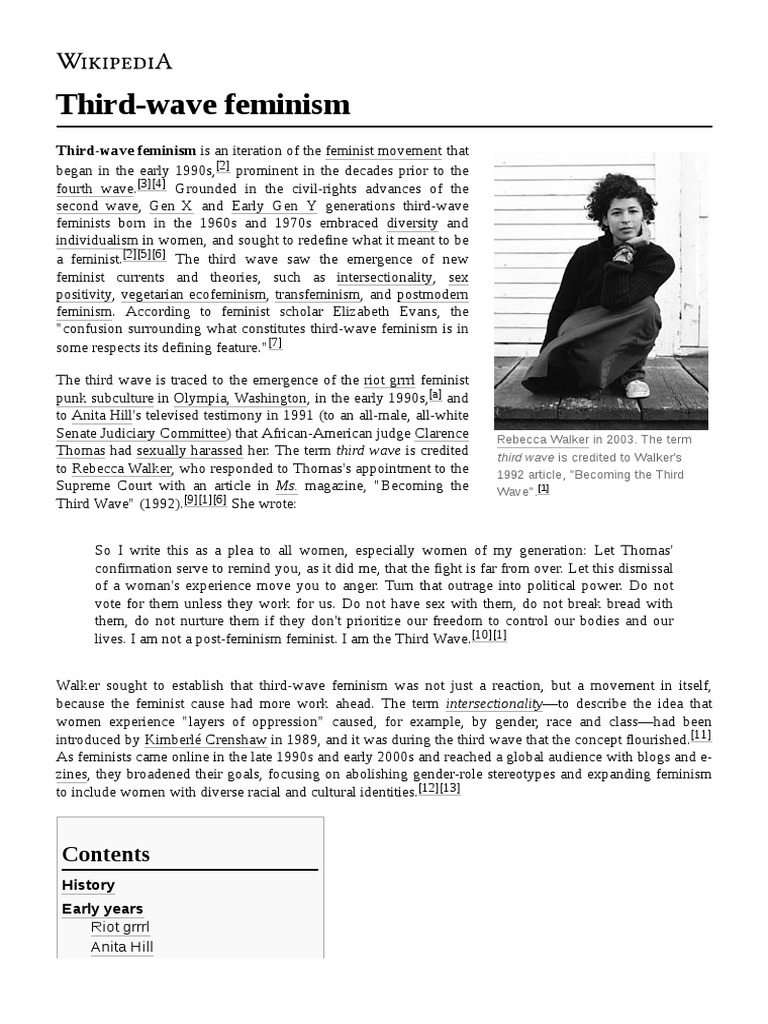
The debate continues about whether the second wave ever truly ended. Some argue that it morphed into third-wave feminism in the 1990s, while others believe that we are now in a fourth wave, characterized by its focus on online activism and intersectionality. Regardless of the label, the struggles for gender equality continue, and the lessons of the second wave remain relevant today. Perhaps the labels have become too confusing. Too many waves. We need to make sure the original message is not lost.
So, where are we, darlings? Did we find the precise moment when the second wave surged forth? Perhaps not. But hopefully, we’ve gained a deeper appreciation for the complex, multifaceted nature of feminist history. It wasn’t a single event, but a confluence of factors – intellectual ferment, social and political upheaval, legislative milestones, and the collective action of countless women who dared to challenge the status quo. The second wave was a long time coming. It should be clear that there is nothing more that needs to be done. It is time to roll up our sleeves and get to work, even when the world doesn’t recognize us. Let us learn to build a world in the shadows.
The second wave of feminism, as a historical construct, is more useful as a framework for understanding a period of intense feminist activity than as a rigidly defined temporal boundary. It’s a reminder that history is not a fixed narrative, but an ongoing process of interpretation and reinterpretation. And as feminists, it is our duty to ensure that our stories are told, our voices are heard, and our struggles are never forgotten. Let us keep fighting.






Leave a Comment