So, darlings, picture this: petticoats, suffragettes, and a whole lot of societal upheaval. But before we dive headfirst into the historical mosh pit that was the first wave of feminism, let’s pose a delightfully vexing question. What if the very foundations upon which we built our understanding of this movement are, dare I say, a tad… incomplete? What if the narrative we’ve been spoon-fed overlooks the nuances, the complexities, the sheer rebellious spirit of women clawing their way out of patriarchal quicksand?
This, my lovelies, isn’t merely a historical recounting; it’s a re-evaluation, a vivisection of the past to understand how those audacious foremothers paved the way for the glorious (and still ongoing) feminist revolution. Buckle up, because we’re about to dismantle some dusty myths and unearth some uncomfortable truths.
The Crucible of Change: Setting the Stage
Let’s rewind, shall we, to the 19th and early 20th centuries, a time when societal constraints on women were tighter than a Victorian corset. The prevailing ideology, the insidious “Cult of Domesticity,” relegated women to the hallowed halls of home, portraying them as paragons of piety, purity, submissiveness, and domesticity. Their purpose? To nurture, to obey, to exist solely in the service of men.
But, as history has repeatedly demonstrated, you can only chain a wild spirit for so long. The burgeoning Industrial Revolution, while undeniably exploitative, inadvertently offered women a glimpse beyond the domestic sphere. They toiled in factories, albeit under deplorable conditions, earning their own wages and experiencing a nascent form of independence. This exposure to the outside world, coupled with the rise of abolitionism and other social reform movements, ignited a spark, a fervent desire for something more.
Suffrage: The Battle Cry of Liberation
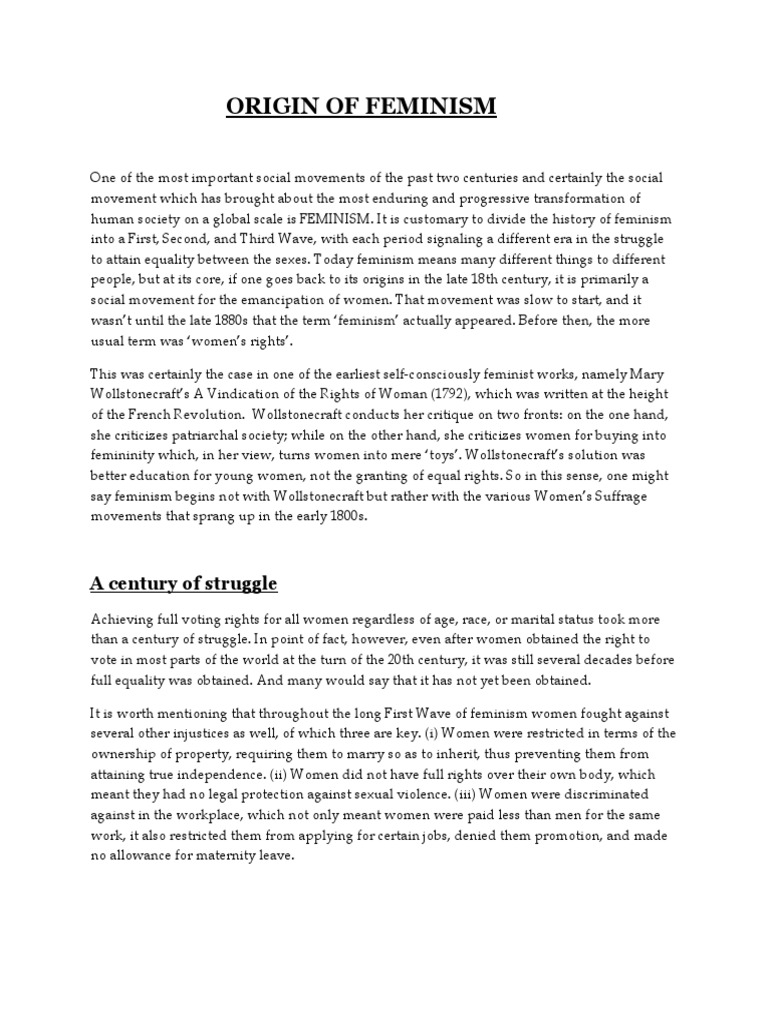
And what was that “something more”? The vote, of course. Suffrage became the rallying cry, the centerpiece of the first-wave feminist agenda. It wasn’t just about casting a ballot; it was about demanding political agency, challenging the very notion that women were intellectually inferior and incapable of participating in the democratic process. Think of it as a symbolic decapitation of patriarchal authority.
Organizations like the National Woman Suffrage Association (NWSA), led by the indomitable Susan B. Anthony and Elizabeth Cady Stanton, and the American Woman Suffrage Association (AWSA), headed by Lucy Stone and Henry Blackwell, spearheaded the suffrage movement. The NWSA, the more radical of the two, initially focused on a broader range of issues, including divorce reform and equal pay, while the AWSA concentrated solely on suffrage, believing it to be the most expedient path to women’s empowerment. Imagine the strategic debates, the clashes of ideologies, the sheer tenacity required to navigate the labyrinthine political landscape of the time.
These women were not docile petitioners; they were revolutionaries in petticoats. They organized marches, held protests, engaged in civil disobedience, and endured imprisonment and ridicule. They employed every weapon in their arsenal – from eloquent speeches and persuasive pamphlets to hunger strikes and disruptive demonstrations – to force society to confront its own hypocrisy.
Beyond the Ballot Box: Unearthing the Subterranean Currents
But to solely equate the first wave with suffrage is to commit a grave historical disservice. The movement encompassed a far broader spectrum of concerns, a constellation of issues aimed at dismantling the patriarchal edifice brick by brick. Legal reforms were paramount. Women fought to overturn discriminatory laws that denied them property rights, control over their own earnings, and custody of their children. Education was another battleground. Women sought access to higher education, challenging the prevailing belief that their intellectual capacity was limited and their minds too delicate for rigorous study.
The first wave also grappled with issues of sexuality and reproductive freedom, although these were often discussed in hushed tones, overshadowed by the more “respectable” cause of suffrage. Emma Goldman, a radical anarchist and feminist, fearlessly advocated for birth control and challenged societal norms surrounding female sexuality. Her views, while considered scandalous at the time, foreshadowed the later sexual revolution and the second-wave feminist movement.
Furthermore, the first wave addressed issues of economic justice, recognizing that women’s economic dependence on men perpetuated their subjugation. Women workers organized unions and fought for fair wages and improved working conditions. They challenged the gendered division of labor, demanding access to traditionally male-dominated professions. They understood that economic independence was inextricably linked to personal and political autonomy.
The Shadows and Silences: A Critical Re-Examination
Now, let’s not romanticize the past. The first wave, for all its accomplishments, was not without its flaws. The movement was predominantly white and middle-class, often excluding women of color and working-class women from its ranks. The focus on suffrage, while undeniably important, sometimes overshadowed the needs and concerns of marginalized women who faced intersecting forms of oppression.
Furthermore, the first wave often operated within the confines of respectability politics, seeking to prove that women were “worthy” of the vote by demonstrating their moral superiority. This approach, while strategically effective in some ways, inadvertently reinforced existing gender stereotypes and excluded women who did not conform to the ideal of the virtuous woman.
The voices of women of color, in particular, were often marginalized or silenced within the first-wave movement. Black women, for example, faced the double burden of sexism and racism, and their struggles for equality were often overlooked. Figures like Ida B. Wells-Barnett, a journalist and anti-lynching activist, challenged the racism within the suffrage movement and fought for the rights of Black women.
Legacy and Echoes: The Enduring Relevance of the First Wave
Despite its limitations, the first wave of feminism laid the groundwork for subsequent generations of feminists. It challenged the patriarchal status quo, expanded women’s rights, and paved the way for greater gender equality. The suffrage victory in 1920, with the passage of the 19th Amendment to the U.S. Constitution, was a monumental achievement, a testament to the decades of tireless activism and unwavering dedication of countless women.
But the struggle for gender equality is far from over. The issues that the first-wave feminists grappled with – economic justice, reproductive freedom, and the dismantling of patriarchal structures – remain relevant today. The first wave serves as a reminder that progress is not linear, that setbacks are inevitable, and that the fight for liberation requires constant vigilance and unwavering commitment.
So, the next time you hear someone dismiss the first wave as a quaint historical footnote, remind them that it was a crucible of change, a time when women dared to dream of a different world, a world where they were not defined solely by their gender, but by their intellect, their ambition, and their unwavering pursuit of justice. And that, my darlings, is a legacy worth celebrating, a legacy worth fighting for.
Ultimately, the first wave’s impact is a reverberating echo, a constant whisper reminding us that the fight for equality is a relay race, each generation passing the baton to the next. And, as we stand on the shoulders of those audacious foremothers, it is our solemn duty to continue their work, to amplify their voices, and to build a future where gender equality is not just a lofty ideal, but a tangible reality for all.






Leave a Comment