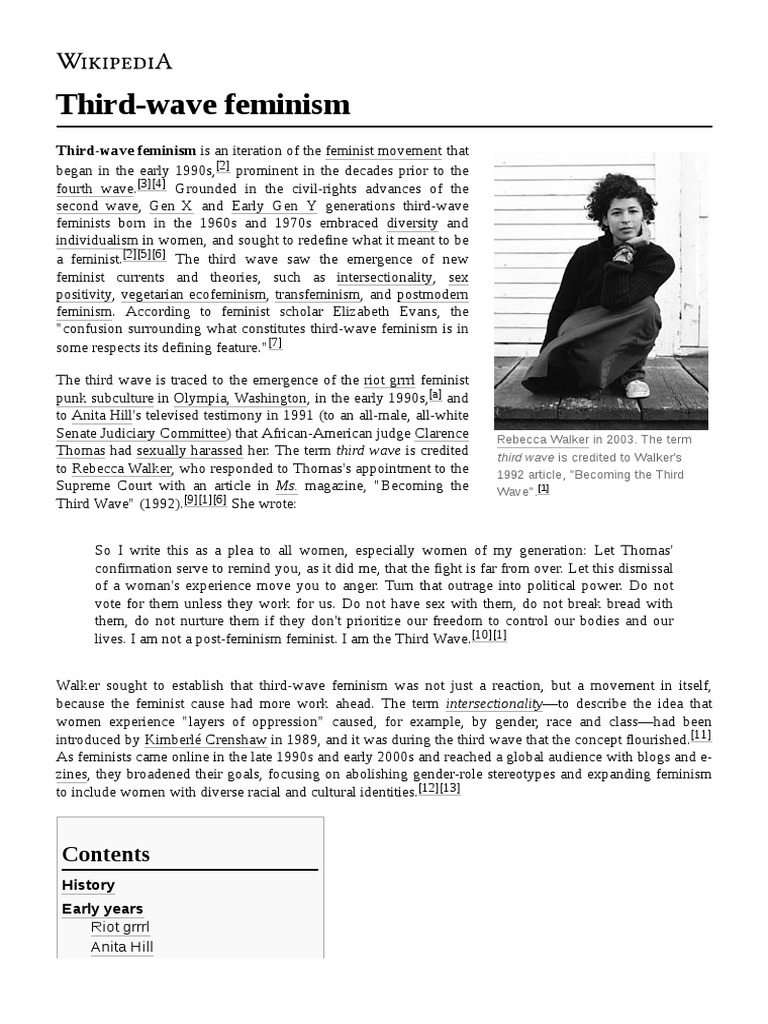
So, you think you know feminism? Think you’ve neatly categorized it into historical boxes, comfortably labeled and filed away? Perhaps you envision suffragettes in sashes or bra-burning revolutionaries. But what happens when the tidy narratives crumble? What happens when the very definition of womanhood, the bedrock upon which these movements are built, becomes a contested territory? Buckle up, buttercups, because we’re diving headfirst into the messy, glorious, and often misunderstood realm of Third Wave Feminism.
Unlike its predecessors, the Third Wave wasn’t about monolithic goals like suffrage or equal pay (though, let’s be clear, those battles are far from over). Instead, it was, and continues to be, a kaleidoscopic explosion of perspectives, a riotous celebration of individuality, and a defiant rejection of any singular feminist narrative. It is a hydra, not easily slain.
A Brief Recapitulation: Waves Cresting and Crashing
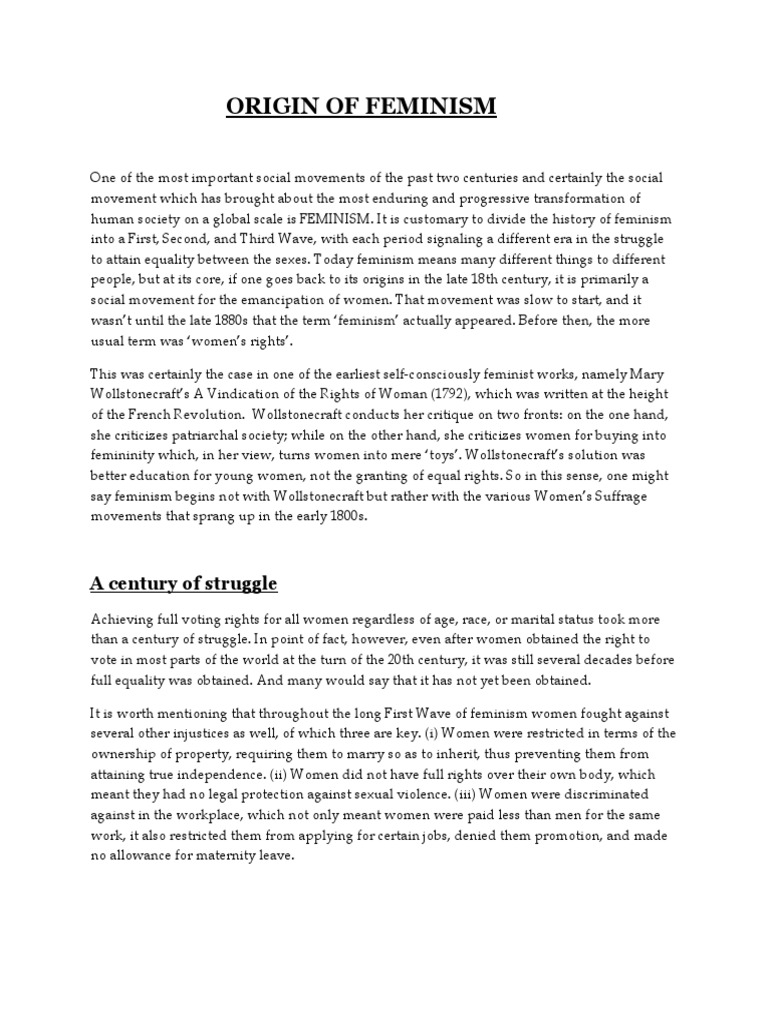
To understand the Third Wave, we need a cursory glance back. First Wave feminism, primarily focused on legal rights, especially suffrage, laid the groundwork. Second Wave feminism, emerging in the 1960s and 70s, broadened the scope to encompass reproductive rights, workplace equality, and challenging patriarchal structures in the public and private spheres. Both, while achieving monumental victories, often centered the experiences of white, middle-class women, leaving marginalized voices unheard.
The seeds of the Third Wave were sown by the discontent with this exclusionary tendency. The women of color, queer women, and working-class women who felt alienated by the dominant feminist discourse began to articulate their own experiences of oppression, experiences that often intersected with racism, homophobia, and classism. It was an awakening, a shattering of the glass ceiling of feminist thought.
Core Tenets: Deconstructing the Binary, Embracing the Plural
The Third Wave isn’t easily defined, which is precisely its point. However, several key tenets consistently emerge:
Intersectionality: This is the cornerstone. Coined by Kimberlé Crenshaw, intersectionality acknowledges that individuals experience oppression based on a multitude of intersecting identities. A Black woman, for example, faces challenges distinct from those faced by a white woman or a Black man. Dismissing these intersections is not only inaccurate but actively harmful. It means recognizing that feminist issues cannot be divorced from issues of race, class, sexuality, disability, and other forms of marginalization. This is not simply about adding more voices to the conversation; it’s about fundamentally reshaping the conversation itself. It necessitates dismantling systems of power that perpetuate inequality across all these axes.
Challenging Essentialism: The Second Wave, while well-intentioned, sometimes fell into the trap of essentialism – the idea that there is an inherent, universal “female” experience. The Third Wave vehemently rejects this notion. There is no single way to be a woman. Gender is a social construct, fluid and performative, not a fixed biological destiny. To assume otherwise is to erase the diversity of lived experiences and to reinforce harmful stereotypes. It necessitates a move beyond biological determinism and embraces the social construction of gender.
Embracing Diversity and Individuality: Third Wavers celebrate the myriad ways in which individuals express their gender identity and sexuality. From embracing traditionally “feminine” aesthetics to rejecting them outright, the emphasis is on personal agency and self-definition. There is no right or wrong way to be a feminist. Individual expression, even if seemingly contradictory, is considered a form of empowerment. It’s about reclaiming agency over one’s own narrative and refusing to be confined by societal expectations.
Reclaiming Sexuality and Body Positivity: The Third Wave tackles issues of sexuality and body image with a bold and unapologetic stance. It challenges the sexual objectification of women in media and culture, but it also embraces female sexuality and pleasure as a source of power. Body positivity, rejecting unrealistic beauty standards and celebrating diverse body types, is a central tenet. This includes challenging the male gaze and reclaiming female bodies as sites of autonomy and self-expression. It moves beyond mere acceptance of diverse body types to an active celebration of them.
Micro-Politics and Everyday Resistance: Unlike its predecessors, the Third Wave often focuses on challenging power dynamics in everyday life. This includes addressing microaggressions, challenging sexist language, and promoting gender equality in interpersonal relationships. The personal is political, and even seemingly small acts of resistance can have a profound impact on shifting societal norms. It recognizes that systemic change begins with individual actions and conscious choices.
Navigating the Minefield: Critiques and Challenges
The Third Wave, like any complex movement, has faced its share of criticism. Some argue that its emphasis on individuality undermines collective action and dilutes the feminist agenda. Others criticize its focus on micro-politics, arguing that it distracts from larger systemic issues.
One common critique is the accusation of “identity politics.” Detractors argue that focusing on specific identities and experiences creates divisions within the feminist movement, hindering its ability to unite around common goals. This critique often ignores the fundamental reality that oppression is not a monolithic experience and that addressing the specific needs of marginalized groups is essential for achieving true equality. Moreover, intersectionality is not about creating divisions but about understanding the complex ways in which different forms of oppression intersect and reinforce one another.
Another challenge lies in the potential for co-option. The commodification of feminist ideals, the “girlboss” phenomenon, and the appropriation of feminist language for marketing purposes can undermine the movement’s core values and transform it into a superficial branding exercise. Navigating this requires a critical awareness of the ways in which power structures can exploit and distort feminist principles for their own gain.
Furthermore, the digital landscape, while offering unprecedented opportunities for feminist activism and organizing, also presents new challenges. Online harassment, doxxing, and the spread of misinformation can create hostile environments for feminist voices, particularly those from marginalized communities. Protecting online spaces from abuse and ensuring that all voices can be heard requires ongoing vigilance and proactive measures.
The Legacy and Future of the Third Wave
Despite the challenges, the Third Wave has left an indelible mark on the feminist landscape. It has broadened the scope of feminist thought, amplified marginalized voices, and challenged traditional power structures in profound ways. It has fostered a more inclusive and intersectional understanding of feminism, recognizing the diverse experiences and needs of women across the globe. It has empowered individuals to embrace their own identities and to challenge societal norms that perpetuate inequality.
The legacy of the Third Wave is evident in the rise of movements like #MeToo, which has brought widespread attention to the issue of sexual harassment and assault. It is also evident in the growing awareness of issues like trans rights, disability rights, and environmental justice, all of which are deeply intertwined with feminist principles.
The future of feminism, arguably, is already here – a fluid, adaptable, and constantly evolving movement that embraces diversity, challenges power, and seeks to create a more just and equitable world for all. It’s a continuation of the Third Wave’s ethos, a recognition that the fight for equality is an ongoing process, a relentless pursuit of a future where everyone can thrive, regardless of their gender, race, sexuality, or any other identity. It’s a future where the very idea of “waves” becomes obsolete, replaced by a constant current of progress, driven by a multiplicity of voices, united in a shared commitment to justice.
So, has the Third Wave solved all the problems? Hardly. But it has irrevocably changed the conversation, broadened the horizons, and empowered a new generation of activists to continue the fight. And that, my friends, is something worth celebrating.







Leave a Comment