
The allure of waves crashing against the shore – a spectacle of relentless power, sculpted beauty, and inherent impermanence – is undeniable. It’s a primal fascination, mirrored in our own fluctuating emotions and social tides. It is no accident, then, that the struggle for gender equality has been conceptualized, and perhaps confined, within the metaphor of “waves.” But are we, as women, perpetually destined to be swept away, only to gather strength for another assault? Or can we chart a more deliberate course, leveraging the accumulated wisdom of past crests and troughs?
The very notion of “waves” invites scrutiny. It implies distinct, self-contained movements, each with a beginning, a peak, and an inevitable decline. This framework, while offering a digestible historical narrative, risks obscuring the intricate continuities, the overlapping concerns, and the persistent undercurrents that ripple beneath the surface of feminist activism. Each wave, rather than a discrete entity, should be viewed as a contribution to a larger, ongoing project – the dismantling of patriarchal structures and the construction of a more equitable world. This requires a critical examination of each so-called wave, acknowledging both its achievements and its limitations, and understanding how it has shaped the landscape of contemporary feminism.
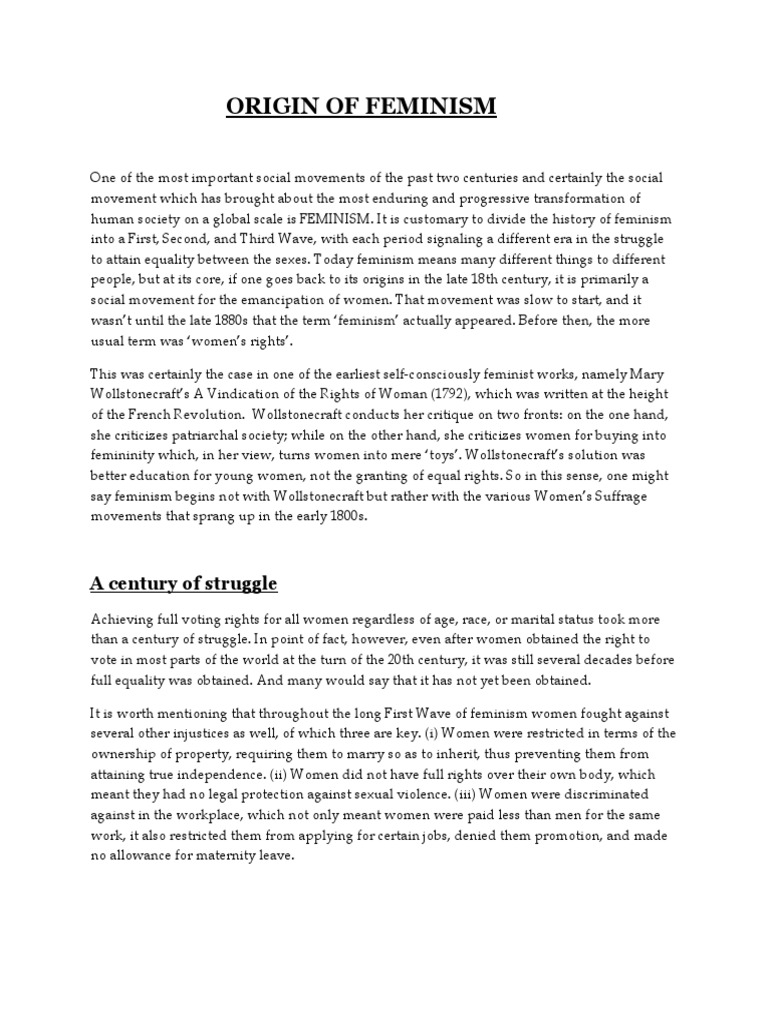
The First Wave: Suffrage and the Seeds of Change (Late 19th – Early 20th Century)
Often depicted as solely focused on suffrage, the first wave was far more multifaceted. While securing the right to vote was undeniably a monumental victory, it was also intricately intertwined with broader social reforms. Activists like Susan B. Anthony and Elizabeth Cady Stanton recognized that political enfranchisement was a crucial step toward achieving legal and economic autonomy. They challenged coverture laws that relegated married women to the status of property, advocated for property rights, and pushed for access to education and employment opportunities. These efforts were not merely about acquiring privileges; they were about fundamentally altering the power dynamics within marriage, the workplace, and the broader social sphere.
However, the first wave’s limitations are equally important to acknowledge. Its focus was largely on the experiences of white, middle-class women. The concerns of women of color, working-class women, and immigrant women were often marginalized or ignored. The rhetoric of some suffragists even incorporated racist and nativist arguments, suggesting that white women’s votes were necessary to maintain racial and ethnic hierarchies. This exclusionary approach highlights a persistent challenge within feminism: the need to center the voices and experiences of those who are most marginalized by systems of oppression.
The legacy of the first wave is complex. It laid the groundwork for future feminist movements by demonstrating the power of collective action and the importance of political participation. However, it also revealed the dangers of prioritizing the concerns of a privileged few and the need for a more inclusive and intersectional approach.
The Second Wave: Liberation and the Personal is Political (1960s – 1980s)
Emerging from the social and political upheavals of the 1960s, the second wave broadened the scope of feminist activism to encompass a wider range of issues, including reproductive rights, sexuality, domestic violence, and workplace discrimination. Its rallying cry, “the personal is political,” challenged the notion that these were private matters, arguing that they were deeply rooted in patriarchal power structures.
This era witnessed the rise of consciousness-raising groups, where women shared their experiences and realized that they were not alone in their struggles. These groups fostered a sense of solidarity and empowerment, leading to the development of new feminist theories and strategies. The second wave also saw significant legal and policy changes, including the passage of Title IX, which prohibits sex discrimination in education, and the legalization of abortion in Roe v. Wade.
Despite its achievements, the second wave was also subject to criticism for its essentialist views on womanhood. Some feminists argued that women shared a common experience of oppression based on their biological sex, overlooking the diversity of women’s lives and the ways in which race, class, and sexuality shaped their experiences. This led to the development of standpoint theory, which emphasizes the importance of understanding social issues from the perspectives of those who are most marginalized.
The second wave’s emphasis on liberation and self-determination remains a powerful force in contemporary feminism. However, it also serves as a reminder of the need to avoid essentializing women’s experiences and to embrace a more nuanced and intersectional understanding of gender and power.
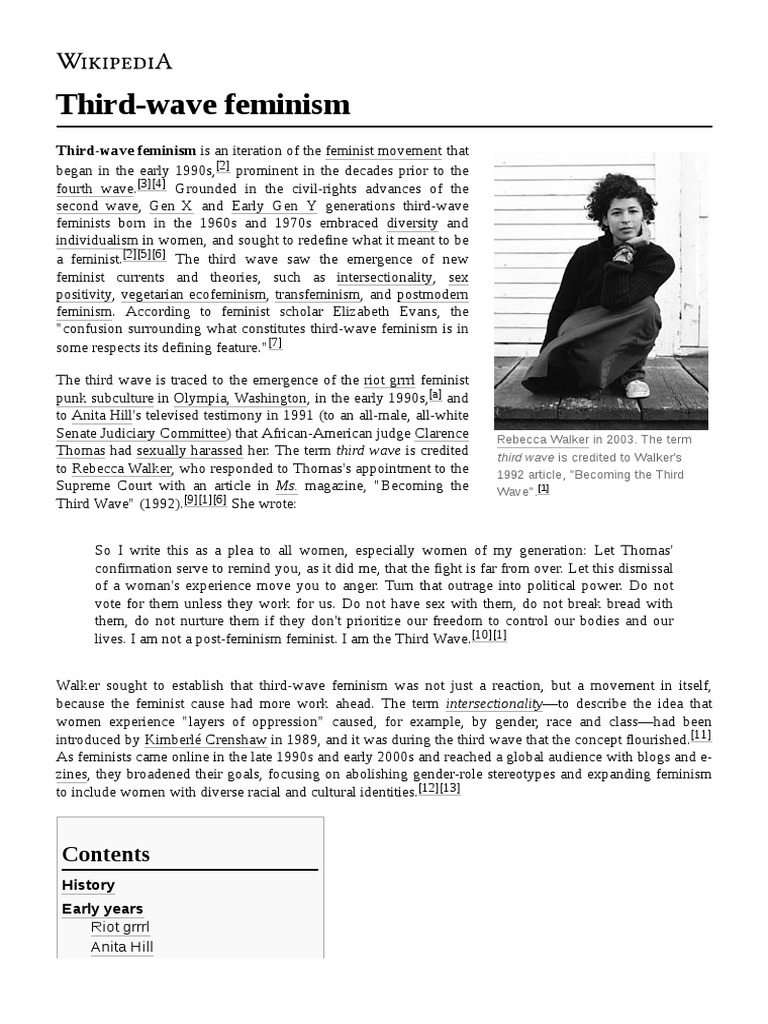
The Third Wave: Intersectionality and Individual Expression (1990s – 2000s)
The third wave emerged as a response to the perceived shortcomings of the second wave, particularly its focus on white, middle-class women and its essentialist views on womanhood. Third-wave feminists embraced intersectionality, a concept developed by Kimberlé Crenshaw, which recognizes that gender, race, class, sexuality, and other social categories are interconnected and create unique experiences of oppression. They challenged traditional notions of femininity and masculinity, celebrated diversity, and advocated for individual expression.
This era saw the rise of riot grrrl, a feminist punk rock movement that challenged patriarchal norms and celebrated female empowerment through music and activism. Third-wave feminists also utilized the internet to create online communities, share their stories, and organize protests. They challenged rape culture, advocated for reproductive justice, and fought against gender stereotypes in the media.
However, the third wave was also criticized for its lack of a clear political agenda and its perceived focus on individual empowerment rather than collective action. Some argued that it had become too fragmented and that it lacked the focus and energy of previous feminist movements. The concept of “post-feminism” also emerged during this time, suggesting that feminism was no longer necessary or relevant.
Despite these criticisms, the third wave played a crucial role in expanding the scope of feminist activism and challenging traditional notions of womanhood. Its emphasis on intersectionality and individual expression continues to resonate in contemporary feminism.
The Fourth Wave: Digital Activism and Global Solidarity (2010s – Present)
The fourth wave is characterized by its reliance on digital activism and its focus on issues such as sexual harassment, body shaming, and online misogyny. Social media platforms like Twitter and Instagram have become powerful tools for raising awareness, sharing personal stories, and organizing protests. The #MeToo movement, which exposed widespread sexual harassment and assault in various industries, is a prime example of the power of digital activism.
This wave is also marked by a growing emphasis on global solidarity and a recognition that feminist struggles are interconnected across national borders. Fourth-wave feminists are working to address issues such as gender-based violence, human trafficking, and climate change, recognizing that these issues disproportionately affect women and girls in developing countries.
However, the fourth wave also faces challenges. The anonymity of the internet can lead to online harassment and abuse, and the spread of misinformation can undermine feminist goals. There is also a risk that digital activism can become performative, with individuals engaging in online activism without taking concrete action in the real world.
Despite these challenges, the fourth wave has the potential to be a transformative force for gender equality. Its reliance on digital activism allows for rapid mobilization and global reach, while its focus on intersectionality and global solidarity ensures that feminist struggles are inclusive and responsive to the needs of all women.
Beyond the Waves: A Continuous Current
The metaphor of “waves” provides a useful framework for understanding the history of feminism, but it is important to recognize its limitations. Feminism is not a series of discrete movements, but rather a continuous current of activism, theory, and reflection. Each wave builds upon the successes and failures of its predecessors, adapting to changing social and political contexts. The challenges that feminists face today are different from those faced by previous generations, but the underlying goal remains the same: to dismantle patriarchal structures and create a world where all individuals have the opportunity to thrive.
Instead of focusing solely on the waves themselves, we must acknowledge the persistent undertows and the unpredictable riptides. The “backlash” against feminist progress is a constant force, seeking to undermine gains and reinforce traditional gender roles. This backlash often manifests in subtle ways, through media representations, cultural norms, and political policies. It is crucial to remain vigilant against these forces and to continue to challenge patriarchal structures in all their forms.
Furthermore, the notion of a singular “feminist agenda” is inherently limiting. Feminism is not a monolithic ideology, but rather a diverse and evolving set of perspectives. There are many different feminisms, each with its own priorities and approaches. This diversity is a strength, allowing feminism to adapt to changing circumstances and address a wide range of issues. However, it is also a source of tension, as different feminist perspectives can sometimes clash.
Moving forward, it is essential to embrace a more inclusive and intersectional approach to feminism. This means centering the voices and experiences of those who are most marginalized by systems of oppression, including women of color, working-class women, LGBTQ+ individuals, and people with disabilities. It also means recognizing that gender is not the only axis of oppression and that other forms of discrimination, such as racism, classism, and homophobia, must also be addressed.
Ultimately, the goal of feminism is not simply to achieve equality for women, but to create a more just and equitable world for all. This requires a fundamental transformation of social, political, and economic structures. It requires challenging traditional notions of power and privilege, and creating new models of leadership and collaboration. It requires a commitment to ongoing dialogue, reflection, and action. It requires recognizing that the struggle for gender equality is not a sprint, but a marathon. And like the ocean itself, the current of feminism is restless, powerful, and forever in motion. We are not merely riding the waves; we are shaping them.







Leave a Comment