
Darling, have you ever stopped to consider how the very air we breathe, the battles we fight, and the freedoms we (sometimes) enjoy are built upon the backs of women who clawed, screamed, and strategized their way through societal quicksand? We’re talking, of course, about feminism – not the watered-down, corporate-approved version, but the real deal, the movement that dares to question every damn thing. But here’s the kicker: it didn’t just spring into existence fully formed. Oh no, it unfolded in distinct waves, each crashing against the shores of patriarchy with its own unique force and flavor.
Think of these waves as evolutionary steps, each building upon the successes and, more importantly, learning from the failures of the last. So, buckle up, sister, because we’re diving headfirst into the tempestuous waters of the three waves of feminism. Get ready to have your preconceptions shattered and your outrage ignited.
First Wave Feminism: Suffrage and the Seeds of Discontent (Late 19th – Early 20th Century)
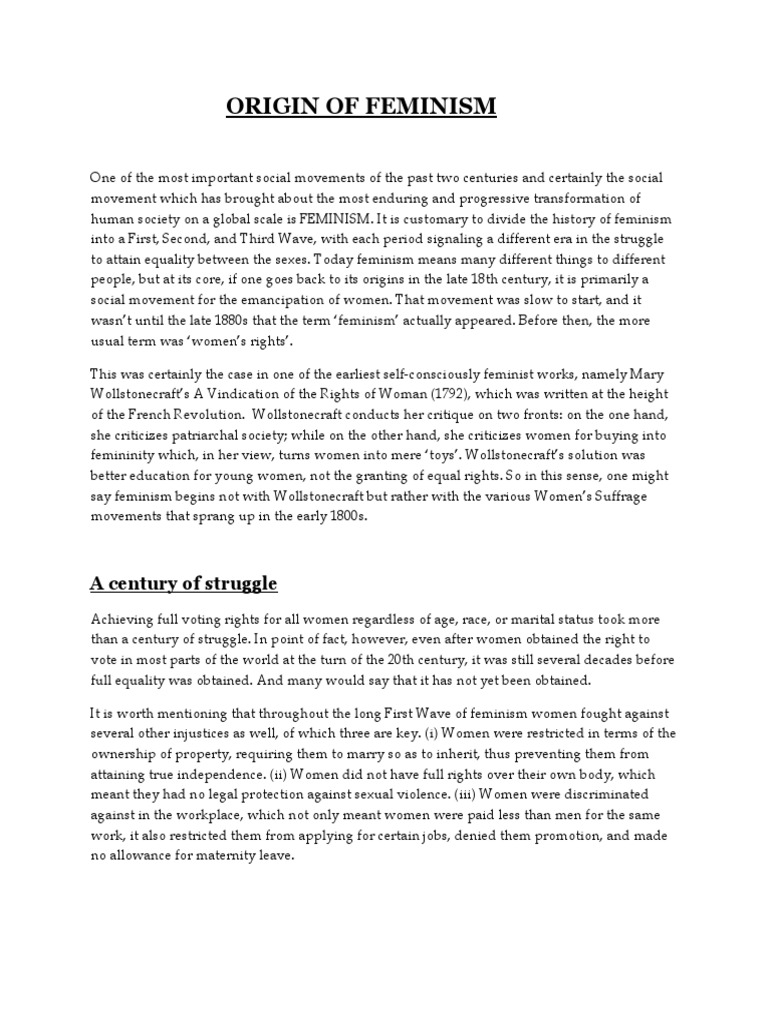
Ah, the genteel rebellion. Our foremothers, corseted and determined, set their sights on the most basic of rights: the vote. But don’t let the perceived primness fool you. These women were revolutionaries in their own right, challenging the very notion that women were intellectually inferior and therefore undeserving of political participation. Picture this: women, armed with pamphlets and sheer audacity, daring to speak in public forums, demanding a seat at the table where decisions that impacted their lives were being made without their input.
The Core Issues: Suffrage, obviously. But it wasn’t *just* about the ballot. It was about property rights. It was about access to education. It was about dismantling the legal framework that treated women as chattel, possessions to be owned and controlled by men.
Key Figures: The usual suspects – Susan B. Anthony, Elizabeth Cady Stanton, Sojourner Truth (whose “Ain’t I a Woman?” speech remains a searing indictment of both sexism and racism). But let’s not forget the countless unsung heroines who organized local chapters, wrote tirelessly, and faced ridicule and arrest to pave the way for future generations. These titans faced derision, violence, and the constant undermining of their intellect.
Strategies and Tactics: Suffrage parades, petitioning, lobbying, civil disobedience (think hunger strikes in prison). They were masters of public persuasion, skillfully leveraging the media (when they could get access) to sway public opinion. Their methods were constrained by the social mores of the time, yet they were undeniably effective in shifting the Overton Window.
The Achieved: The 19th Amendment (1920) granting women the right to vote. A monumental victory, no doubt, but one that primarily benefited white, middle-class women. Which leads us to the critiques…
Critiques: The first wave is often criticized for its focus on the concerns of white, middle-class women, often neglecting the experiences of women of color and working-class women. The movement was also plagued by internal divisions, particularly regarding race and strategies. Did they prioritize respectability politics over radical change? Did their focus on legal reforms inadvertently reinforce other forms of oppression?
Second Wave Feminism: Liberation and the Personal is Political (1960s – 1980s)
Out with the girdles and in with the burning bras! (Okay, maybe not *that* many bras actually burned). The second wave exploded onto the scene with a radical agenda, questioning not just legal inequalities but the very foundations of patriarchal society. This wasn’t just about getting a seat at the table; it was about dismantling the table altogether.
The Core Issues: Reproductive rights (abortion access was paramount), equal pay, challenging gender roles, confronting violence against women, and addressing the societal construction of femininity. Think of Betty Friedan’s *The Feminine Mystique*, a cultural bombshell that exposed the deep dissatisfaction simmering beneath the surface of suburban domesticity.
Key Figures: Gloria Steinem, Betty Friedan, Angela Davis, Audre Lorde. This wave saw the rise of diverse voices, challenging the homogenous narrative of the first wave and bringing intersectionality to the forefront (though not always successfully). Angela Davis, for example, eloquently intertwined the struggles against sexism, racism, and class oppression. Audre Lorde, in her powerful essays and poems, demanded that black women’s experiences be centered in feminist discourse.
Strategies and Tactics: Consciousness-raising groups (where women shared their personal experiences and realized that their struggles were not isolated), protests, demonstrations, the establishment of women’s health clinics and rape crisis centers, and the rise of feminist publishing and media outlets. This wave embraced a more confrontational and radical approach, challenging the status quo at every turn. The slogan “The personal is political” encapsulated the belief that individual experiences of oppression were rooted in systemic power structures.
The Achieved: Landmark legislation like Title IX (prohibiting sex discrimination in education), the legalization of abortion (Roe v. Wade), and increased awareness of issues like domestic violence and sexual harassment. A significant shift in cultural attitudes towards women’s roles and capabilities.
Critiques: Still largely dominated by white, middle-class women. A tendency towards essentialism (the belief that all women share a common experience). A lack of attention to the needs of trans women and other marginalized groups. Did the focus on individual liberation inadvertently overlook the importance of collective action? Did the emphasis on gender difference reinforce harmful stereotypes?
Third Wave Feminism: Intersectionality and the Reclamation of Power (1990s – Present)
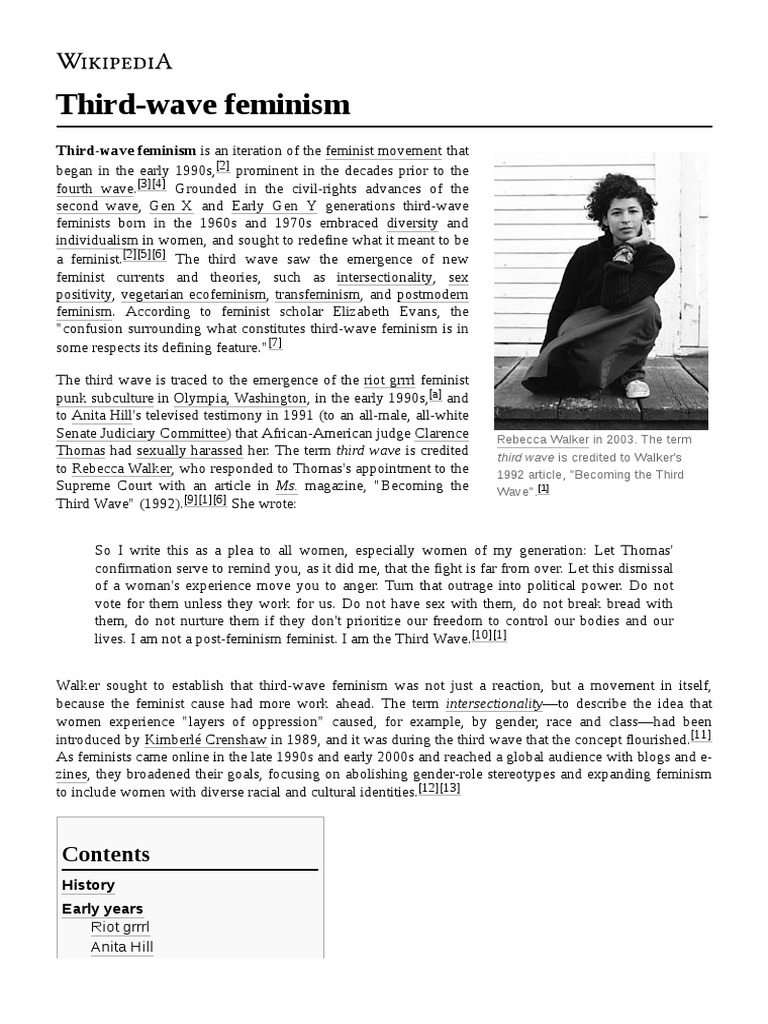
The third wave, born out of the critiques of the second, is a messy, vibrant, and often contradictory force. It embraces diversity, rejects essentialism, and champions intersectionality – the understanding that gender oppression is intertwined with other forms of oppression, such as racism, classism, and homophobia. This wave sees feminism not as a monolithic entity but as a spectrum of experiences and perspectives. It acknowledges the complexities of power and privilege and seeks to create a more inclusive and equitable world.
The Core Issues: Intersectionality, reproductive justice (expanding beyond abortion access to include issues like maternal health and access to contraception for all women), ending rape culture, promoting LGBTQ+ rights, challenging beauty standards, and addressing economic inequality. Third-wave feminists are often concerned with issues like environmental justice and global feminism, recognizing that the struggles of women in different parts of the world are interconnected.
Key Figures: Rebecca Walker, Jennifer Baumgardner, Amy Richards, Kimberlé Crenshaw (who coined the term “intersectionality”). This wave is characterized by a proliferation of voices, often amplified through online platforms. Bloggers, activists, artists, and academics are all contributing to the ongoing conversation about feminism.
Strategies and Tactics: Online activism (blogging, social media campaigns), zines, art, music, grassroots organizing, and a focus on reclaiming and redefining femininity. Third-wave feminists are often adept at using humor and irony to challenge patriarchal norms. They embrace a “do-it-yourself” ethos, creating their own spaces and platforms to amplify their voices.
The Achieved: Increased awareness of intersectionality, a greater focus on issues like LGBTQ+ rights and body positivity, and the rise of online feminist communities. A shift in cultural attitudes towards gender and sexuality, although significant challenges remain.
Critiques: Can be criticized for being too individualistic and lacking a clear political agenda. Is it possible to be “too” inclusive? Does the emphasis on individual expression sometimes overshadow the need for collective action? Has the rise of online feminism led to a dilution of the movement’s core principles?
A Perpetual Cadenza: Feminism’s Undulating Future
So, where does this leave us? Are we now in a fourth wave, a fifth, or are we simply continuing the work of the third? The truth is, the boundaries between the waves are porous and fluid. Feminism is not a linear progression; it’s an ongoing conversation, a constant negotiation between different perspectives and priorities. It’s about recognizing the past, learning from our mistakes, and building a future where all genders can thrive. Some argue the fourth wave is defined by digital activism, a renewed focus on intersectionality and challenging systemic power structures in the digital age. Others might point to ongoing global movements for reproductive rights and against gender-based violence as key indicators.
And here’s the challenge: how do we ensure that feminism remains relevant and accessible to all? How do we bridge the divides between different generations and perspectives? How do we translate online activism into real-world change? How do we prevent the movement from being co-opted by corporations and politicians who pay lip service to feminist ideals while perpetuating the very systems that oppress us?
These are the questions that we must grapple with as we move forward. The waves of feminism may have crested and crashed, but the tide is still rising. And it’s up to us to ensure that it washes away the remnants of patriarchy once and for all. Now, let’s get to work, shall we?





Leave a Comment