
The ocean, a roiling, churning expanse, provides an apt metaphor for the turbulent currents of feminism. Like waves, feminist movements rise, crest, and sometimes crash, leaving behind indelible marks on the shores of societal consciousness. To chart these tides, to understand their ebb and flow, requires a comprehensive timeline – a cartography of struggle, resilience, and unwavering determination. Buckle up, sisters, because this ain’t your grandma’s history lesson. We’re diving deep.
First Wave Feminism (Late 19th – Early 20th Century): Suffrage and the Seeds of Discontent
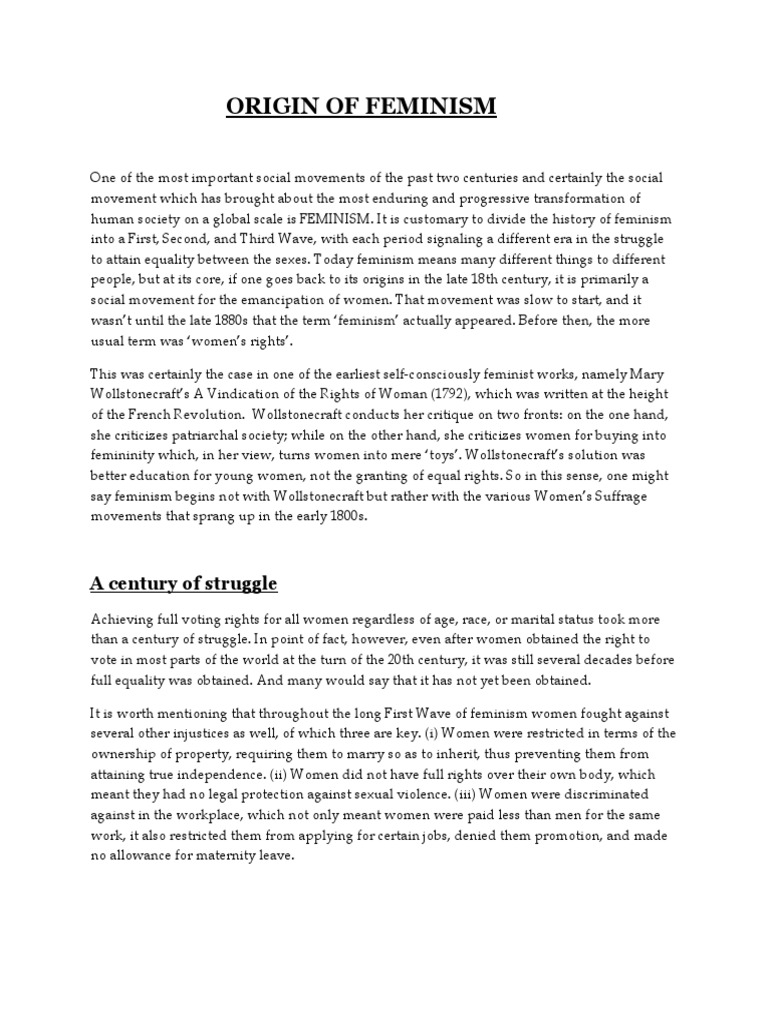
Imagine a world where a woman’s legal existence was practically subsumed by her husband’s. Where the very idea of a woman owning property, controlling her earnings, or even having a say in the political arena was considered radical, even blasphemous. That, my friends, was the reality that birthed First Wave Feminism. This era was primarily concerned with achieving basic legal and political rights, most notably the right to vote. But it was so much more than just securing the ballot. It was about challenging the deeply entrenched patriarchal structures that relegated women to the domestic sphere, silencing their voices and denying their autonomy.
Consider the Seneca Falls Convention of 1848, a watershed moment where women like Elizabeth Cady Stanton and Lucretia Mott dared to articulate a “Declaration of Sentiments,” boldly proclaiming that all men and women are created equal. This wasn’t some polite request; it was a fiery declaration of war against the status quo. Think about it: these women were operating in a social milieu that actively discouraged female education and intellectual pursuits. Their mere act of gathering, of organizing, of demanding change, was a revolutionary act of defiance.
The suffrage movement, spearheaded by organizations like the National Woman Suffrage Association (NWSA) and the American Woman Suffrage Association (AWSA), wasn’t a monolithic entity. There were internal debates about strategy, about the scope of their demands, and about the inclusion of women of color. Some activists, like Alice Paul, favored more militant tactics, advocating for direct action and civil disobedience. Others, like Carrie Chapman Catt, preferred a more pragmatic approach, focusing on state-by-state campaigns. Despite these differences, they shared a common goal: to dismantle the legal barriers that prevented women from participating fully in civic life. It was a long and arduous battle, marked by countless protests, arrests, and acts of sheer, unadulterated tenacity. Suffragists faced ridicule, scorn, and even violence, but they refused to be silenced. Finally, in 1920, the 19th Amendment to the U.S. Constitution was ratified, granting women the right to vote. A monumental victory, yes, but far from the end of the struggle.
Content Readers Can Expect:
- Historical accounts of key events and figures
- Analysis of the social and political context of the era
- Exploration of the different factions and strategies within the movement
- Examination of the limitations and exclusions of First Wave Feminism (particularly regarding race)
Second Wave Feminism (1960s – 1980s): The Personal is Political
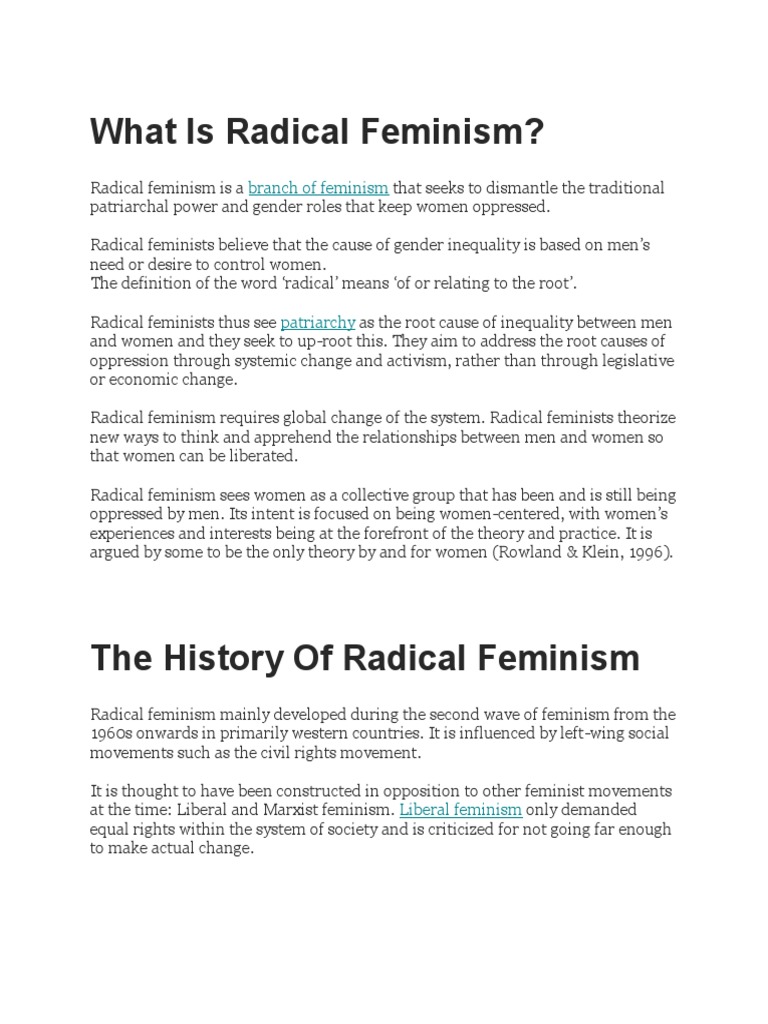
If First Wave Feminism focused on legal rights, Second Wave Feminism delved into the deeply ingrained societal structures that perpetuated gender inequality. This era, fueled by the Civil Rights Movement and the burgeoning counterculture, challenged everything from traditional gender roles to workplace discrimination to reproductive rights. It was a period of radical questioning, of consciousness-raising groups, and of bold pronouncements that resonated far beyond the hallowed halls of academia.
Betty Friedan’s “The Feminine Mystique,” published in 1963, is often credited with igniting the Second Wave. Friedan dared to articulate the “problem that has no name” – the pervasive sense of dissatisfaction and unfulfillment that many middle-class housewives experienced despite their seemingly perfect suburban lives. This book resonated with millions of women, sparking a national conversation about the limitations imposed by traditional gender roles.
The Second Wave tackled a wide range of issues, including equal pay, access to education, reproductive rights, and violence against women. The slogan “the personal is political” became a rallying cry, highlighting the ways in which seemingly private experiences were shaped by systemic power imbalances. Consciousness-raising groups provided a space for women to share their stories, to analyze their experiences, and to develop a collective understanding of their oppression. These groups were incredibly powerful, fostering a sense of solidarity and empowering women to challenge the status quo.
The women’s liberation movement also challenged the traditional family structure and the division of labor within the home. Activists demanded access to affordable childcare, equal opportunities in the workplace, and the right to control their own bodies. The fight for reproductive rights was particularly contentious, culminating in the landmark Supreme Court decision Roe v. Wade in 1973, which established a woman’s right to an abortion. This victory, however, was met with fierce opposition, and the battle over reproductive rights continues to this day.
It is crucial to acknowledge the shortcomings of Second Wave Feminism. Often, it was criticized for its predominantly white, middle-class focus, failing to adequately address the concerns of women of color and working-class women. The perspectives and experiences of LGBTQ+ women were also frequently marginalized. These critiques paved the way for Third Wave Feminism, which sought to be more inclusive and intersectional.
Content Readers Can Expect:
- Exploration of key texts and thinkers
- Analysis of the social and cultural context of the era
- Examination of the movement’s diverse goals and strategies
- Discussion of the critiques and limitations of Second Wave Feminism
- Focus on the importance of consciousness-raising and collective action
Third Wave Feminism (Early 1990s – 2010s): Embracing Complexity and Intersectionality
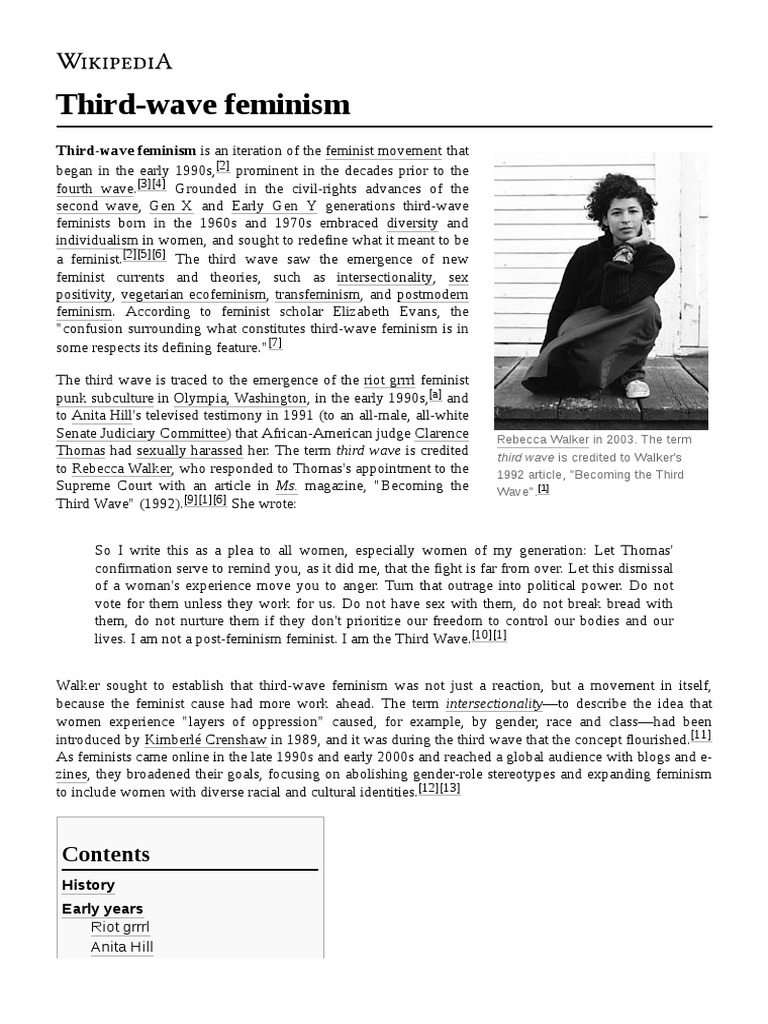
Emerging as a response to the perceived shortcomings of its predecessor, Third Wave Feminism embraced complexity, celebrated diversity, and challenged essentialist notions of womanhood. This wave, shaped by the rise of the internet and a growing awareness of intersectionality, sought to create a more inclusive and nuanced feminism that acknowledged the multiple forms of oppression experienced by different groups of women.
Rebecca Walker’s 1992 essay, “Becoming the Third Wave,” is often cited as a defining moment in the emergence of this new wave. Walker called for a feminism that was both assertive and playful, that embraced individuality and challenged traditional notions of femininity. Riot grrrl, a punk rock feminist movement, provided a soundtrack for the Third Wave, expressing anger, frustration, and a desire for radical social change. These young women used zines, music, and activism to challenge sexism, racism, and homophobia.
Intersectionality, a concept developed by Kimberlé Crenshaw, became a central tenet of Third Wave Feminism. Intersectionality recognizes that different forms of oppression, such as racism, sexism, and classism, are interconnected and cannot be understood in isolation. Third Wave feminists sought to create a feminism that was inclusive of all women, regardless of their race, class, sexual orientation, or gender identity. They challenged the tendency to universalize the experiences of white, middle-class women and sought to amplify the voices of marginalized groups.
The internet played a crucial role in the Third Wave, providing a platform for feminists to connect, organize, and share their ideas. Blogs, online forums, and social media became important tools for activism and community building. Third Wave feminists used the internet to challenge sexism in the media, to raise awareness about violence against women, and to advocate for reproductive justice. They also used the internet to create their own media, challenging the dominance of mainstream narratives.
However, Third Wave Feminism also faced criticism. Some argued that its focus on individual expression and choice undermined the collective action necessary to achieve systemic change. Others criticized its emphasis on micro-politics and its perceived lack of a clear political agenda. Despite these criticisms, Third Wave Feminism made important contributions to feminist theory and practice, expanding the definition of feminism and challenging traditional power structures.
Content Readers Can Expect:
- Analysis of the concept of intersectionality
- Exploration of the role of media and technology in feminist activism
- Examination of the diverse issues addressed by Third Wave feminists
- Discussion of the critiques and debates within the movement
- Focus on the importance of individual agency and self-expression
Fourth Wave Feminism (2010s – Present): Digital Activism and Global Solidarity
Characterized by its reliance on digital tools and its focus on issues such as sexual harassment, body shaming, and online misogyny, Fourth Wave Feminism represents a new era of feminist activism. This wave, fueled by social media and a growing awareness of global inequalities, seeks to create a more just and equitable world for all women.
The #MeToo movement, which gained widespread attention in 2017, is a prime example of Fourth Wave Feminism in action. This movement, sparked by allegations of sexual harassment and assault against Harvey Weinstein, empowered women around the world to share their stories of sexual violence and demand accountability from perpetrators. Social media played a crucial role in amplifying these voices, creating a global conversation about sexual harassment and assault.
Fourth Wave Feminism also addresses issues such as body shaming, online misogyny, and the gender pay gap. Activists use social media to challenge unrealistic beauty standards, to combat online harassment, and to advocate for equal pay for equal work. They also work to raise awareness about issues such as period poverty, forced marriage, and female genital mutilation, highlighting the global dimensions of gender inequality.
This wave benefits from an already networked society. Activists create petitions, organize boycotts, and coordinate protests through these interconnected digital spaces. Further, Fourth Wave Feminists are very open to discussion, debate, and criticism – so long as it is presented respectfully. The very nature of digital activism encourages a constant discussion about what is effective and what is not.
While there are those who resist the validity of Fourth Wave Feminism as a “true” wave, it’s power can be seen in the younger generation. The new generation of feminists are hyper-aware, and quick to call out inequality or injustice, whether it be in their personal lives or within a massive organization.
Content Readers Can Expect:
- Exploration of the role of social media in feminist activism
- Analysis of contemporary issues such as sexual harassment, body shaming, and online misogyny
- Examination of the global dimensions of gender inequality
- Discussion of the challenges and opportunities of digital activism
- Focus on the importance of intersectionality and inclusivity
The Waves Continue to Break
The waves of feminism, though distinct in their focus and strategies, are interconnected. Each wave builds upon the foundations laid by its predecessors, learning from past mistakes and adapting to changing social and political landscapes. The fight for gender equality is far from over, but the unwavering determination of feminist activists throughout history provides hope for a more just and equitable future. So, let the waves crash on, sisters. We’re just getting started.





Leave a Comment