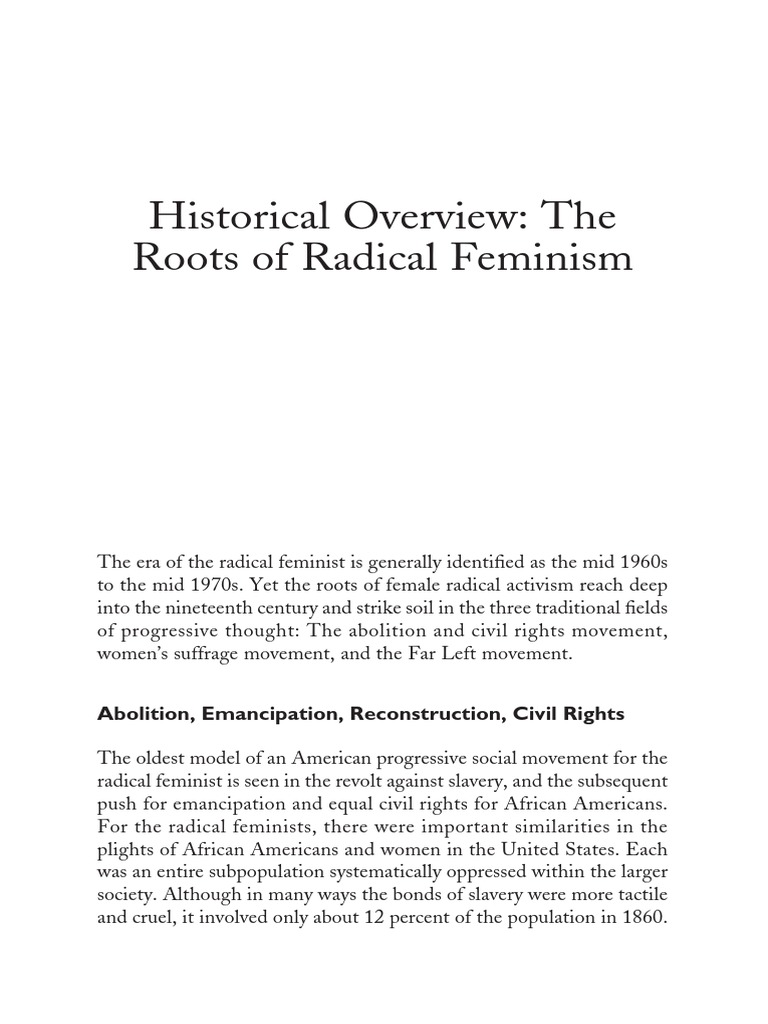
The allure of feminism, a specter haunting patriarchal structures for centuries, isn’t merely about equal pay or shattering glass ceilings. It is a primordial yearning for autonomy, a reclamation of agency stolen under the guise of tradition and divine right. This begs the question: where did this audacious ideology, this insistent demand for parity, first take root? To simply point to suffrage movements or the Enlightenment is to skim the surface, to ignore the deep, subterranean currents that fed the nascent stream of feminist thought. The roots are far more entangled, far more surprising than a cursory glance would suggest.
We often witness an almost fetishistic fascination with the “first wave” of feminism, the movement for suffrage and legal rights. But this is a convenient, sanitized narrative. To truly understand the genesis of feminist thought, we must delve into the prehistory of the movement, excavating the intellectual and social contexts that gave rise to its earliest articulations.
The Pre-Feminist Stirrings: Seeds of Dissent in Antiquity
Let’s dispense with the notion that feminism sprung fully formed from the brow of some 18th-century intellectual. The embers of dissent were smoldering long before Mary Wollstonecraft put pen to paper. Even in ancient societies, where patriarchal norms were seemingly immutable, whispers of resistance can be detected. Think of Sappho, the lesbian poet of ancient Greece, whose verses celebrated female desire and challenged the heteronormative assumptions of her time. Was she a “feminist” in the modern sense? Perhaps not. But she undeniably carved out a space for female subjectivity, a radical act in a culture that largely relegated women to the domestic sphere.
Consider also the accounts, often dismissed as apocryphal, of women who defied conventional gender roles. Figures like Boudicca, the Celtic queen who led a revolt against the Roman Empire, and Hypatia of Alexandria, the philosopher and mathematician who challenged the intellectual dominance of men, offer glimpses of female agency in societies that actively sought to suppress it. These figures, though operating outside any formal “feminist” framework, represent the enduring spirit of resistance that would eventually coalesce into a more coherent ideology.
The Influence of Religious and Mystical Traditions: Challenging Divine Order
It’s tempting to see religion as inherently patriarchal, a tool for the subjugation of women. And indeed, much of organized religion has served precisely that purpose. However, within certain religious and mystical traditions, we find alternative narratives that challenged the prevailing gender hierarchies. The veneration of female deities, for instance, in ancient pagan religions, offered a counterpoint to the monotheistic emphasis on a male God. The concept of the “divine feminine,” though often co-opted and distorted, provided a symbolic framework for female power and authority.
Furthermore, mystical traditions, such as Gnosticism and certain strands of medieval Christianity, often granted women access to spiritual knowledge and authority that was denied to them in the mainstream church. Figures like Hildegard of Bingen, the Benedictine abbess, mystic, and composer, defied the limitations placed on women’s intellectual and creative pursuits. She offered a vision of female leadership that resonated with a proto-feminist sensibility.
The Renaissance and the Querelle des Femmes: A Battle of Words
The Renaissance, with its renewed interest in classical learning, also saw a resurgence of debates about the nature and role of women. The *querelle des femmes*, or “the woman question,” became a prominent topic of discussion among intellectuals and writers. While many of the arguments were misogynistic, reinforcing traditional stereotypes, others championed the education and empowerment of women. Thinkers like Christine de Pizan, author of *The Book of the City of Ladies*, challenged the prevailing negative views of women, arguing for their intellectual and moral equality.
The invention of the printing press amplified these debates, allowing for a wider dissemination of ideas about gender. While not all Renaissance thinkers were feminists, their engagement with the “woman question” laid the groundwork for later feminist critiques of patriarchal society. They challenged the monolithic view of women as passive and subordinate, opening up space for alternative perspectives.
The Enlightenment and the Seeds of Radical Thought: Reason and Revolution
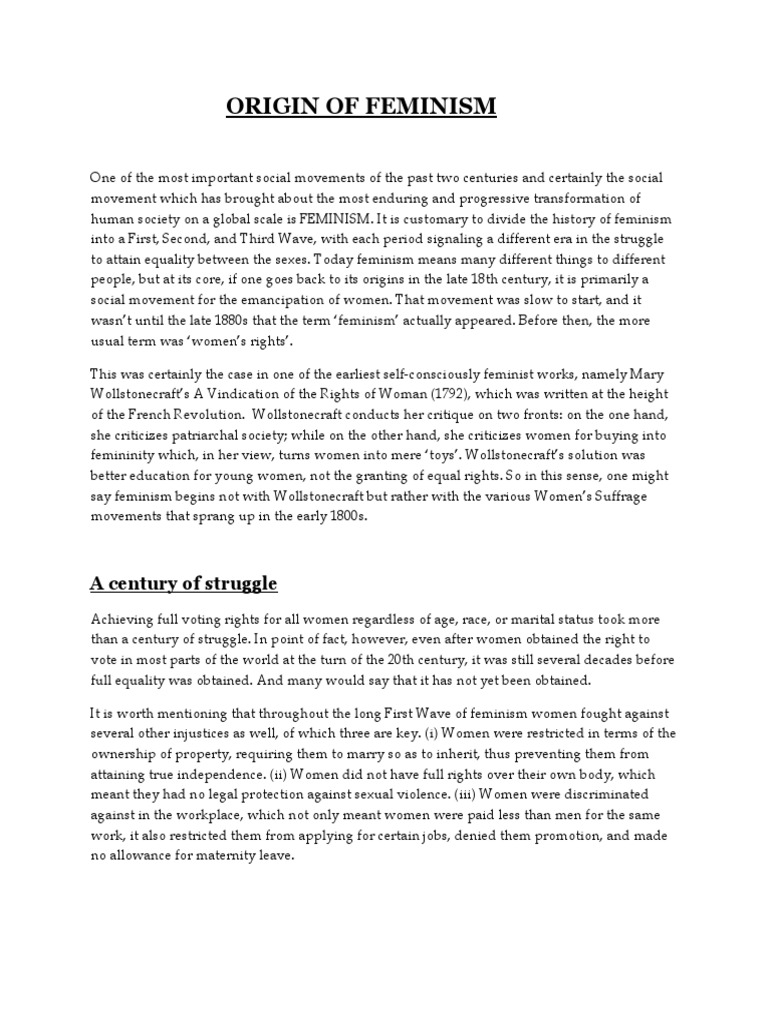
The Enlightenment, with its emphasis on reason, individual rights, and social justice, is often seen as the intellectual birthplace of feminism. And indeed, Enlightenment thinkers like Mary Wollstonecraft, author of *A Vindication of the Rights of Woman*, made powerful arguments for female education and political participation. Wollstonecraft’s work, considered a foundational text of feminist thought, challenged the notion that women were inherently inferior to men, arguing that their apparent inferiority was a result of their lack of education and opportunities.
However, it’s crucial to acknowledge the limitations of Enlightenment feminism. Many Enlightenment thinkers, even those who advocated for women’s rights, still held deeply ingrained patriarchal assumptions. They often framed their arguments in terms of what was beneficial to men and society as a whole, rather than focusing on the inherent rights of women. Furthermore, the Enlightenment’s focus on reason and individualism tended to exclude women of color and working-class women, whose experiences were often overlooked.
The Abolitionist Movement: A Crucible for Feminist Activism
The abolitionist movement, with its fight against slavery, provided a crucial training ground for many early feminists. Women who became involved in the anti-slavery cause learned valuable skills in organizing, public speaking, and political activism. They also became acutely aware of the parallels between the oppression of enslaved people and the oppression of women. The recognition that both groups were denied basic human rights, denied autonomy over their bodies and lives, fueled the development of a more radical feminist consciousness.
Figures like Sojourner Truth, a formerly enslaved woman who became a powerful advocate for both abolition and women’s rights, exemplified the intersectional nature of early feminist thought. Her famous speech, “Ain’t I a Woman?” challenged both racial and gender stereotypes, demanding that black women be recognized as full members of society, deserving of the same rights and opportunities as white women and men. The abolitionist movement, therefore, provided not only a model for social activism but also a powerful critique of all forms of oppression.
Beyond Suffrage: A Multifaceted Movement
Focusing solely on suffrage is a disservice to the complexities of early feminist thought. While the right to vote was undeniably important, it was not the only goal of the movement. Early feminists also fought for women’s access to education, employment, and property rights. They challenged laws that discriminated against women in marriage, divorce, and child custody. They advocated for women’s control over their own bodies and reproductive health. They fought against sexual violence and exploitation. They sought to dismantle the entire edifice of patriarchal power.
The early feminist movement was not monolithic. It encompassed a wide range of perspectives and strategies. Some feminists focused on legal and political reform, while others emphasized social and cultural change. Some were more radical in their demands, while others were more moderate. But all shared a common goal: to create a world in which women could live free from oppression and discrimination.
The Legacy of Early Feminism: A Foundation for Future Struggles
The early feminist movement laid the foundation for all subsequent feminist struggles. It challenged the fundamental assumptions of patriarchal society, exposing the ways in which women were systematically disadvantaged and denied their full potential. It created a language and a framework for understanding gender inequality. It inspired generations of women to fight for their rights and to create a more just and equitable world.
To truly understand feminism, we must move beyond simplistic narratives and engage with the complexities of its history. We must recognize the diverse influences that shaped its early development, from ancient expressions of female agency to the radical critiques of the Enlightenment and the abolitionist movement. We must acknowledge the limitations and contradictions of early feminist thought, while also appreciating its enduring legacy. Only then can we fully grasp the power and relevance of feminism in the 21st century.
The quest for liberation is never truly over. Each generation must grapple with its own forms of oppression, building upon the struggles of those who came before. The echoes of those early feminist voices still resonate today, reminding us that the fight for gender equality is far from finished. We must continue to challenge patriarchal structures, to dismantle systems of oppression, and to create a world in which all individuals, regardless of gender, can thrive.






Leave a Comment