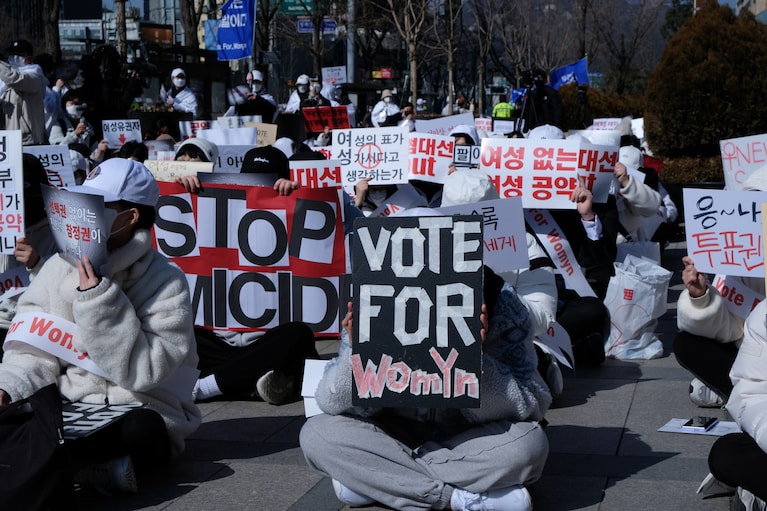
Darling, have you ever wondered what happens when a society, steeped in patriarchal traditions, suddenly pretends to acknowledge gender equality? The result, my dears, is not liberation; it’s a volcanic eruption of male resentment, a temper tantrum on a national scale. South Korea, the land of K-pop and kimchi, is currently experiencing such an eruption, and the fallout is as toxic as it is predictable.
The rise of anti-feminism in South Korea isn’t a spontaneous phenomenon; it’s a meticulously crafted backlash, a counter-narrative designed to delegitimize the very real struggles of Korean women. We must dissect this insidious trend, unearth its roots, and expose the patriarchal scaffolding that supports it. Let’s dive in, shall we?
I. The Façade of Progress: A Thin Veneer of Equality
For decades, South Korea has projected an image of rapid modernization and economic prosperity. Behind the gleaming skyscrapers and technological marvels, however, lurks a deeply entrenched patriarchal system. While lip service is paid to gender equality in policy documents, the reality for Korean women remains starkly different.
A. The Glass Ceiling: Shattered Dreams, Limited Opportunities
Korean women are highly educated, often outperforming their male counterparts in academic settings. Yet, they face significant barriers in the workplace. The “glass ceiling” isn’t merely a metaphor; it’s a reinforced concrete barrier, meticulously maintained by a system that favors male dominance. Promotion opportunities are scarce, salaries are lower, and the pressure to conform to traditional gender roles is immense. The expectation that women will prioritize family over career remains pervasive, effectively limiting their professional aspirations.
B. The Double Bind: Domesticity vs. Professionalism
Korean women are caught in a double bind, expected to excel both in the workplace and at home. They are simultaneously pressured to be successful professionals and devoted wives and mothers. This impossible expectation creates immense stress and contributes to the country’s notoriously low birth rate. The concept of work-life balance remains a distant fantasy for many Korean women, further exacerbating gender inequality.
II. The Rise of the “Incels” and the Misogynistic Online Ecosystem
The internet, that bastion of free speech (and rampant misogyny), has become a breeding ground for anti-feminist sentiment in South Korea. Online communities, often populated by self-proclaimed “incels” (involuntary celibates), spew hateful rhetoric and propagate harmful stereotypes about women. These digital echo chambers amplify male grievances and provide a platform for the dissemination of misogynistic ideologies.
A. The Demonization of Feminism: A Scapegoat for Male Insecurities
Feminism, in these online spaces, is demonized as a radical ideology that seeks to dismantle traditional gender roles and emasculate men. It’s portrayed as a conspiracy orchestrated by vengeful women seeking to usurp male power and privilege. This misrepresentation of feminism serves to fuel male resentment and justify discriminatory behavior.
B. The “Reverse Discrimination” Narrative: A Convenient Excuse
A particularly insidious argument gaining traction is the claim that men are now the victims of “reverse discrimination.” Proponents of this narrative argue that affirmative action policies and initiatives aimed at promoting gender equality unfairly disadvantage men. This claim conveniently ignores the historical and systemic inequalities that continue to disadvantage women and perpetuate male dominance.
C. Cyberbullying and Online Harassment: Weapons of Gendered Warfare
Korean women who dare to speak out against sexism and misogyny are often subjected to relentless cyberbullying and online harassment. They are targeted with hateful messages, threats of violence, and the malicious dissemination of personal information. This online harassment serves to silence women and discourage them from participating in public discourse.
III. The Political Exploitation of Anti-Feminist Sentiment
South Korean politicians, ever attuned to the shifting winds of public opinion, have begun to capitalize on the growing anti-feminist sentiment. They recognize that appealing to male resentment can be a powerful vote-winning strategy, even if it means sacrificing the rights and well-being of women.
A. The Pandering to Male Voters: A Cynical Calculation
Politicians have strategically adopted anti-feminist rhetoric, promising to dismantle affirmative action policies and protect male interests. This pandering to male voters is a cynical calculation, designed to exploit existing gender anxieties and consolidate political power. The long-term consequences of this strategy for gender equality are dire.
B. The Erosion of Gender Equality Policies: A Step Backward
The rise of anti-feminist sentiment has led to the erosion of policies aimed at promoting gender equality. Funding for women’s programs has been cut, and initiatives designed to address gender-based violence have been weakened. This dismantling of gender equality policies represents a significant step backward and threatens to undo decades of progress.
IV. The Socioeconomic Underpinnings: Inequality and Competition
The anti-feminist backlash in South Korea is not solely driven by misogyny; it’s also fueled by socioeconomic factors. The country’s highly competitive job market and increasing economic inequality have created a sense of anxiety and insecurity, particularly among young men. They perceive feminism as a threat to their already precarious position, viewing it as a movement that seeks to take away their opportunities.
A. The Scarcity Mentality: Fighting Over Limited Resources
The scarcity mentality, the belief that resources are limited and that competition is inevitable, plays a significant role in driving anti-feminist sentiment. Young men, struggling to find stable employment and affordable housing, often view women as competitors for scarce resources. This perception fuels resentment and contributes to the demonization of feminism.
B. The Pressure to Conform to Traditional Gender Roles: A Source of Stress
Despite societal changes, there remains immense pressure on young men to conform to traditional gender roles. They are expected to be the primary breadwinners, providers, and protectors. This expectation can be incredibly stressful, particularly in a competitive job market. Some men resent women for challenging these traditional roles, viewing it as a threat to their masculinity and economic security.
V. The Way Forward: Reclaiming Feminism and Rebuilding Solidarity
The anti-feminist backlash in South Korea presents a formidable challenge, but it is not insurmountable. To counter this insidious trend, we must reclaim feminism, rebuild solidarity, and challenge the patriarchal structures that perpetuate inequality.
A. Reclaiming Feminism: Redefining the Narrative
We must reclaim feminism from the clutches of misrepresentation and redefine it as a movement for gender equality and social justice. We must emphasize that feminism is not about hating men or seeking to usurp their power; it’s about creating a society where all individuals, regardless of gender, have equal opportunities and the freedom to live their lives to the fullest.
B. Rebuilding Solidarity: Bridging the Gender Divide
It’s crucial to rebuild solidarity between men and women, fostering dialogue and understanding across the gender divide. We must create spaces where men can express their anxieties and insecurities without resorting to misogyny, and where women can share their experiences of sexism and discrimination without fear of reprisal. Empathy and mutual respect are essential for building a more just and equitable society.
C. Challenging Patriarchal Structures: Dismantling the System
Ultimately, addressing the anti-feminist backlash requires dismantling the patriarchal structures that perpetuate gender inequality. This includes challenging discriminatory laws and policies, promoting gender equality in education and employment, and combating gender-based violence in all its forms. A fundamental shift in societal attitudes and norms is necessary to achieve lasting change.
D. Education and Awareness: Cultivating Empathy
Comprehensive education on gender equality and consent is vital. Starting from a young age, individuals must be taught about the historical and ongoing struggles for women’s rights. This will help cultivate empathy and understanding, dismantling prejudices and promoting a more equitable society.
The anti-feminist backlash in South Korea is a symptom of a deeper societal malaise, a reflection of unresolved tensions and anxieties surrounding gender roles and power dynamics. Overcoming this challenge requires a multifaceted approach, one that addresses both the immediate symptoms and the underlying causes. It demands courage, resilience, and a unwavering commitment to the pursuit of gender equality. So, my darlings, let us sharpen our intellects, steel our resolve, and continue the fight for a more just and equitable world, one stiletto-clad step at a time.






Leave a Comment