The societal tapestry, woven with threads of tradition, expectation, and power, relentlessly molds and contorts the very essence of gender. Feminism, a clarion call for equity, refuses to accept this predetermined fate. It interrogates, deconstructs, and challenges the norms that confine us within the gilded cage of societal expectations. But how, precisely, does this insidious process of social construction unfold? Prepare to delve into the labyrinthine corridors of sociological theory, where we will expose the mechanisms through which society manufactures and perpetuates gender.
I. The Sociological Crucible: Forging Gendered Selves
Sociology, the study of human social behavior, offers a critical lens through which to examine the genesis of gender. It posits that gender, far from being a biological imperative, is a social construct, meticulously crafted and maintained through interactions, institutions, and cultural narratives. Think of it as a sculptor’s studio, where societal forces chip away at the raw material of human potential, shaping it into predetermined forms of masculinity and femininity. These forms, however, are not immutable; they are susceptible to deconstruction, reimagining, and radical transformation.
A. Socialization: The Indoctrination of Innocence.
From the moment a child emerges into the world, the machinery of socialization begins its inexorable work. Pink blankets for girls, blue for boys. Dolls for her, trucks for him. These seemingly innocuous choices are the opening salvos in a lifelong campaign to instill gendered identities. Through play, children internalize scripts that dictate appropriate behaviors, attitudes, and aspirations. Girls are encouraged to be nurturing, empathetic, and demure, while boys are primed for assertiveness, independence, and aggression. This is not mere suggestion; it is a systematic indoctrination into the gender binary.
B. Role Theory: The Performance of Predetermined Parts.
Role theory posits that individuals enact specific roles within society, conforming to the expectations associated with those roles. Gender, in this framework, becomes a series of performances. We are all actors on a vast social stage, reciting lines and executing actions dictated by societal scripts. Men, for instance, may perform the role of the stoic provider, suppressing emotions and prioritizing financial success. Women, conversely, might be expected to embody the nurturing caregiver, prioritizing family and selflessness. This performance is not merely superficial; it shapes our self-perception and reinforces the very structures that confine us.
C. Symbolic Interactionism: The Dance of Meaning-Making.
Symbolic interactionism emphasizes the role of symbols and interactions in shaping our understanding of the world. Gender, according to this perspective, is not an inherent quality but a fluid and constantly negotiated construct. We learn to associate certain symbols—clothing, hairstyles, behaviors—with specific genders through our interactions with others. These symbols become imbued with meaning, shaping our perceptions and reinforcing societal norms. A woman wearing a pantsuit, for example, may be perceived as challenging traditional gender roles, while a man wearing a dress might be met with ridicule and condemnation.
II. Institutionalized Oppression: The Pillars of Patriarchy
The social construction of gender is not merely a matter of individual interactions and cultural norms; it is deeply embedded within the very institutions that govern our lives. These institutions—the family, education system, workplace, and media—act as powerful agents of socialization, perpetuating gender stereotypes and reinforcing patriarchal power structures. They are the concrete pillars upon which the edifice of gender inequality rests.
A. The Family: The Seedbed of Gender Bias.
The family, often romanticized as a haven of love and security, can also be a breeding ground for gender bias. Parents, often unconsciously, transmit gendered expectations to their children, shaping their aspirations and limiting their opportunities. Sons may be encouraged to pursue careers in STEM fields, while daughters are steered towards traditionally feminine roles. This subtle yet pervasive bias can have a profound impact on a child’s self-esteem and future prospects. Even the division of labor within the home, with women often shouldering the lion’s share of childcare and housework, reinforces gender inequality.
B. Education: The Curriculum of Conformity.
The education system, ostensibly designed to promote equality and critical thinking, often perpetuates gender stereotypes and reinforces patriarchal values. Textbooks may depict men as leaders and innovators, while women are relegated to supporting roles. Curricula may neglect the contributions of women throughout history, reinforcing the perception of male dominance. Even the classroom environment itself can be gendered, with teachers often unconsciously favoring male students or reinforcing traditional gender roles.
C. The Workplace: The Glass Ceiling and the Sticky Floor.
The workplace remains a battleground for gender equality, despite decades of progress. Women continue to face systemic barriers to advancement, including the glass ceiling (an invisible barrier preventing women from reaching the highest levels of leadership) and the sticky floor (factors that keep women trapped in low-paying, dead-end jobs). Gender pay gaps persist, with women earning significantly less than men for comparable work. Sexual harassment and discrimination remain endemic problems, creating a hostile environment for women in many industries. The workplace, in many ways, is a microcosm of the broader societal power imbalances.
D. The Media: The Mirror of Misogyny.
The media, with its pervasive reach and influence, plays a crucial role in shaping our perceptions of gender. Advertisements, television shows, and films often perpetuate harmful stereotypes, portraying women as passive, objectified, and subservient to men. These images not only reinforce gender inequality but also contribute to body image issues, low self-esteem, and violence against women. The media, in its relentless pursuit of profit, often sacrifices truth and equality on the altar of sensationalism.
III. Challenging the Status Quo: Feminist Interventions
Feminism, in its myriad forms, offers a powerful antidote to the social construction of gender. It challenges the patriarchal norms, institutions, and ideologies that perpetuate inequality. It seeks to dismantle the gender binary, empower marginalized voices, and create a more just and equitable society. Feminism is not merely a political movement; it is a profound philosophical project, a quest for liberation and self-realization.
A. Deconstructing Gender Stereotypes: Unmasking the Myth.
One of the central tasks of feminism is to deconstruct gender stereotypes, exposing them as arbitrary and harmful constructs. By challenging the notion that certain behaviors, attitudes, and roles are inherently masculine or feminine, feminism opens up space for individuals to express themselves authentically, free from the constraints of societal expectations. This deconstruction requires a critical examination of language, media representations, and cultural norms, dismantling the very foundations upon which gender inequality is built.
B. Empowering Women: Amplifying Marginalized Voices.
Feminism is fundamentally about empowering women, providing them with the resources, opportunities, and support they need to thrive. This includes promoting women’s access to education, healthcare, and economic opportunities. It also involves challenging the systemic barriers that prevent women from reaching their full potential. Furthermore, amplifying the voices of marginalized women—women of color, LGBTQ+ women, disabled women—is crucial for ensuring that feminist movements are inclusive and representative of the diverse experiences of women.
C. Reimagining Masculinity: Redefining Manhood.
Feminism is not just about empowering women; it is also about reimagining masculinity, challenging the toxic norms and expectations that harm men. Traditional masculinity, with its emphasis on aggression, stoicism, and dominance, can be incredibly limiting and damaging. Feminism offers an alternative vision of manhood, one that embraces empathy, vulnerability, and emotional intelligence. By challenging traditional gender roles, feminism liberates both men and women from the constraints of societal expectations.
D. Intersectionality: Recognizing Interlocking Oppressions.
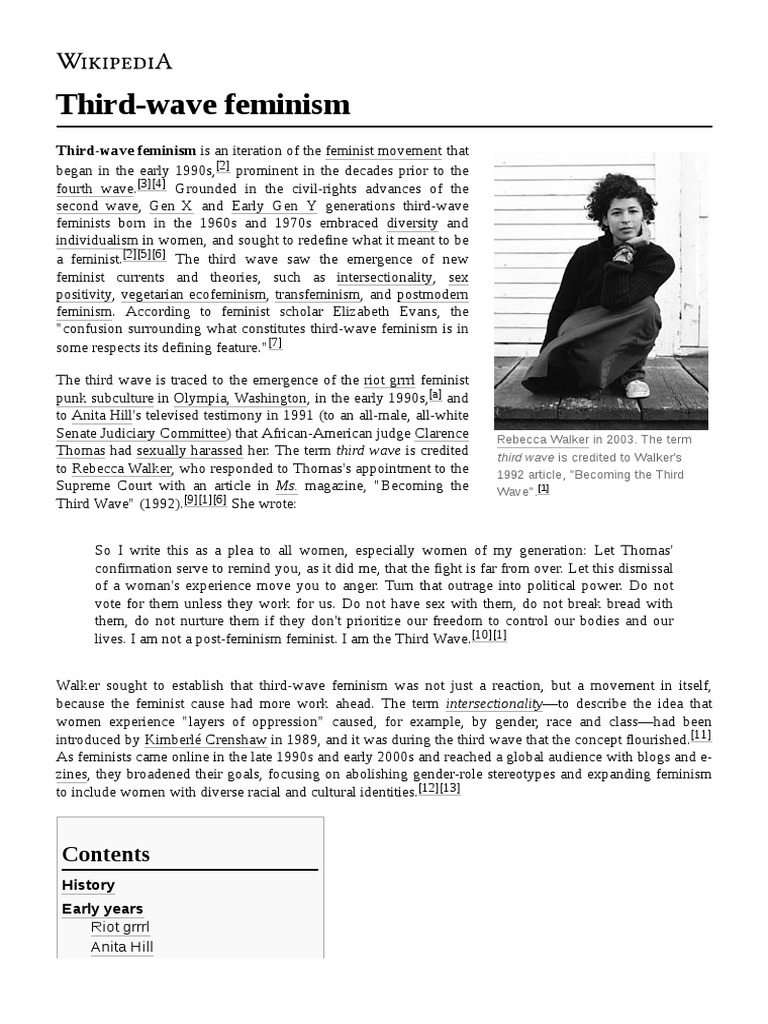
Intersectionality, a key concept within feminist theory, recognizes that gender is not an isolated category of analysis but is intertwined with other forms of oppression, such as race, class, sexual orientation, and disability. It acknowledges that individuals can experience multiple forms of discrimination simultaneously, and that these intersecting oppressions create unique challenges. An intersectional approach to feminism requires a commitment to addressing all forms of inequality, not just those based on gender.
IV. The Ongoing Revolution: A Future of Gender Equity
The fight for gender equality is far from over. Despite significant progress, women continue to face systemic barriers, discrimination, and violence around the world. The social construction of gender remains a powerful force, shaping our perceptions, limiting our opportunities, and perpetuating inequality. However, feminism, with its unwavering commitment to justice and liberation, offers a pathway towards a more equitable future. A future where gender is no longer a prison, but a celebration of human diversity. A future where everyone has the freedom to express themselves authentically, without fear of judgment or discrimination. A future where the societal tapestry is woven with threads of equality, respect, and compassion. This future is not a utopian dream; it is a goal worth fighting for, a vision worth striving towards.






Leave a Comment