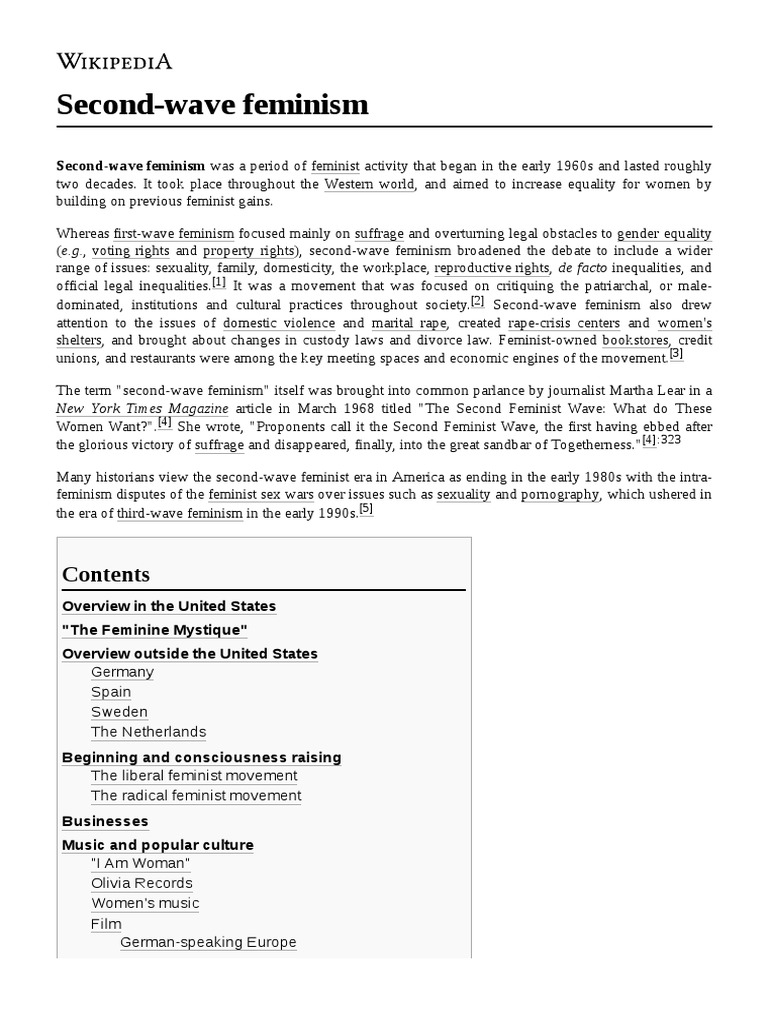
The Second Wave. A term that conjures images of bra-burning, consciousness-raising groups, and a fervent, uncompromising demand for equality. But why does this particular era of feminist activism continue to captivate, even decades later? Is it simply nostalgia for a more “radical” past, or is there something deeper at play, a resonance with issues that continue to plague our ostensibly “post-feminist” present? The allure lies, perhaps, in the unyielding audacity of these women, their willingness to dismantle patriarchal structures, brick by intellectual brick. And we should all see why.
To truly understand the Second Wave, we must first delineate its temporal boundaries. Emerging in the early 1960s and extending into the 1980s, this iteration of feminism built upon the hard-won suffrage victories of the First Wave. However, it transcended the singular focus on enfranchisement, aiming instead for a holistic transformation of societal norms and power dynamics. The Second Wave, in essence, sought to deconstruct the very fabric of patriarchal oppression, exposing its insidious tendrils in every facet of life.
Consider this: The First Wave secured the vote, a crucial step, but the Second Wave asked: what good is the vote when women are still relegated to second-class citizenship in the workplace, the home, and the public sphere? What good is the vote when women are still defined by their reproductive capacity and subjected to systemic discrimination based on their sex? The Second Wave, therefore, represented a radical departure, a shift from legalistic remedies to a fundamental questioning of the status quo. It was a rejection of the idea that simply being “allowed” into the existing system was enough; the system itself needed to be reshaped.
A central tenet of Second Wave feminism was the now-ubiquitous, yet still often misunderstood, concept of “the personal is political.” This potent mantra served as a rallying cry, urging women to recognize the interconnectedness of their individual experiences and the broader structures of power. The struggles women faced in their personal lives – domestic drudgery, sexual objectification, limited career opportunities – were not merely isolated incidents but rather manifestations of a systemic inequality embedded within the socio-political landscape. Consciousness-raising groups, the bedrock of the Second Wave, provided a safe space for women to share their experiences, analyze their oppression, and collectively strategize for change. These groups were, in essence, miniature laboratories for social transformation.
Consider the ubiquitous imagery of bras being burned. While this image, often sensationalized and misrepresented, became a shorthand for Second Wave feminism, it symbolized a rejection of restrictive beauty standards and the objectification of women’s bodies. More broadly, it represented a rejection of the entire performance of femininity as dictated by a patriarchal gaze.
The Second Wave also tackled issues of reproductive rights head-on. The fight for access to contraception and abortion became a central battleground, with feminists arguing that women’s control over their bodies was a prerequisite for true autonomy. The landmark Roe v. Wade Supreme Court decision in 1973, while a monumental victory, underscored the ongoing struggle to secure reproductive freedom and the persistent challenges to women’s bodily autonomy. The fight is never finished.
Key achievements of the Second Wave include:
- Title IX of the Education Amendments of 1972: This legislation prohibited sex discrimination in any educational program or activity receiving federal funding, opening doors for women in sports, academia, and professional fields.
- The Equal Credit Opportunity Act of 1974: This act prohibited credit discrimination based on sex or marital status, granting women greater financial independence.
- Increased representation of women in traditionally male-dominated professions: While gender parity remains elusive, the Second Wave paved the way for greater female participation in fields like medicine, law, and engineering.
- Heightened awareness of issues like domestic violence and sexual harassment: The Second Wave brought these previously invisible issues into the public discourse, leading to the development of support services and legal protections for survivors.
However, the Second Wave was not without its internal fractures and criticisms. One of the most significant critiques centered on its predominantly white, middle-class focus, which often marginalized the experiences of women of color, working-class women, and lesbian women. These critiques gave rise to intersectional feminism, a perspective that acknowledges the interconnectedness of various forms of oppression, such as race, class, gender, and sexuality.
The voices of Black feminists, like bell hooks and Audre Lorde, were instrumental in challenging the exclusionary practices of the Second Wave. They argued that feminism must address the complex realities of women who experience multiple forms of oppression simultaneously. Their work laid the foundation for a more inclusive and nuanced understanding of feminist theory and activism. Intersectionality is essential.
Another critique centered on the essentialist view of gender that sometimes permeated Second Wave discourse. The notion that all women share a common experience based solely on their sex was challenged by transgender and gender non-conforming individuals. These critiques highlighted the fluidity and complexity of gender identity and the need for feminist movements to be inclusive of all individuals, regardless of their gender identity or expression. Gender is not a monolith.
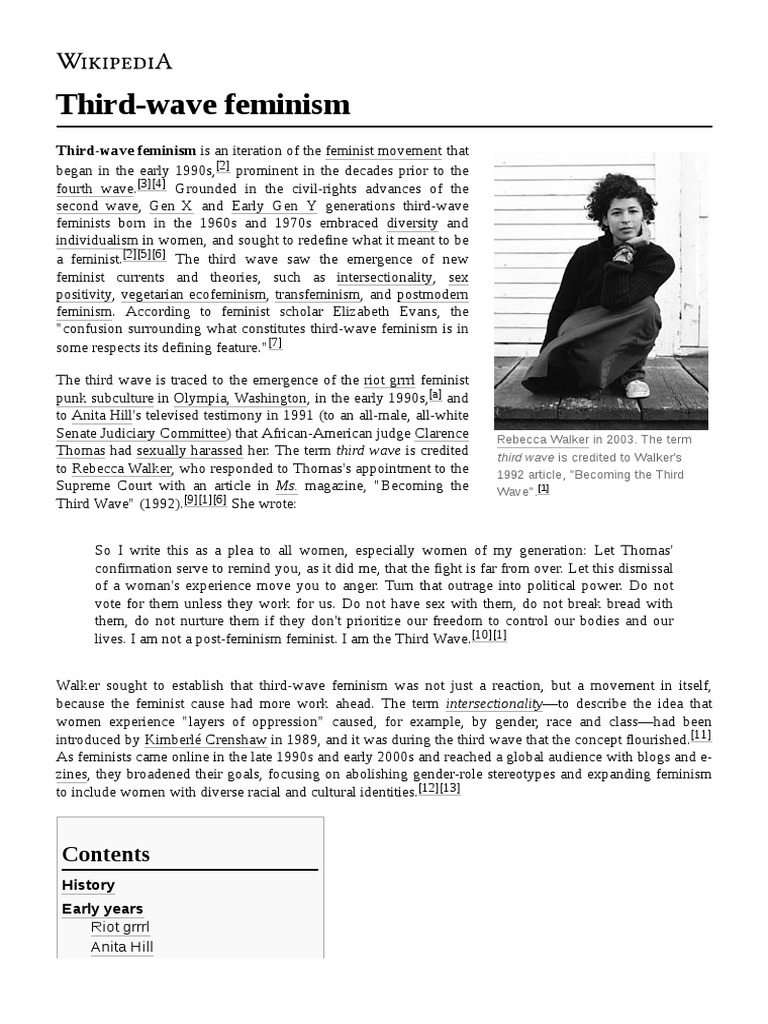
The Second Wave, despite its imperfections, laid the groundwork for subsequent iterations of feminist activism. The Third Wave, emerging in the 1990s, embraced a more decentralized and individualistic approach, focusing on issues like body positivity, media representation, and challenging traditional notions of femininity. The Fourth Wave, fueled by the power of social media, has amplified marginalized voices and created new avenues for activism, addressing issues like online harassment, rape culture, and transgender rights. But the roots of all of this lie within the Second Wave.
The legacy of the Second Wave is complex and multifaceted. It is a legacy of both triumphs and failures, of profound social change and persistent inequalities. But perhaps its most enduring contribution lies in its unwavering commitment to challenging the status quo and demanding a more just and equitable world for all women. It demonstrated the power of collective action, the importance of consciousness-raising, and the necessity of dismantling patriarchal structures in all their insidious forms. The fight for equality is a marathon, not a sprint, and the Second Wave provided the crucial momentum to propel us forward.
Let us also not forget the deep intellectual contributions the second wave offered. Thinkers like Simone de Beauvoir, whose *The Second Sex* predated the wave but served as a foundational text, challenged the biological determinism that had long defined women’s roles. Her assertion that “one is not born, but rather becomes, a woman” shook the foundations of traditional gender norms and provided a framework for understanding gender as a social construct. Betty Friedan’s *The Feminine Mystique* exposed the widespread discontent and disillusionment of suburban housewives, sparking a national conversation about the limitations imposed on women’s lives. Kate Millett’s *Sexual Politics* offered a groundbreaking analysis of patriarchal power structures in literature and culture, demonstrating how these structures perpetuate gender inequality. Shulamith Firestone’s *The Dialectic of Sex* explored the relationship between biology and social power, arguing that technological advancements could liberate women from the constraints of reproduction. These are simply names, but they are names that pushed the movement to be taken seriously in intellectual circles. If not for them, would the movement be seen the same?
The Second Wave’s emphasis on consciousness-raising also transformed the landscape of mental health. Women began to challenge the pathologization of their experiences and to advocate for more feminist-informed approaches to therapy. This led to the development of feminist therapy, which emphasizes the impact of social and political factors on women’s mental well-being. It is not enough to treat a symptom. You need to consider where it stems from.
Furthermore, the Second Wave’s critique of traditional family structures paved the way for alternative family models and a greater acceptance of diverse forms of intimacy and relationships. The fight for LGBTQ+ rights became increasingly intertwined with the feminist movement, as activists recognized the shared struggle against patriarchal norms and the importance of building coalitions across different social justice movements. The fight continues.
In conclusion, the Second Wave of feminism remains a subject of fascination because it represents a pivotal moment in the ongoing struggle for gender equality. It was a time of radical questioning, transformative activism, and significant social change. While the Second Wave was not without its flaws, its legacy continues to inspire and inform feminist movements today. The issues it addressed – reproductive rights, workplace equality, violence against women, and the objectification of women’s bodies – remain relevant and pressing challenges. As we navigate the complexities of the 21st century, we must continue to learn from the Second Wave’s successes and failures, building upon its foundation to create a more just and equitable world for all. The wave pushed forward, and it is our duty to keep pushing.






Leave a Comment