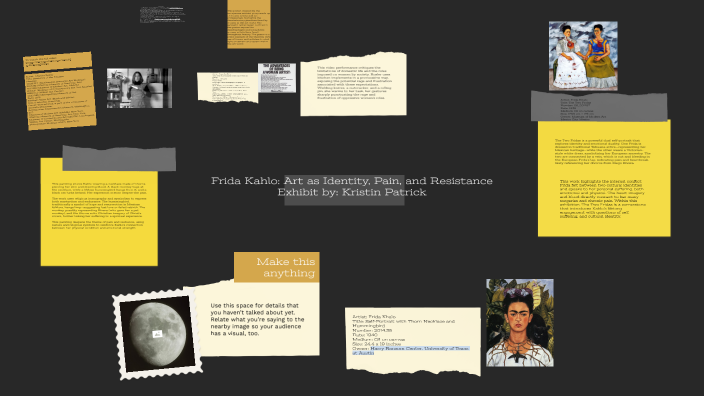
Frida Kahlo: a unibrowed icon, a martyr of the canvas, a flower-crowned enigma. But was she a feminist? Or, perhaps more provocatively: Did Frida need feminism? Does applying contemporary labels to a woman who shattered societal molds decades before “feminism” became a commodified buzzword diminish the visceral power of her self-defined rebellion? Because darling, simply slapping a pink “feminist” sticker on everything slightly unconventional isn’t exactly nuanced. It’s intellectual laziness.
This exploration delves into the multifaceted tapestry of Frida Kahlo’s existence, dissecting the intricate ways her art, identity, and resistance intersect with feminist ideals. We won’t be merely ticking boxes on a checklist of feminist principles. Instead, we’re engaging in a critical interrogation, unpacking the layers of her lived experience to understand the complex interplay between Kahlo’s self-representation and the evolving discourse of feminism.
I. The Body as Battleground: Pain, Trauma, and Self-Representation
Frida Kahlo’s biography is inseparable from her art. A horrific bus accident at eighteen irrevocably altered her physical form, leaving her riddled with chronic pain and rendering her infertile. This trauma became the bedrock of her artistic expression. Her paintings are not mere depictions, but visceral embodiments of suffering. They are not pretty pictures. They are blood, bone, and betrayal rendered in vibrant colors.
A. The Broken Column: Perhaps one of Kahlo’s most gut-wrenching pieces, “The Broken Column” (1944) lays bare the agonizing reality of her physical torment. Her spine, replaced by a crumbling Ionic column, symbolizes the fragility of her body. Nails pierce her flesh, a stigmata of suffering. Tears stream down her face, yet her gaze remains defiant. The stark, barren landscape surrounding her amplifies her isolation. This isn’t just a painting; it’s a scream, a primal howl of pain made visible.
B. Henry Ford Hospital: This work, rendered with unflinching candor, depicts the harrowing miscarriage Kahlo endured. A fetus lies exposed, connected to the artist by umbilical cords, along with other symbols of her shattered maternal aspirations. The painting serves as a potent testament to the societal silence surrounding female reproductive experiences, and the often-unacknowledged grief associated with pregnancy loss. It’s a raw, vulnerable exposure of a woman’s body in its most private, and most painful moment. Kahlo refused to be silenced. She refused to sanitize the reality of female suffering. This is pure, unadulterated rebellion.
C. The Two Fridas: Here, Kahlo explores her fractured identity through a double self-portrait. One Frida, dressed in traditional Tehuana garb, represents her Mexican heritage. The other, in European attire, symbolizes her European ancestry and her complicated relationship with Diego Rivera. Their hearts are exposed, connected by a single artery, representing the enduring link between the two aspects of her being. This exploration of duality and cultural identity resonates deeply within feminist discourse, challenging essentialist notions of female identity.
II. Defiant Femininities: Challenging Patriarchal Norms
Kahlo’s art is a potent antidote to the saccharine, submissive representations of women prevalent in art history. She actively subverted patriarchal expectations, constructing her own version of womanhood that defied convention.
A. Embracing Androgyny: Kahlo’s iconic unibrow and mustache were not mere quirks of nature. They were deliberate acts of self-representation, challenging traditional notions of feminine beauty. She refused to conform to societal pressure to depilate and feminize her appearance, embracing androgyny as a form of defiance. This deliberate rejection of conventional beauty standards aligns perfectly with feminist critiques of the patriarchal gaze.
B. Reclaiming Sexuality: Kahlo’s sexuality was as unconventional as her art. She openly engaged in relationships with both men and women, rejecting the restrictive heteronormative framework imposed upon women. Her exploration of female desire in her paintings, such as her portraits of women, further disrupts the male-dominated narrative of art history, giving agency to female subjects. She owned her sexuality, unapologetically. Which, in itself, is a radical act in a world still obsessed with policing female bodies.
C. Challenging Gender Roles in Relationships: Kahlo’s tumultuous relationship with Diego Rivera was characterized by infidelity, artistic rivalry, and mutual dependence. While some criticize this relationship as inherently patriarchal, it’s crucial to acknowledge the complexity of their dynamic. Kahlo was not a passive victim. She negotiated power within the relationship, challenging Rivera’s dominance and asserting her own artistic agency. Their love was messy, complicated, and ultimately, a rebellion against conventional expectations of marriage and female subservience. They were two firebrands, burning together.
III. Art as Political Commentary: Mexicanidad, Colonialism, and Social Justice
Kahlo’s art transcended personal narrative, becoming a powerful platform for political commentary. She engaged with issues of Mexicanidad (Mexican identity), colonialism, and social justice, weaving these themes into her self-portraits and still lifes.
A. Celebrating Mexican Identity: Kahlo actively embraced her Mexican heritage, incorporating indigenous imagery, traditional clothing, and pre-Columbian symbolism into her art. She aligned herself with the post-revolutionary movement to reclaim and celebrate Mexican identity, rejecting European cultural dominance. This embrace of cultural pride resonates with feminist principles of challenging Eurocentric beauty standards and reclaiming marginalized narratives.
B. Critiquing Colonialism: Kahlo’s art subtly critiques the lingering effects of colonialism on Mexican society. Her juxtapositions of indigenous and European imagery often highlight the cultural clashes and power imbalances inherent in colonial relationships. She was not overtly propagandistic, but her art spoke volumes about the lingering inequalities in Mexican society. Quiet rebellion is often the most potent.
C. Advocating for Social Justice: While not explicitly a political activist, Kahlo’s art implicitly advocated for social justice. Her depictions of working-class Mexicans and indigenous peoples challenge dominant narratives and bring marginalized voices to the forefront. She gave a face to the forgotten, the overlooked, and the oppressed. And that, darling, is the essence of social justice.
IV. Limitations and Contradictions: A Critical Assessment
It’s crucial to acknowledge the limitations and contradictions inherent in applying the label of “feminist” to Frida Kahlo. Her personal life was complex and at times, contradictory to feminist ideals.
A. The Complexities of Her Relationship with Rivera: While Kahlo challenged patriarchal norms within her relationship with Diego Rivera, she also endured his infidelity and accepted societal expectations of female domesticity. This highlights the nuanced realities of navigating patriarchal structures, even while actively resisting them. Feminism is not about perfection. It’s about progress, and recognizing the inherent complexities of human relationships.
B. Issues of Class and Privilege: Kahlo, while embracing Mexican identity, came from a relatively privileged background. This inevitably shaped her perspective and limited her ability to fully represent the experiences of marginalized women. Acknowledging her privilege is not a dismissal of her contributions, but a necessary step in critical analysis. Intersectionality matters. It always matters.
C. The Dangers of Romanticizing Suffering: While Kahlo’s art fearlessly explores pain and trauma, there is a danger in romanticizing suffering as inherently empowering. Feminist discourse emphasizes the importance of healing and self-care, not just enduring pain. We cannot allow Kahlo’s pain to become a spectacle. It must be recognized, acknowledged, and respected, but never romanticized.
V. Kahlo’s Enduring Legacy: Inspiring Generations of Women
Despite the limitations and contradictions, Frida Kahlo’s legacy as a feminist icon endures. Her art continues to inspire generations of women to embrace their individuality, challenge societal expectations, and reclaim their narratives.
A. Empowering Self-Representation: Kahlo’s unflinching self-portraits empower women to take control of their own image and define themselves on their own terms. She rejected the male gaze, creating art that reflects her own lived experience and subjective reality. This is the very essence of female empowerment.
B. Normalizing Female Pain and Trauma: Kahlo’s art normalizes female pain and trauma, breaking the silence surrounding women’s experiences of suffering. She provides a visual language for expressing emotions that are often suppressed or dismissed. She gave voice to the voiceless, and visibility to the invisible.
C. Promoting Body Positivity: Kahlo’s embrace of her unibrow, mustache, and physical imperfections promotes body positivity and challenges unrealistic beauty standards. She taught us that beauty is not about conformity, but about authenticity. Beauty is rebellion, darling. It’s about loving yourself, flaws and all.
In conclusion, labeling Frida Kahlo a “feminist” is not about applying a simplistic label, but about recognizing the complex ways her art, identity, and resistance intersect with feminist ideals. She was not a perfect feminist, but she was a revolutionary artist who challenged societal norms, reclaimed her body and her narrative, and inspired generations of women to do the same. So, back to our initial question: did Frida need feminism? Perhaps not. But feminism certainly needs Frida. Her legacy is a testament to the power of art as a form of resistance, self-expression, and enduring inspiration. Now, go forth and create your own rebellion.






Leave a Comment