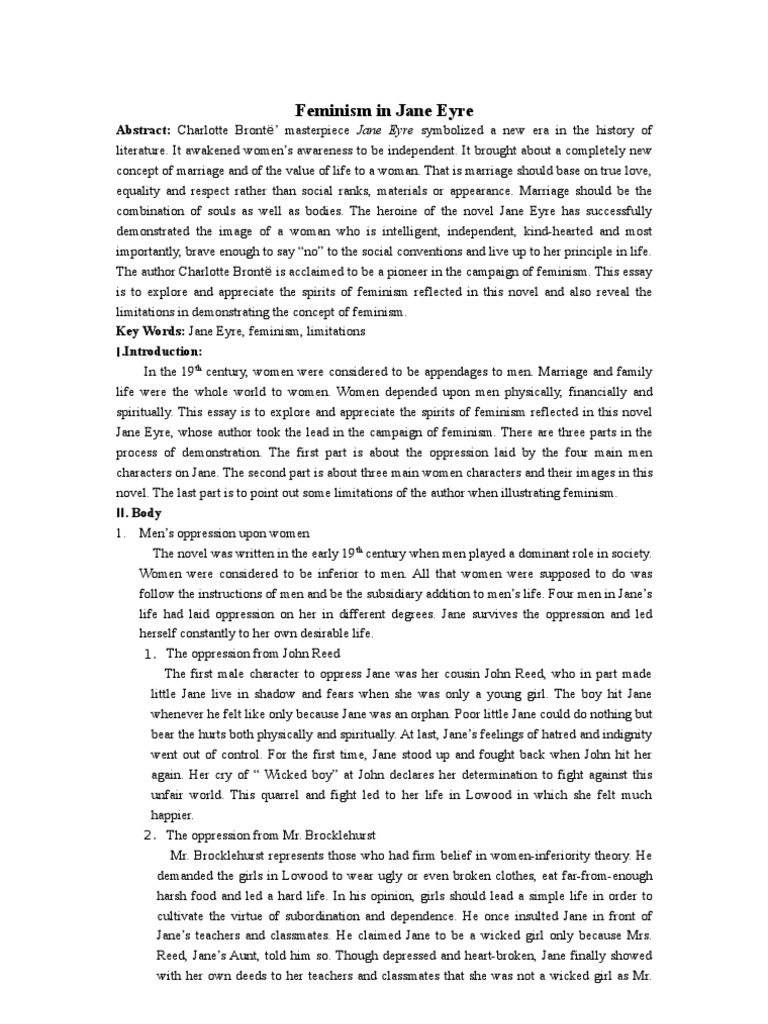
Jane Eyre. The name conjures images of windswept moors, a brooding anti-hero, and a woman… a woman… who refuses to be silenced. But why does this particular Victorian novel continue to resonate with such fervent intensity, particularly among those who self-identify as feminists? It’s easy to dismiss it as a simple story of a governess finding love, a palatable romance veiled in period-appropriate morality. Such an assessment is not only facile, it is frankly, intellectually insulting. We are not drawn in merely by a trite love story. The abiding power of Jane Eyre resides in its exploration of female agency, its unflinching gaze at societal constraints, and its fiery protagonist who, despite the limitations imposed upon her, forges her own path, defining her identity on her own goddamn terms.
I. The Cage of Convention: A Society Designed to Crush
Victorian society, as we all know, was a delicately constructed cage for women. Positioned as paragons of virtue, they were simultaneously denied agency, their lives circumscribed by expectations of domesticity and subservience. Jane, from her earliest days at Gateshead, chafes against these constraints. She is not the docile, compliant child Mrs. Reed expects. Her spirit, as untamed as the Yorkshire moors, refuses to be broken. This initial rebellion, often dismissed as childish petulance, is in fact the nascent articulation of a profound desire for autonomy. Observe how Jane internalizes the societal dictates, yet simultaneously rejects them. She understands the “proper” role of a woman, but refuses to be confined by it.
The stifling atmosphere of Lowood School further illuminates the systemic oppression of women. Ostensibly designed to educate, Lowood serves primarily to control, to strip girls of their individuality and mold them into pious, obedient servants. Helen Burns, with her almost pathological acceptance of suffering, represents one extreme of this process. Jane, while admiring Helen’s fortitude, recognizes the inherent danger in such complete self-abnegation. Helen’s piety, however admirable, is a form of acquiescence. Jane, in contrast, seeks a more active form of resistance.
II. Identity Forged in the Crucible: The Autopoiesis of Jane Eyre
Jane’s journey is, at its core, a quest for self-definition. She refuses to allow others to dictate her identity, actively engaging in a process of autopoiesis – the self-creation and self-maintenance of a living system. This is not a passive acceptance of fate, but a conscious and deliberate act of will. Consider her confrontation with Mr. Rochester. She does not shy away from intellectual sparring. She challenges his assumptions, asserts her own opinions, and refuses to be treated as a mere plaything or a subordinate. “Do you think I am an automaton?” she demands, “A machine without feelings?” This is not the language of a grateful dependent. It is the voice of a woman demanding recognition, demanding equality.
Her time at Thornfield is a complex and nuanced exploration of power dynamics. While she is drawn to Rochester’s intelligence and unconventionality, she is also acutely aware of the inherent imbalance in their social positions. He is her employer, her social superior. She, in turn, is a governess, a woman dependent on his patronage. This dependency creates a vulnerability that Jane instinctively recognizes and actively combats. She maintains her moral compass, resisting any temptation to compromise her principles for the sake of security or social advancement. This internal battle, the constant negotiation between desire and self-respect, is what makes Jane such a compelling and enduring figure.
The aborted marriage to Rochester serves as the ultimate catalyst for Jane’s self-discovery. The revelation of Bertha Mason shatters Jane’s illusions and forces her to confront the inherent inequalities and hypocrisies of Victorian marriage. To remain with Rochester would be to compromise her integrity, to become complicit in a lie. It is a testament to her strength of character that she chooses to leave, even though it means sacrificing her happiness and security. This is not merely a rejection of Rochester, it is a rejection of a societal structure that allows for such blatant exploitation and deceit. The escape from Thornfield is a metaphorical shedding of societal expectations, a purging of the constraints that have held her captive.
III. Independence as a Weapon: The Pursuit of Sovereignty
Jane’s unwavering pursuit of independence is perhaps the most overtly feminist aspect of the novel. It is not merely financial independence she seeks, though that is certainly a crucial component. It is a deeper, more profound sense of self-sovereignty. She craves the freedom to make her own choices, to live her life on her own terms, without being beholden to any man. Her brief stint as a schoolmistress and her subsequent inheritance allow her to achieve this autonomy. She is no longer dependent on the goodwill of others. She is master of her own destiny. This newfound financial independence empowers her to make a conscious and deliberate choice to return to Rochester, not out of desperation or necessity, but out of genuine love and mutual respect.
IV. The Symbolism of Fire: Passion, Rebellion, and Purification
Fire, as a recurring motif throughout Jane Eyre, serves as a potent symbol of Jane’s inner spirit. It represents her passion, her rebellion, and her capacity for both destruction and purification. From the red-room at Gateshead, where she experiences her first act of defiance, to the devastating fire at Thornfield, fire is associated with moments of intense emotional upheaval and transformative change. The fire that consumes Thornfield, leaving Rochester blind and crippled, can be interpreted as a metaphorical cleansing, a purging of the past that allows for a new beginning. It is only after this destructive conflagration that Rochester is humbled, stripped of his arrogance and power, and rendered capable of a truly equal relationship with Jane. The flames also symbolize the simmering rage that society attempts to suppress in women, a rage that, when unleashed, can be both destructive and liberating.
V. Beyond the Romance: A Call to Arms for Future Generations
To reduce Jane Eyre to a simple love story is to fundamentally misunderstand its significance. While the romantic element is undeniably present, it is merely one facet of a much larger and more complex exploration of female identity and agency. Jane’s journey is a testament to the power of self-reliance, the importance of challenging societal norms, and the enduring strength of the human spirit. She is not a passive recipient of fate, but an active agent in her own life, forging her own path in a world that seeks to confine her. Her unwavering commitment to her principles, her refusal to compromise her integrity, and her relentless pursuit of independence make her a powerful and enduring role model for women everywhere.
Furthermore, the novel subtly critiques the social structures that perpetuate inequality and oppression. Through its portrayal of characters like Mrs. Reed, Mr. Brocklehurst, and even Mr. Rochester, Jane Eyre exposes the hypocrisy and injustice that underpin Victorian society. It is a call to arms, not in the literal sense, but in the sense that it encourages readers to question the status quo, to challenge injustice, and to strive for a more equitable and just world. It’s a battle cry whispered across generations, an invitation to ignite our own inner flames. It is a reminder that even in the face of overwhelming odds, one woman, armed with her intellect, her integrity, and her unwavering spirit, can change the world. The enduring appeal of Jane Eyre lies not in its romanticism, but in its radical assertion of female autonomy. It is a timeless masterpiece precisely because it continues to speak to our deepest aspirations for freedom and equality.






Leave a Comment