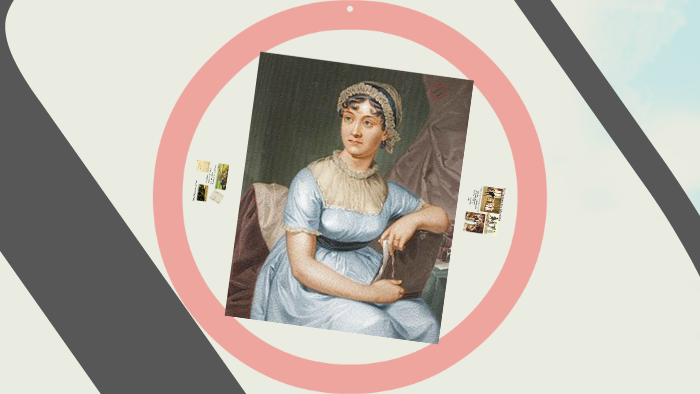
Jane Austen. A name synonymous with bonnets, balls, and blushing brides. But to dismiss her works as mere Regency romances is to profoundly misunderstand the subtle, yet seismic, feminist tremors rippling beneath the surface of her elegantly crafted narratives. We’ve been spoon-fed this narrative of Austen as a quaint chronicler of societal norms, haven’t we? As a charming entertainer oblivious to the simmering societal injustices against women. Hogwash. Utter and complete hogwash. Prepare to recalibrate your assumptions. Prepare to confront a perspective that challenges the conventional wisdom. Prepare to be provoked.
Austen’s genius lies not in overt pronouncements of radicalism, but in her meticulous dissection of the societal constraints that choked the lives of women in 19th-century England. She wielded the pen as a surgeon wields a scalpel, exposing the insidious nature of patriarchy with a precision that continues to resonate today. The very notion of “romance” as it’s traditionally understood, the damsel awaiting rescue by a wealthy suitor, is interrogated and often outright subverted within her novels. This isn’t about flowery prose and superficial storylines; it’s about meticulously constructing female characters who, despite operating within the confines of their circumscribed world, find ways to exert agency, challenge expectations, and ultimately, define their own destinies. It’s a quiet revolution, whispered in drawing rooms and etched onto the pages of enduring literature.
Consider, for instance, the societal milieu in which Austen operated. Women of her era were largely defined by their marital prospects. Their economic security, their social standing, their very identities, were inextricably linked to securing a suitable husband. This wasn’t a matter of romantic fulfillment; it was a matter of survival. Austen understood this precariousness intimately, having witnessed its impact on her own life and the lives of those around her. But instead of simply accepting this reality, she used her novels to explore its inherent contradictions and injustices.
Let’s dissect the concept of marriage as portrayed in Austen’s works. It’s not simply about love and happiness, although those elements are certainly present. It’s about economic pragmatism, social mobility, and the delicate dance of power dynamics. Marriage, in Austen’s world, is a transaction, a contract, a negotiation. And women, often possessing limited resources and agency, must navigate this complex terrain with wit, intelligence, and a healthy dose of self-preservation. This is where Austen’s heroines truly shine.
Austen’s protagonists aren’t passive recipients of fate. They are active agents in shaping their own lives, even within the limitations imposed upon them. Elizabeth Bennet, in *Pride and Prejudice*, is perhaps the most iconic example. She refuses to be swayed by societal expectations, challenges the arrogance of Mr. Darcy, and ultimately, chooses a marriage based on mutual respect and intellectual compatibility, rather than simply settling for financial security. Her refusal to conform is a direct challenge to the patriarchal structures that sought to define her worth solely in terms of her marital prospects. Short sentences pack a punch, don’t they?
Emma Woodhouse, the titular character of *Emma*, is another fascinating case study. While initially flawed and prone to meddling, Emma demonstrates a fierce independence and a refusal to be dictated to by others. Her initial disdain for marriage and her desire to remain in control of her own life, even if it means societal censure, speaks volumes about her rebellious spirit. Emma’s journey is one of self-discovery, as she learns to temper her independence with empathy and understanding, but her underlying desire for autonomy remains a constant throughout the novel.
Even characters who might initially appear more conventional, such as Elinor Dashwood in *Sense and Sensibility*, exhibit a quiet strength and resilience in the face of adversity. Elinor is forced to navigate a world of financial insecurity and societal pressure, yet she maintains her integrity and dignity, refusing to compromise her values for the sake of convenience. Her “sense,” often interpreted as a sign of repression, can also be seen as a form of self-preservation in a world where women were so easily exploited. The nuances are crucial.
Beyond individual characters, Austen’s novels also offer a scathing critique of the societal institutions that perpetuated female oppression. The limitations placed on women’s education, the lack of economic opportunities, and the pervasive culture of gossip and judgment are all exposed with a keen eye and a sharp wit. Austen doesn’t simply tell us that these things are unfair; she shows us the devastating impact they have on the lives of her characters. The ramifications are profound.
The seemingly innocuous social gatherings depicted in Austen’s novels, the balls, the dinners, the afternoon teas, are actually sites of intense social scrutiny and power plays. Women are constantly being evaluated and judged based on their appearance, their accomplishments, and their marital prospects. These gatherings are not simply opportunities for entertainment; they are arenas in which women must compete for social and economic survival. A dark undercurrent runs through the superficial gaiety.
Furthermore, Austen’s use of irony and satire allows her to critique societal norms in a way that is both subtle and effective. She exposes the hypocrisy and absurdity of the patriarchal system through witty dialogue and pointed observations. The reader is invited to laugh at the foibles of the characters, but also to recognize the underlying injustices that those foibles represent. This is social commentary disguised as entertainment. An incredibly effective method, wouldn’t you agree?
Consider the portrayal of clergymen in Austen’s novels. Characters like Mr. Collins in *Pride and Prejudice* represent the worst aspects of the patriarchal system: self-importance, hypocrisy, and a complete lack of empathy. Austen uses these characters to satirize the religious institutions that often reinforced traditional gender roles and perpetuated the subordination of women. The subtle jabs are often the most devastating.
Austen’s feminism is not the overt, revolutionary feminism of later generations. It’s a more subtle, nuanced form of rebellion. It’s about challenging the status quo from within, about finding ways to exert agency and resist oppression in a world where overt resistance was often impossible. It’s about giving voice to the experiences of women and exposing the limitations of a society that sought to silence them. This is the power of quiet resistance. A force to be reckoned with.
To truly appreciate Austen’s feminist sensibilities, we must move beyond the superficial readings that focus solely on the romantic plotlines. We must delve deeper into the complexities of her characters, the nuances of her social commentary, and the subtle ways in which she challenged the patriarchal norms of her time. We must recognize that her novels are not simply escapist fantasies; they are powerful critiques of the societal forces that shaped the lives of women in 19th-century England. They are not relics of a bygone era; they are timeless explorations of power, gender, and the enduring struggle for female autonomy.
The argument that Austen’s focus on domesticity somehow diminishes her feminist significance is, frankly, absurd. The domestic sphere was, for many women in the 19th century, the primary, if not the only, arena in which they could exert influence. Austen’s focus on this sphere allows her to explore the complexities of female relationships, the challenges of motherhood, and the ways in which women could find meaning and purpose within the confines of their limited world. She doesn’t romanticize domesticity; she interrogates it. She exposes its limitations, but also celebrates the strength and resilience of the women who navigated it. She refuses to shy away from the realities of women’s lives. A brave stance, wouldn’t you say?
And let’s not forget the importance of Austen’s own life and experiences in shaping her feminist perspective. She was a woman who chose to remain unmarried, defying societal expectations and pursuing her own creative ambitions. Her novels are, in a sense, a testament to her own independence and her refusal to conform to the limitations imposed upon her. She lived a life of quiet rebellion, and her novels reflect that spirit of defiance. The personal is political, after all. It always has been, and it always will be.
So, the next time you pick up a Jane Austen novel, I urge you to read it with a critical eye. Don’t be seduced by the bonnets and the balls. Look beneath the surface, and you’ll find a world of subtle rebellion, quiet resistance, and enduring feminist power. Austen’s legacy is not simply one of romance and entertainment; it’s one of social commentary, intellectual rigor, and a profound understanding of the complexities of the human condition, particularly the female condition. It’s time we stop underestimating her. It’s time we recognize her for what she truly is: a feminist icon, centuries ahead of her time. This is not merely literature; it’s a provocation. And are you provoked yet?








Leave a Comment