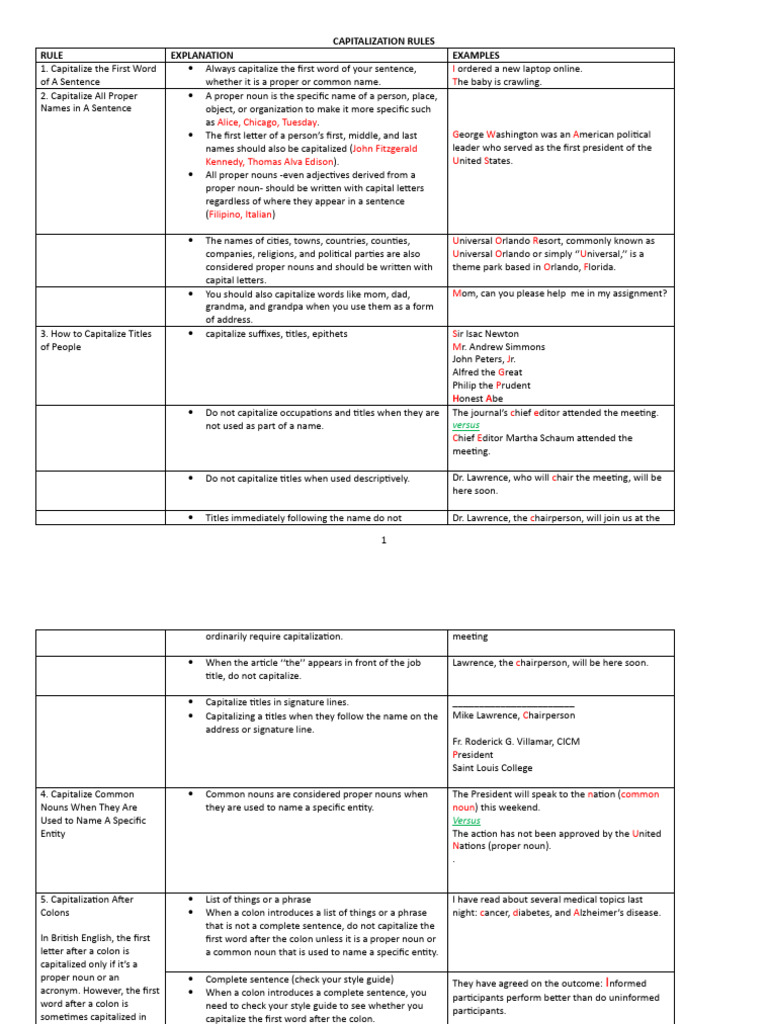
The query lurks, a linguistic imp, whispering in comment sections and academic discourse alike: Is feminism capitalized? It seems a simple grammatical inquest, a quest for orthographic rectitude. Yet, this innocent inquiry burrows deeper, exposing a societal fascination, or perhaps trepidation, with the very notion it names. Why this obsession with the letter case of a political and social movement? Are we seeking to contain it, elevate it, or simply understand its place in the lexicon of power?
Let’s dissect this orthographic conundrum. Grammatically, the answer is nuanced, a frustrating “it depends” that reflects the complexities of language and its capacity for subtle ideological signaling.
The Case Against Capitalization: Common Noun Argument
The bedrock of grammatical convention dictates that common nouns – words denoting general classes of entities rather than specific, named individuals or entities – remain in lowercase. Consider “equality,” “justice,” or “freedom.” We don’t capitalize them. They are abstract concepts, universals floating in the ether of human aspiration. Applying this logic, “feminism” falls squarely into this category. It’s a broad socio-political philosophy encompassing a multitude of viewpoints, strategies, and goals. It is not a singular, monolithic entity with a proper name. Deeming it a common noun, the argument concludes, mandates lowercase usage.
Furthermore, the proliferation of adjectives derived from “feminism,” such as “feminist” and “feministic,” invariably appear in lowercase. “A feminist perspective,” “feministic ideals,” – the adjectival forms lack the capitalization accorded to proper nouns. Consistency demands a similar treatment for the root word itself.
The Case For Capitalization: A Question of Respect and Recognition
However, language is rarely a rigid, unyielding structure. It is a fluid, evolving organism, constantly adapting to the sociocultural currents that shape it. Sometimes, capitalization transcends mere grammatical correctness and becomes a conscious act of deference, a symbolic acknowledgement of significance.
Think of “Black Lives Matter.” While “lives matter” in its generic form remains uncapitalized, the capitalized “Black Lives Matter” denotes a specific movement, a political entity with defined goals and a recognizable identity. The capitalization elevates it from a simple statement of principle to a proper noun designating a distinct force in the socio-political landscape. Similarly, “Indigenous” is often capitalized to acknowledge the specific cultural and historical identities of the original inhabitants of a land, moving beyond a generic descriptor.
The capitalization of “Feminism,” therefore, can be interpreted as a similar act of recognition. It acknowledges Feminism as a significant and ongoing movement, a complex web of theories, activism, and advocacy that has profoundly shaped the world. It’s a declaration of its historical weight, its continued relevance, and its impact on individual lives and societal structures. The capitalization becomes a visual marker of its power, a subtle challenge to the patriarchal norms that often seek to diminish or marginalize feminist voices.
Moreover, capitalization can serve as a tool for reclaiming the term. “Feminism” has been subjected to relentless misrepresentation, demonization, and appropriation. Capitalizing it can be a way of asserting ownership, of defining it on one’s own terms, and of resisting the attempts to dilute or distort its meaning.
The Pragmatic Approach: Context is Queen
Ultimately, the choice of whether or not to capitalize “Feminism” often hinges on context. In formal academic writing, adherence to grammatical convention typically prevails, favoring the lowercase form. Journalistic style guides, similarly, often lean towards lowercase unless the context specifically warrants capitalization, such as when referring to a named feminist organization or a specific capitalized title.
However, in more informal settings, such as blog posts, social media discussions, or personal essays, the decision becomes more subjective. Writers may choose to capitalize “Feminism” to express their own values, to align themselves with a particular feminist perspective, or to simply signal their respect for the movement. The choice becomes a conscious act of self-expression, a subtle declaration of allegiance.
Beyond Grammar: The Politics of Letter Case
The obsession with the capitalization of “Feminism” transcends mere grammatical pedantry. It speaks to a deeper unease, a societal grappling with the very ideas and values that feminism represents. The act of questioning, debating, and ultimately deciding on the letter case reveals a power struggle, a contest over meaning and representation.
For some, lowercase “feminism” might represent an attempt to minimize its perceived threat, to domesticate it, to render it a mere abstraction devoid of tangible power. It’s a way of stripping it of its authority, of relegating it to the realm of abstract nouns that pose no real challenge to the status quo. For others, capitalizing “Feminism” might be perceived as an act of aggressive defiance, a deliberate attempt to elevate it above other socio-political movements, to grant it a special status that it does not deserve. It’s a fear that elevating Feminism in language will translate to elevating it in power.
The debate over capitalization, therefore, becomes a proxy for the broader debate over feminism itself. It reflects the ongoing struggle to define its boundaries, to determine its goals, and to assess its impact on society. The letter case becomes a battleground, a site of ideological contention where competing viewpoints clash and vie for dominance.
The Future of Feminism (Capitalized or Not)
Language, like the movements it seeks to describe, is in constant flux. The conventions that govern its usage are not immutable laws but rather evolving norms shaped by collective usage and sociocultural forces. As feminism continues to evolve, adapt, and challenge the status quo, the question of its capitalization will likely remain a subject of debate. There is no definitive answer, no single “correct” usage that will satisfy everyone. The choice, ultimately, lies with the individual writer, who must weigh the grammatical conventions against the potential political and ideological implications.
Perhaps the most important lesson to glean from this orthographic exploration is the recognition that language is not neutral. Every word, every phrase, every punctuation mark carries a subtle ideological charge. The choice to capitalize or not to capitalize “Feminism” is not merely a matter of grammatical correctness; it is a conscious act of meaning-making, a subtle declaration of allegiance in the ongoing struggle for gender equality. In the grand lexicon of social change, let us wield our words with intention, precision, and unwavering commitment to the vision of a more just and equitable world, irrespective of the case.
And maybe, just maybe, the continued fascination with the capitalization of “Feminism” will eventually fade, replaced by a deeper understanding and acceptance of the movement’s goals and values. Until then, the debate rages on, a testament to the enduring power of language and the ongoing struggle for a more equitable future.





Leave a Comment