
Darling, ever wondered how this delicious concoction of defiance we call feminism even began? Was it a spontaneous combustion of frustrated sighs and suppressed rage, or a meticulously planned insurrection against the patriarchy’s suffocating grip? The truth, as always, is far more nuanced, a tapestry woven from threads of revolution, resilience, and, let’s be honest, a healthy dose of righteous indignation. But the real question is: Can we, armed with the wisdom of hindsight and the fire of contemporary urgency, truly grasp the genesis of a movement so profoundly transformative, so relentlessly evolving?
Let’s embark, shall we, on a historical peregrination, a veritable odyssey into the labyrinthine origins of feminism. This isn’t just a recounting of events; it’s an excavation of the intellectual and social tectonics that birthed this paradigm shift.
I. Seeds of Dissent: Proto-Feminist Stirrings (Pre-18th Century)
Forget the glossy image of marches and manifestos for a moment. The yearning for equality wasn’t born overnight. It simmered beneath the surface for centuries, a low, persistent hum of discontent. Consider the women of antiquity, veiled in the strictures of their respective societies, yet daring to question, to challenge, to subtly subvert the established order.
A. Literary Luminaries and Intellectual Provocateurs: Names like Christine de Pizan, a 15th-century intellectual firebrand, spring to mind. Her “The Book of the City of Ladies” was a proto-feminist manifesto, a defiant rebuke to the misogynistic narratives that permeated medieval Europe. Her very existence as a female intellectual was a revolutionary act. It was a beacon of light in an otherwise dismal landscape. What about Isabella d’Este, the First Lady of the Renaissance, who navigated the treacherous waters of courtly power with cunning and intellect? These were women wielding the only weapons available to them: their minds and their words.
B. Religious Heresies and Mystical Rebellion: The religious sphere, ironically, provided some women with a platform to express their discontent. Mystics like Hildegard of Bingen, with her visions and pronouncements, carved out spaces for female authority within the traditionally patriarchal church. Women accused of heresy, like the Beguines, often challenged conventional gender roles through their independent lifestyles and spiritual practices. Their challenge to religious authority was inextricably linked to a challenge to social norms. These were not mere acts of piety; they were acts of profound defiance.
C. The Querelle des Femmes: A War of Words: The 16th and 17th centuries witnessed the “Querelle des Femmes,” a literary and intellectual debate about the nature and worth of women. This “war of words” raged across Europe, with writers both defending and denigrating the female sex. While often couched in misogynistic terms, the very fact that the debate was taking place signified a growing awareness of the “woman question.” The debate exposed the inherent contradictions within the patriarchal system itself.
II. The Enlightenment’s Double Standard: Reason and Revolution
Ah, the Enlightenment! That glorious era of reason, liberty, and fraternity! Except, of course, the “fraternity” part seemed to conveniently exclude half the population. The Enlightenment, while championing individual rights, often failed to extend those rights to women. The inherent contradiction between Enlightenment ideals and the reality of female subjugation became a powerful catalyst for feminist thought.
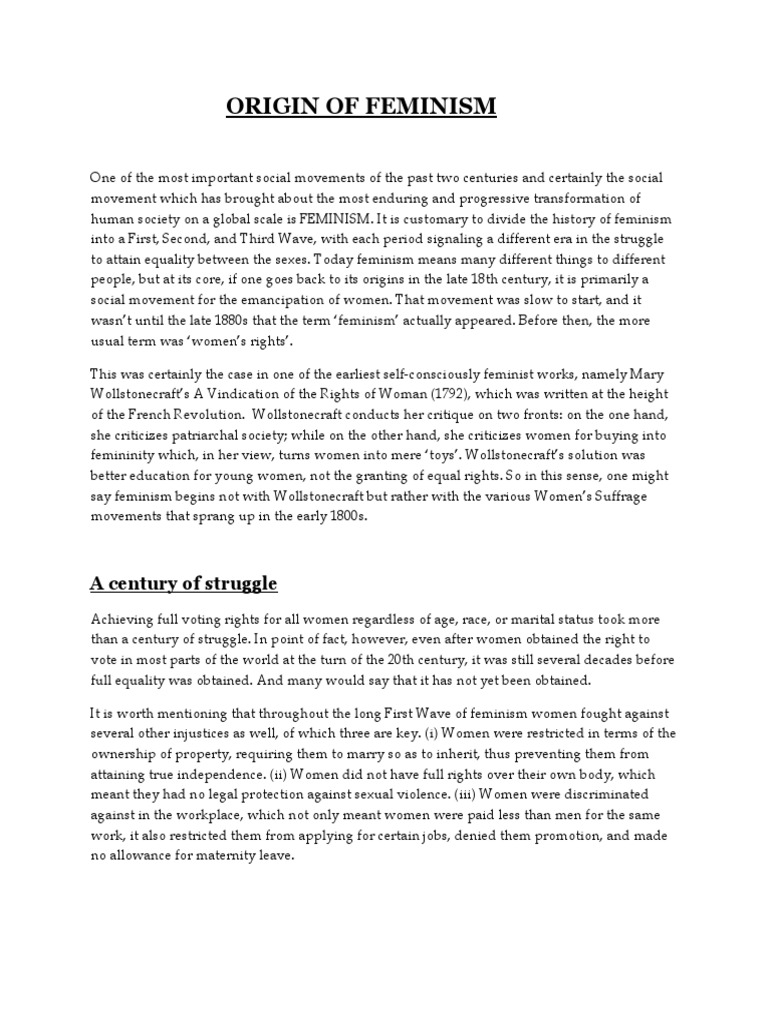
A. Mary Wollstonecraft: A Vindication of Rights: Enter Mary Wollstonecraft, the intellectual supernova who shattered the Enlightenment’s illusions of universality. Her “A Vindication of the Rights of Woman” (1792) is a foundational text of feminist theory. Wollstonecraft argued that women, like men, were rational beings capable of intellectual and moral development. She advocated for equal education and opportunities for women, not as a matter of sentimentality, but as a matter of justice. This was not a plea for special treatment; it was a demand for equal standing.
B. The French Revolution: Liberty, Equality, Sorority?: The French Revolution, with its revolutionary fervor, initially held promise for women. Women actively participated in the revolution, demanding political rights and social reforms. Olympe de Gouges, a playwright and political activist, penned the “Declaration of the Rights of Woman and of the Female Citizen” (1791), a direct response to the “Declaration of the Rights of Man and of the Citizen.” However, the revolution ultimately failed to deliver on its promises of equality for women. De Gouges herself was guillotined for her radical views, a stark reminder of the dangers of challenging the established order.
C. Early Feminist Salons and Intellectual Networks: Despite the setbacks, the Enlightenment fostered the growth of feminist salons and intellectual networks. Women like Madame de Staël hosted gatherings where intellectual and political ideas were debated. These salons provided women with a space to engage in intellectual discourse and to develop their own feminist ideas. These spaces were vital for the development of a collective feminist consciousness.
III. The 19th Century: Suffrage and Social Reform
The 19th century witnessed the rise of organized feminist movements, focused on achieving suffrage (the right to vote) and addressing a range of social and economic inequalities. This era saw the emergence of a powerful and diverse feminist movement, characterized by a range of strategies and ideologies.
A. The Suffrage Movement: A Battle for the Ballot: The fight for suffrage became the central focus of feminist activism in the 19th and early 20th centuries. Suffragists employed a variety of tactics, from peaceful protests and lobbying to civil disobedience and militant action. Figures like Susan B. Anthony, Elizabeth Cady Stanton, and Emmeline Pankhurst became iconic leaders of the suffrage movement. The struggle for the vote was not merely a political battle; it was a symbolic struggle for recognition and agency.
B. Abolition and Feminist Solidarity (and its Limitations): The abolitionist movement provided a crucial training ground for many early feminists. Women who fought against slavery recognized the parallels between the oppression of enslaved people and the oppression of women. However, the relationship between the abolitionist and feminist movements was not always seamless. Some abolitionists prioritized the rights of black men over the rights of women, leading to tensions within the movement. The intersection of race and gender became a significant issue in the development of feminist thought.
C. Social Reform and the “Woman Question”: Beyond suffrage, feminists also campaigned for social reforms, including improved education for women, access to employment opportunities, and legal rights within marriage. Issues like temperance, prostitution, and domestic violence were also addressed. The “woman question” became a subject of intense debate, with conservatives arguing that women’s proper place was in the home and progressives advocating for greater opportunities for women. The discourse surrounding the “woman question” shaped the development of feminist ideology.
D. The Rise of Socialist Feminism: As industrial capitalism expanded, socialist feminists argued that the oppression of women was rooted in economic inequality and class exploitation. They advocated for socialist reforms, such as equal pay for equal work and access to childcare, as essential steps towards achieving women’s liberation. Figures like Clara Zetkin and Alexandra Kollontai played key roles in developing socialist feminist theory. Socialist feminism offered a critique of both capitalism and patriarchy.
IV. The 20th Century and Beyond: Waves of Feminism
The 20th century witnessed the emergence of distinct “waves” of feminism, each characterized by its own priorities and concerns. From securing the vote to challenging cultural norms and advocating for intersectionality, feminism has continued to evolve and adapt to changing social and political conditions.
A. First-Wave Feminism: Suffrage Achieved (and its Aftermath): The first wave of feminism culminated in the achievement of suffrage in many countries, including the United States and the United Kingdom. However, the achievement of suffrage did not automatically lead to full equality for women. Many women continued to face discrimination in employment, education, and other areas of life. The first wave paved the way for further feminist activism.
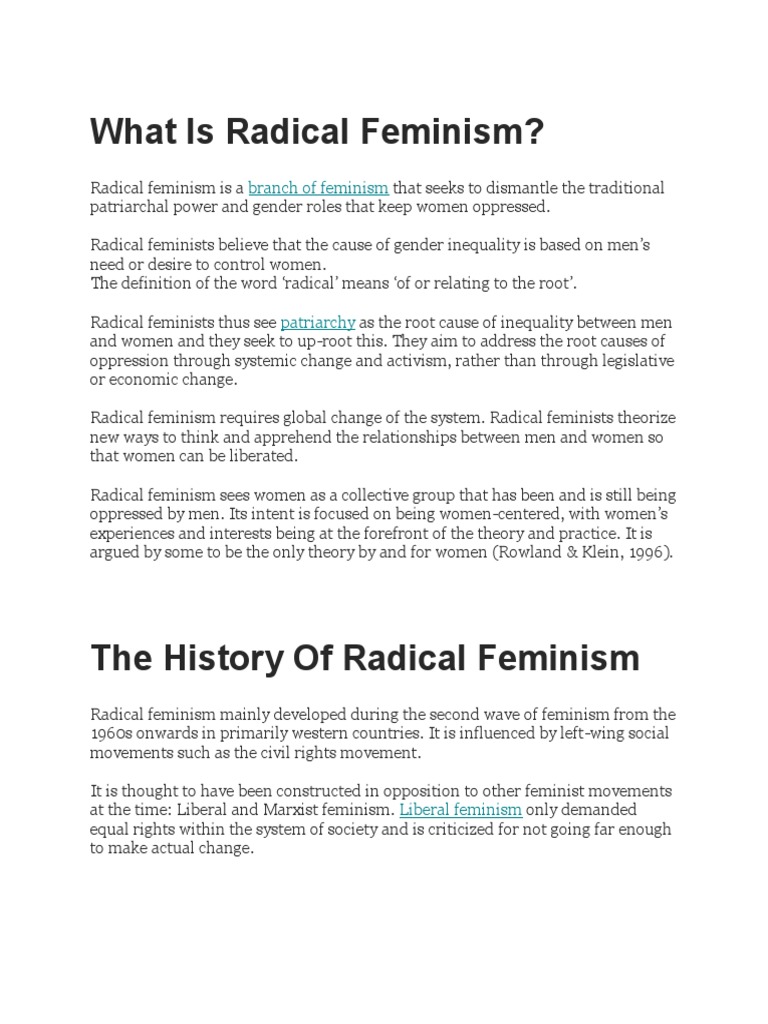
B. Second-Wave Feminism: The Personal is Political: The second wave of feminism, which emerged in the 1960s and 1970s, challenged traditional gender roles and focused on issues such as reproductive rights, domestic violence, and equal pay. Key texts like Betty Friedan’s “The Feminine Mystique” and Kate Millett’s “Sexual Politics” helped to galvanize the movement. The slogan “the personal is political” captured the second wave’s emphasis on the ways in which personal experiences are shaped by broader social and political structures. This era was marked by a radical questioning of societal norms.
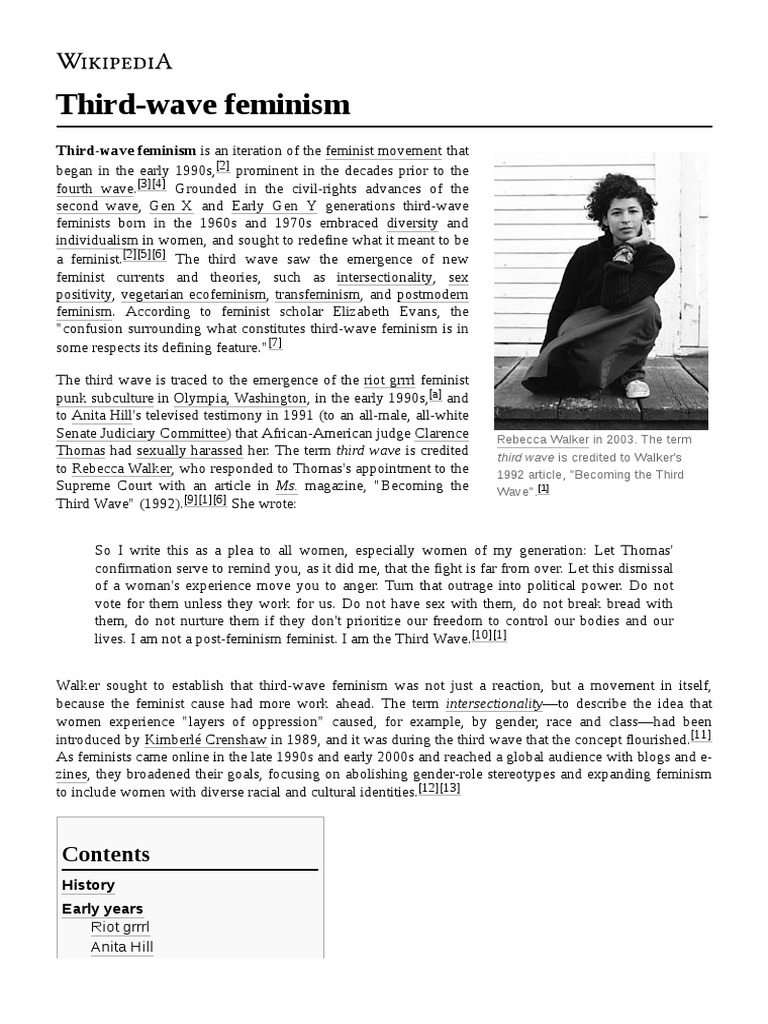
C. Third-Wave Feminism: Intersectionality and Diversity: The third wave of feminism, which emerged in the 1990s, challenged the perceived homogeneity of second-wave feminism and emphasized the importance of intersectionality, recognizing that women’s experiences are shaped by a complex interplay of factors, including race, class, sexual orientation, and disability. Third-wave feminists embraced diversity and celebrated female empowerment in all its forms. This wave was characterized by a more inclusive and nuanced understanding of feminism.
D. Fourth-Wave Feminism: Digital Activism and Global Connections: Some scholars argue that we are now in a fourth wave of feminism, characterized by its reliance on digital technologies and its global reach. Social media platforms have become powerful tools for feminist activism, allowing women to share their stories, organize protests, and challenge online harassment. Issues such as body positivity, transgender rights, and climate justice are also central to fourth-wave feminism. The digital age has allowed for unprecedented connectivity and mobilization.
E. Contemporary Challenges and Future Directions: Despite the progress that has been made, feminism continues to face significant challenges, including backlash against feminist ideas, persistent gender inequalities, and the rise of misogynistic online communities. The future of feminism will depend on its ability to address these challenges and to build coalitions with other social justice movements. The fight for equality is far from over; it demands constant vigilance and unwavering commitment.
So, how did feminism begin? It began with a whisper, a seed of discontent planted in the fertile ground of oppression. It grew into a roar, a demand for justice that continues to reverberate across the globe. And as for that challenge – grasping the genesis of such a transformative movement? Perhaps, darling, we’ve just begun to scratch the surface. Perhaps the most crucial part of understanding the origins, is understanding it continues to evolve.






Leave a Comment