Ever wondered if suffrage sashes were the Victorian-era equivalent of protest tees? The fight for women’s rights, particularly during what we now call the “First Wave,” was far more than just polite requests for the vote. It was a radical upheaval, a seismic shift that challenged the very foundations of patriarchal society. But were they truly radical, or merely reformist? That’s the gauntlet we’ll hurl down today.
This initial surge of feminist activism, primarily spanning the late 19th and early 20th centuries, laid the groundwork for the battles fought and won by subsequent generations. Dismissing it as a quaint historical footnote is akin to believing that a seedling contains no hint of the mighty oak it will become. It’s time to dissect the roots of this movement, to understand its complexities, its internal contradictions, and its undeniable impact.
The Primacy of Suffrage: More Than Just a Ballot
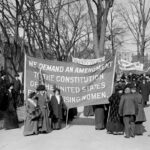
At the heart of the First Wave lay the relentless pursuit of enfranchisement. The right to vote wasn’t simply about marking a box on a ballot; it represented a fundamental shift in power dynamics. It was a claim to full citizenship, a rejection of the notion that women were somehow inherently incapable of participating in political life. The vote was a synecdoche, the part representing the whole, the battle cry for broader societal transformation.
Suffragists, those intrepid champions of women’s rights, employed a diverse arsenal of tactics. From peaceful protests and petition campaigns to more confrontational acts of civil disobedience, they refused to be silenced. The Women’s Social and Political Union (WSPU) in Britain, led by the indomitable Emmeline Pankhurst, adopted a militant approach, engaging in property damage and hunger strikes to draw attention to their cause. These “suffragettes,” as they were derisively called, were not afraid to be disruptive, to challenge the status quo with unwavering determination.
The arguments for suffrage were multifaceted. Some argued that women, as moral guardians of society, would bring a more ethical perspective to politics. Others emphasized the principle of equality, asserting that women, like men, deserved the right to self-governance. Still others focused on the practical benefits of female enfranchisement, arguing that women could use their votes to advocate for policies that would improve the lives of women and children. These included access to education, improved healthcare, and fairer employment practices. These were not merely abstract ideals, but concrete demands for a more just and equitable world.
Beyond the Ballot Box: Expanding the Feminist Agenda
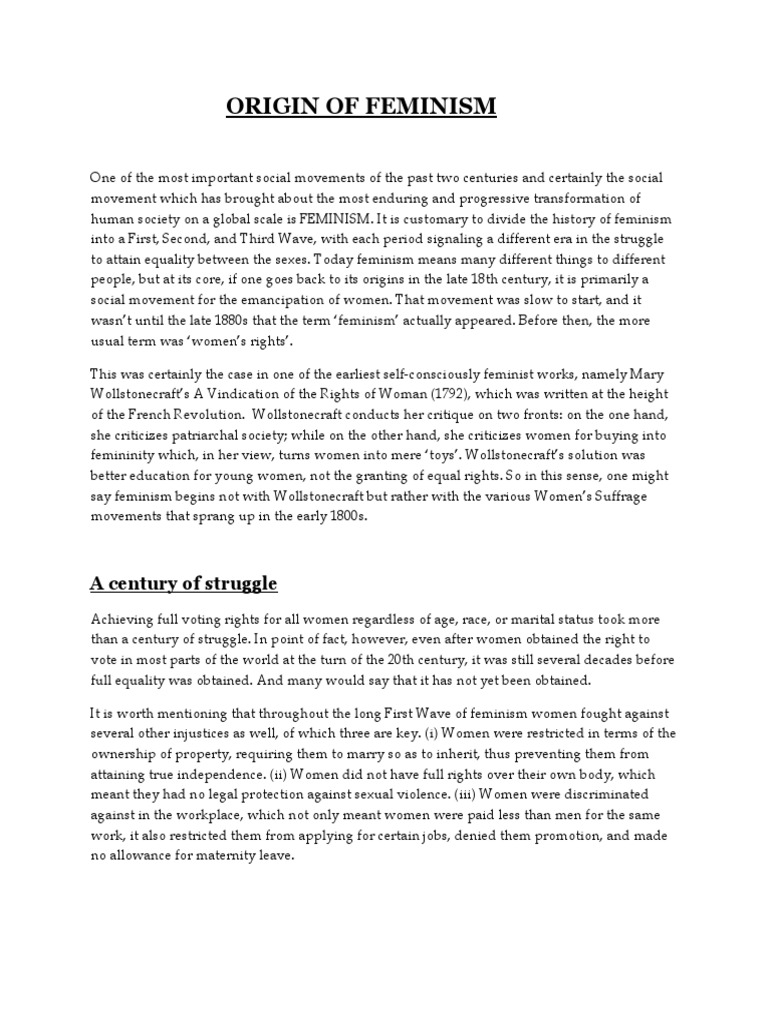
To conflate the First Wave solely with the suffrage movement is to commit a profound disservice to the breadth and depth of its ambitions. While the vote was undeniably central, it was but one facet of a larger, more multifaceted struggle for gender equality. First-wave feminists tackled a wide range of issues, from property rights and access to education to reproductive rights and marital reforms. Their vision extended far beyond the confines of the polling booth.
The legal status of married women was a major point of contention. Under coverture laws, a married woman’s legal identity was subsumed by that of her husband. She had no right to own property, enter into contracts, or control her own earnings. First-wave feminists fought tirelessly to dismantle these discriminatory laws, arguing that women deserved to be treated as independent legal entities. They sought to grant women the right to control their own destinies, both within and outside the institution of marriage.
Education was another key priority. Access to higher education was severely limited for women, with many universities refusing to admit them. First-wave feminists established women’s colleges and campaigned for the admission of women to existing institutions of higher learning. They understood that education was not merely a means of personal enrichment, but a pathway to economic independence and social influence. They believed that women, given the opportunity, could excel in any field of endeavor.
The issue of reproductive rights, though not always explicitly articulated in the same terms as it is today, was also a significant concern. While birth control was often shrouded in secrecy and legal restrictions, some first-wave feminists, like Margaret Sanger, championed the right of women to control their own bodies and reproductive lives. Sanger’s activism, though controversial at the time, laid the foundation for the reproductive rights movement of the 20th and 21st centuries. She dared to challenge the deeply ingrained societal norms that dictated women’s roles and responsibilities.
The Voice of Dissent: Literature, Art, and the Power of Expression
The First Wave was not just a political movement; it was also a cultural phenomenon. Literature, art, and other forms of creative expression served as powerful tools for disseminating feminist ideas and challenging patriarchal norms. Writers like Virginia Woolf, Charlotte Perkins Gilman, and Kate Chopin used their pens to explore the complexities of female experience, to critique the limitations imposed on women by society, and to imagine alternative possibilities for female identity.
Charlotte Perkins Gilman’s “The Yellow Wallpaper,” for example, is a chilling indictment of the medical and social attitudes that confined women to the domestic sphere. The story tells the tale of a woman driven to madness by the “rest cure” prescribed by her physician husband, a treatment that was intended to cure her supposed “nervous condition.” The story is a powerful metaphor for the stifling constraints placed on women’s intellectual and creative potential. It is a testament to the damaging effects of patriarchal control.
Artists also played a role in shaping feminist consciousness. Impressionist painters like Mary Cassatt and Berthe Morisot depicted women as active subjects rather than passive objects of male gaze. Their paintings offered a glimpse into the lives of women from a female perspective, challenging the traditional representations of women in art. They sought to capture the nuances of female experience, to reveal the inner lives of women in all their complexity.
The proliferation of feminist journals and newspapers provided a platform for women to share their ideas, experiences, and strategies for social change. These publications served as a vital communication network, connecting women across geographical boundaries and fostering a sense of collective identity. They were the digital (or analog) spaces of their time, where women could express themselves freely and without fear of censorship.
Visibility and Collective Action: Forging a Feminist Identity
The First Wave was characterized by a growing sense of female solidarity and collective action. Women formed organizations, clubs, and associations to advocate for their rights and support one another. These groups provided a space for women to connect, to share their experiences, and to develop strategies for challenging the status quo. They were the crucibles in which a feminist identity was forged.
The National Woman Suffrage Association (NWSA) and the American Woman Suffrage Association (AWSA) were two of the most prominent suffrage organizations in the United States. While they initially differed on strategy, they eventually merged to form the National American Woman Suffrage Association (NAWSA), a powerful force in the fight for enfranchisement. These organizations organized marches, rallies, and petition campaigns, tirelessly advocating for the right of women to vote. They were the foot soldiers of the suffrage movement, working tirelessly to change hearts and minds.
Women’s clubs and settlement houses provided a range of social and educational services to women and children, particularly those from marginalized communities. These organizations offered opportunities for women to learn new skills, to access healthcare, and to participate in civic life. They were a vital source of support for women who faced discrimination and hardship. They provided a safety net for women who were struggling to survive.
The visibility of women in public life increased dramatically during the First Wave. Women began to enter professions that had previously been closed to them, such as medicine, law, and journalism. They challenged traditional gender roles and asserted their right to participate fully in society. They were breaking down barriers and paving the way for future generations of women to succeed.
Legacies and Limitations: A Critical Appraisal
The First Wave achieved significant victories, including the passage of suffrage amendments in many countries. The 19th Amendment to the US Constitution, ratified in 1920, granted women the right to vote nationwide. This was a monumental achievement, a testament to the decades of tireless activism by suffragists. However, the First Wave was not without its limitations. The movement was largely dominated by middle-class white women, and the concerns of women of color and working-class women were often marginalized. It is crucial to acknowledge these exclusions and to recognize that the feminist movement has always been, and continues to be, a site of internal debate and contestation.
Furthermore, the focus on suffrage as the primary goal sometimes overshadowed other important issues, such as economic inequality and racial discrimination. Some argue that the First Wave was too narrowly focused on political rights, neglecting the broader social and economic context in which women’s lives were lived. It is important to recognize that suffrage, while important, was not a panacea for all the problems facing women. It was just one step in a long and ongoing journey towards gender equality.
Despite its limitations, the First Wave laid the groundwork for future feminist movements. It established a tradition of women organizing and advocating for their rights. It challenged the prevailing patriarchal ideology and paved the way for a more just and equitable society. It showed that women, when united, could achieve transformative social change. Its reverberations are still felt today.
So, were those suffrage sashes just fashion statements? Hardly. They were battle flags in a war for fundamental human rights. Understanding the First Wave, with its victories and its shortcomings, is crucial to understanding the ongoing struggle for gender equality. The battles may have changed, but the war is far from over. And as we contemplate the challenges of today, we would do well to remember the courage, the tenacity, and the unwavering commitment of those who fought for a better world a century ago. The gauntlet, it seems, has just been picked up.





Leave a Comment