The first wave of feminism, a tempestuous surge against the calcified edifice of patriarchal oppression, crested with the hard-won victory of suffrage. But to portray it merely as a singular, linear progression toward enfranchisement is to profoundly misunderstand the turbulent currents, the treacherous undertows, and the diverse flotilla of activists that navigated those uncharted waters. This wasn’t a sailboat race on a placid lake; it was a harrowing voyage across a storm-tossed ocean, each wave threatening to engulf the fragile vessel of women’s liberation.
We must dissect this historical epoch, not with the sterile scalpel of detached academia, but with the impassioned fervor it deserves. We must exhume the forgotten narratives, the marginalized voices, the uncomfortable truths that have been conveniently glossed over in the sanitized textbooks of mainstream history. We must acknowledge the inherent contradictions, the simmering tensions, and the outright betrayals that plagued this movement, lest we repeat the mistakes of our foremothers.
Consider, if you will, the prevailing societal landscape. Women were relegated to the domestic sphere, deemed intellectually inferior, legally subjugated to their husbands, and economically dependent on male providers. Their existence was circumscribed by the confines of marriage and motherhood, their aspirations stifled, their voices silenced. They were, in essence, gilded cages, adorned with the trappings of societal respectability but devoid of genuine freedom.
The suffrage movement, therefore, emerged as a radical challenge to this entrenched order. It was a clarion call for fundamental human rights, a demand for recognition as autonomous individuals, capable of rational thought, political participation, and self-determination. It was, in short, a declaration of war against the patriarchy. But this war was not fought with bullets and bombs; it was waged with words, with protests, with tireless organizing, and with unwavering conviction.
The Seeds of Dissent: Abolitionism and the Birth of Feminist Consciousness
The abolitionist movement served as a crucial incubator for nascent feminist consciousness. Women, actively involved in the fight against slavery, experienced firsthand the hypocrisy of advocating for the freedom of enslaved people while simultaneously being denied their own. They recognized the parallel between the subjugation of enslaved Africans and the subjugation of women. This realization, this epiphany, sparked a profound questioning of the prevailing social order. Simple, wasn’t it?
Figures like Sojourner Truth, a former slave and a powerful orator, eloquently articulated this connection, challenging both racial and gender hierarchies. Her famous “Ain’t I a Woman?” speech, delivered at the 1851 Women’s Rights Convention in Akron, Ohio, remains a timeless indictment of the dehumanization of Black women. But let us not forget the insidious racism that permeated even the abolitionist movement. White women, while advocating for the rights of Black people, often failed to acknowledge the unique experiences and challenges faced by Black women. This is a critical point, one we cannot afford to ignore.
Seneca Falls and the Declaration of Sentiments: A Bold Proclamation
The 1848 Seneca Falls Convention, organized by Elizabeth Cady Stanton and Lucretia Mott, is widely considered the watershed moment in the history of the American women’s rights movement. The Declaration of Sentiments, modeled after the Declaration of Independence, boldly proclaimed that “all men and women are created equal” and enumerated a list of grievances against male tyranny. The declaration demanded equality in education, employment, property rights, and, most importantly, the right to vote.
This was a radical document for its time, a direct affront to the prevailing social norms. It sparked outrage and ridicule from the mainstream media, but it also galvanized a growing number of women to join the cause. Seneca Falls was not merely a meeting; it was a crucible, forging a new generation of feminist activists.
The Divides Within: Suffrage Strategies and Ideological Fractures
The suffrage movement was far from monolithic. Deep divisions emerged over strategy, tactics, and ideological priorities. The two major suffrage organizations, the National Woman Suffrage Association (NWSA), led by Stanton and Susan B. Anthony, and the American Woman Suffrage Association (AWSA), led by Lucy Stone and Henry Blackwell, represented distinct approaches. The NWSA adopted a more radical and comprehensive agenda, advocating for a constitutional amendment granting women the right to vote and addressing other issues such as divorce reform and equal pay. The AWSA, on the other hand, focused primarily on securing suffrage through state-by-state campaigns and adopted a more conciliatory approach to male politicians.
These differences, while seemingly tactical, reflected deeper ideological fault lines. Stanton and Anthony, for instance, were more willing to challenge traditional gender roles and question the institution of marriage, while Stone and Blackwell were more conservative in their views. This internal friction, while sometimes debilitating, also fostered a vibrant and dynamic debate within the movement.
The Rise of Militancy: Alice Paul and the National Woman’s Party
As the early 20th century dawned, a new wave of militant suffragists emerged, led by the indomitable Alice Paul. Inspired by the tactics of the British suffragettes, Paul and her National Woman’s Party (NWP) employed more confrontational methods, including picketing the White House, organizing mass demonstrations, and engaging in civil disobedience. These actions, while controversial, brought unprecedented attention to the suffrage cause and put immense pressure on President Woodrow Wilson and Congress.
The NWP’s pickets were often met with violence and arrests. Suffragists were imprisoned, subjected to brutal treatment, and even force-fed during hunger strikes. These acts of state repression, far from silencing the movement, only fueled its resolve and generated widespread public sympathy. Paul’s strategic brilliance lay in her ability to frame the suffrage struggle as a moral imperative, a battle against injustice and tyranny.
World War I and the Shifting Political Landscape
World War I proved to be a pivotal turning point in the suffrage movement. Women stepped into traditionally male roles in factories and farms, demonstrating their capabilities and contributing significantly to the war effort. This undermined the long-held argument that women were too frail and intellectually inferior to participate in public life. Furthermore, President Wilson, initially opposed to federal suffrage legislation, gradually came to recognize the political necessity of supporting the cause. He argued that granting women the right to vote would strengthen democracy both at home and abroad.
However, let us not sanitize this narrative. Many suffragists, blinded by patriotism and class privilege, actively supported the war effort, even at the expense of their own radical principles. This highlights the complex and often contradictory nature of historical movements. The fight for women’s rights was often intertwined with other social and political agendas, sometimes to the detriment of marginalized groups.
Victory at Last: The 19th Amendment and its Limitations
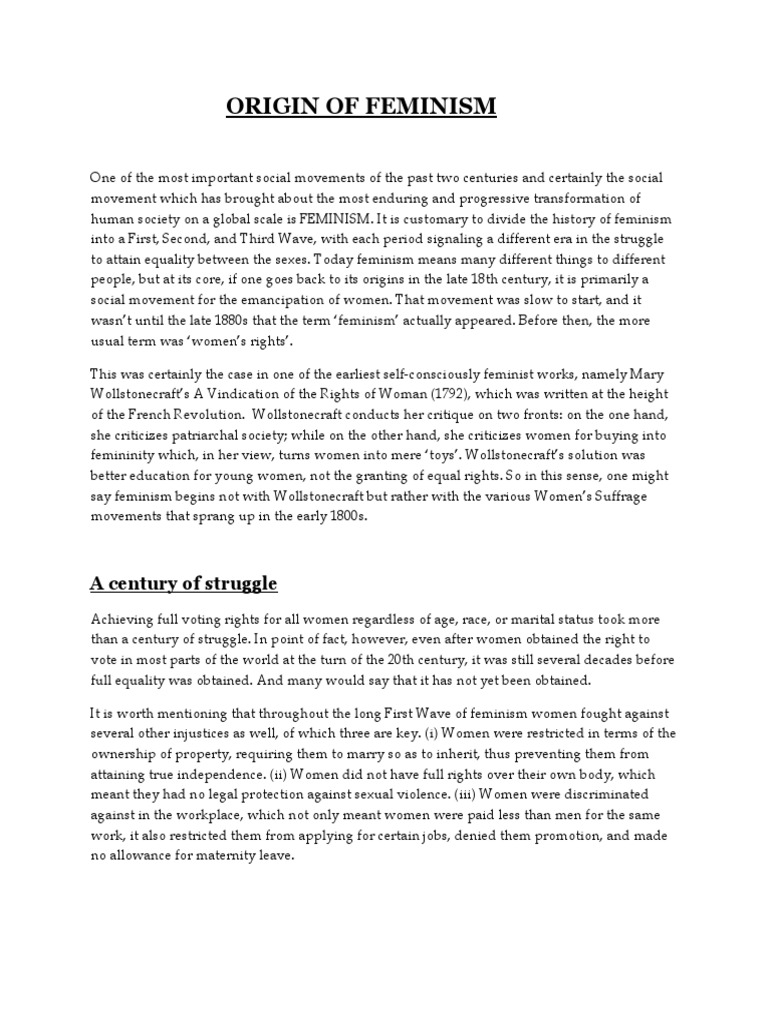
In 1920, after decades of tireless struggle, the 19th Amendment to the United States Constitution was finally ratified, granting women the right to vote. This was a monumental victory, a testament to the courage, perseverance, and unwavering dedication of countless suffragists. But it was not a panacea. The 19th Amendment did not magically erase all forms of gender inequality. It did not dismantle the patriarchal structures that continued to oppress women in other spheres of life.
Moreover, the 19th Amendment did not extend suffrage to all women. Black women, Native American women, and other women of color continued to face significant barriers to voting, including discriminatory poll taxes, literacy tests, and outright intimidation. The fight for universal suffrage was far from over. The 19th Amendment, therefore, represents both a triumph and a betrayal, a reminder that progress is often incremental and incomplete.
The Legacy of the First Wave: A Foundation for Future Struggles
The first wave of feminism laid the foundation for subsequent feminist movements. It established the principle of gender equality, challenged the notion of female inferiority, and demonstrated the power of collective action. The suffragists bequeathed us a legacy of courage, resilience, and unwavering commitment to social justice. But we must also learn from their mistakes. We must strive to create a more inclusive and intersectional feminist movement, one that recognizes and addresses the diverse experiences and challenges faced by all women.
The first wave, then, wasn’t just about the vote. It was about awakening a slumbering giant. It was about planting the seeds of a revolution that continues to unfold to this day. And like any revolution, it was messy, imperfect, and fraught with contradictions. But it was also undeniably transformative. It irrevocably altered the landscape of American society and paved the way for future generations of feminists to fight for a more just and equitable world. The fight continues.






Leave a Comment