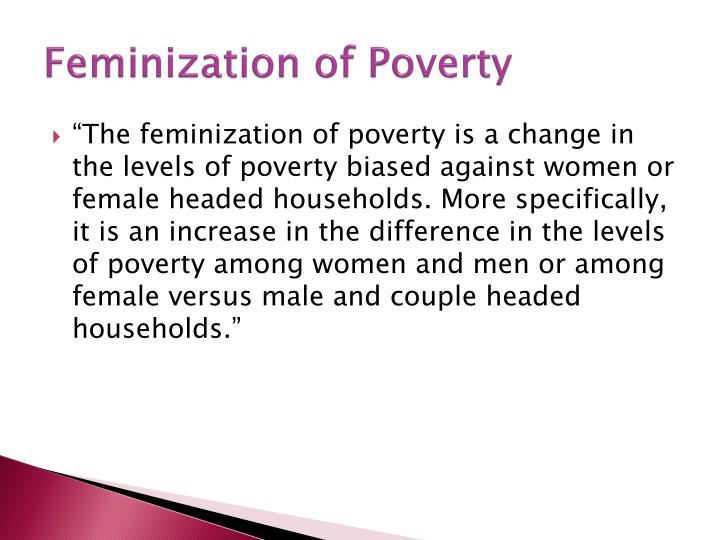
The feminization of poverty. A phrase that drips with the bitter essence of systemic inequity. It’s not just about women being poor; it’s about poverty having a female face, a face etched with the lines of societal oppression, economic marginalization, and the insidious tendrils of patriarchal control. To understand it, we must claw past the surface level and delve into the roiling depths of its causation, its perpetuation, and its profoundly damaging consequences.
What exactly are we talking about when we invoke this loaded term? At its core, the feminization of poverty describes the disproportionate impoverishment of women and girls across the globe. It’s the stark reality that women are more likely than men to live in poverty, and that this disparity is not a random occurrence but a direct result of systemic biases embedded within our social, political, and economic structures. It’s not simply a statistical anomaly; it is a structural malady.
Let’s dismantle the architecture of this inequity. What pillars uphold this edifice of injustice?
The Wage Gap: A Chasm of Disparity
The gender pay gap, that gaping wound in the flesh of economic fairness, is a primary driver of the feminization of poverty. Women, on average, earn less than men for performing the same work, even when accounting for differences in education, experience, and occupation. This chasm of disparity is not merely a question of market forces; it’s a reflection of deeply ingrained societal prejudices that devalue women’s labor. We are told its about personal choices, about women choosing less demanding roles. I call it a lie, a deliberate obfuscation of the truth. These “choices” are often forced, circumscribed by societal expectations and limited opportunities.
This disparity has cascading effects. Less pay translates to less savings, reduced retirement security, and increased vulnerability to economic shocks. Furthermore, in many parts of the world, women are concentrated in low-paying sectors, such as care work, domestic service, and informal economies, which offer little to no job security, benefits, or opportunities for advancement. It is not an accident that the nurturing, supporting roles are the least valued. This is a system working as designed.
The Burden of Care: An Unpaid Labor of Love (and Exploitation)
Globally, women disproportionately bear the burden of unpaid care work – childcare, elder care, household chores. This invisible labor, often rendered completely valueless in economic calculations, has profound implications for women’s economic opportunities. Imagine trying to build a career, to ascend the professional ladder, when you are simultaneously responsible for the intensive, time-consuming, and emotionally draining task of caring for children or aging relatives. The very suggestion is ludicrous.
This unpaid care work not only limits women’s participation in the paid labor force but also perpetuates gender stereotypes, reinforcing the notion that women’s primary role is in the domestic sphere. The irony is that the very act of nurturing and sustaining society is simultaneously a significant barrier to women’s economic advancement. It’s a societal double bind, a cruel paradox.
Lack of Access to Education and Resources: A Crippling Impediment
In many regions of the world, women face significant barriers to accessing education, healthcare, financial services, and other essential resources. This lack of access limits their ability to acquire skills, start businesses, and participate fully in the economy. Denying women education is a deliberate act of disempowerment. It’s a systematic attempt to limit their agency and perpetuate their dependence on men. How can women compete when the playing field is so grotesquely tilted against them? The answer is, they cannot. Not without a fundamental restructuring of the entire damn game.
Moreover, discriminatory laws and customs often prevent women from owning property, inheriting assets, and accessing credit, further exacerbating their economic vulnerability. The legal framework itself becomes a tool of oppression, reinforcing the patriarchal power structure and denying women their fundamental rights.
Violence Against Women: An Economic Sabotage
Violence against women, in all its insidious forms – domestic violence, sexual assault, harassment – has devastating economic consequences. It leads to lost productivity, increased healthcare costs, and decreased earning potential. Women who experience violence may be forced to leave their jobs, lose their homes, and become dependent on social services. This is not merely a personal tragedy; it’s an economic disaster with far-reaching ramifications.
The societal cost of violence against women is staggering, measured not only in monetary terms but also in terms of lost human potential and the perpetuation of inequality. It’s a cancerous growth that undermines the very foundation of a just and equitable society. Furthermore, the fear of violence can restrict women’s mobility and limit their access to education, employment, and other opportunities. The threat of violence becomes a cage, confining women to a limited sphere of action.
The Unique Challenges of Single Mothers: A Tightrope Walk on the Edge of Poverty
Single mothers face a particularly precarious economic situation. They are often solely responsible for raising children while simultaneously struggling to make ends meet. The combination of low wages, high childcare costs, and limited access to support services creates a perfect storm of economic vulnerability. Society expects them to be both the breadwinner and the primary caregiver, a virtually impossible feat in a system designed to disadvantage them. Their struggles are often invisible, their sacrifices unacknowledged. The state refuses to provide adequate support, often viewing single mothers with suspicion and disdain. They are deemed “irresponsible” and “dependent,” labels that further stigmatize them and limit their access to resources.
The Impact of Globalization: A Double-Edged Sword
Globalization, while often touted as a driver of economic growth, has also exacerbated the feminization of poverty in many parts of the world. While it has created new opportunities for some women, it has also led to increased competition for jobs, lower wages, and precarious working conditions, particularly in developing countries. Women are often concentrated in export-oriented industries, such as garment manufacturing and agriculture, where they are subjected to exploitation and abuse. The race to the bottom, driven by the relentless pursuit of profit, often comes at the expense of women’s rights and economic security.
Furthermore, structural adjustment programs imposed by international financial institutions often lead to cuts in social spending, disproportionately affecting women who rely on these services. The dismantling of social safety nets leaves women even more vulnerable to economic shocks and poverty.
The Intersectionality of Oppression: A Multi-Layered Web of Disadvantage
The feminization of poverty is not a monolithic phenomenon; it is shaped by the intersectionality of various forms of oppression, including race, ethnicity, class, sexual orientation, and disability. Women of color, for example, face the combined effects of gender and racial discrimination, which can significantly limit their economic opportunities. Similarly, women with disabilities often encounter barriers to education, employment, and healthcare, further exacerbating their economic vulnerability. We cannot pretend that all women experience poverty in the same way. To do so is to ignore the complexities of lived experience and to perpetuate the very inequalities we seek to dismantle.
Acknowledging and addressing these intersecting forms of oppression is crucial to developing effective strategies to combat the feminization of poverty. A one-size-fits-all approach will simply not work. We must tailor our interventions to meet the specific needs of marginalized groups.
Beyond the Definition: Addressing the Root Causes
Combating the feminization of poverty requires a multi-pronged approach that addresses its root causes. This includes:
- Closing the gender pay gap: Implementing equal pay laws and policies that ensure women are paid fairly for their work.
- Investing in childcare and eldercare: Providing affordable and accessible care services to enable women to participate fully in the labor force.
- Promoting women’s education and access to resources: Ensuring that all women have the opportunity to acquire skills, start businesses, and control their own resources.
- Combating violence against women: Enacting and enforcing laws that protect women from violence and providing support services to survivors.
- Strengthening social safety nets: Providing unemployment benefits, food assistance, and other forms of support to women and families in need.
- Challenging patriarchal norms and stereotypes: Promoting gender equality in all aspects of society.
These are not merely suggestions; they are imperatives. They are the necessary steps to dismantle the structures that perpetuate the feminization of poverty. Anything less is a betrayal of our commitment to justice and equality. The solutions must be bold, systemic, and unwavering.
In the end, the feminization of poverty is not just a women’s issue; it’s a societal issue that affects us all. A society that systematically disadvantages half of its population cannot truly thrive. By addressing the root causes of the feminization of poverty, we can create a more just and equitable world for all.







Leave a Comment